

Audio By Carbonatix
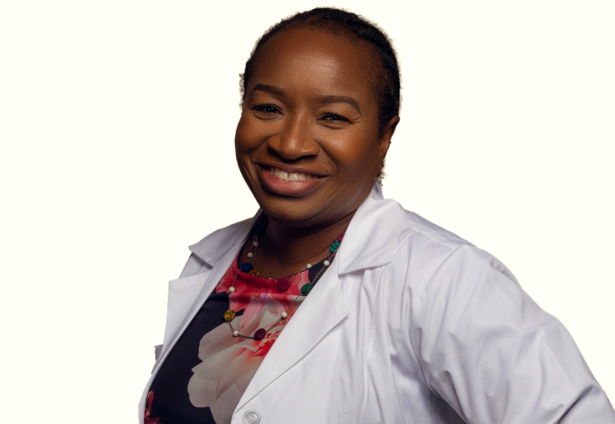
Renowned gynaecologist, Dr Theodora Pepera, has provided insights on three cancers that affect women’s reproductive organs and genitals, namely uterine cancer, ovarian cancer, and cervical cancer.
She shared this information on the sixth episode of the Vodafone Healthline Spin-Off show.
Dr Pepera explained that ovarian cancer is commonly known as the "silent killer" because it does not often present any symptoms.
According to her, by the time it presents with symptoms, cancer would have already advanced. She said that some of the most common signs of advanced cancer in women are bloating around the waist, a bigger stomach, and a feeling of fullness because there is a lot of fluid in the stomach.
According to Dr Pepera, unlike other cancers, there is no proven screening test for ovarian cancer. It is thus important to visit the doctor if one notices any changes in their body.
Speaking on cancer of the womb, also known as uterine cancer, Dr Pepera said womb cancer is one of the more treatable cancers.
She said that this type of cancer usually causes bleeding, so if this symptom is noticed early and taken seriously, cancer can be treated.
On cervical cancer, the gynaecologist told host Frema Asiedu, "Cervical cancer is mostly preventable, yet it is one of the leading cancers. So, either we are not screening for it or when people get screened, they are not getting the appropriate treatment. We are also not vaccinating for it."
Cervical cancer, she said, happens when cancer forms in the tunnel-like organ that connects the vagina and the uterus, known as the cervix. The human papillomavirus, or HPV, is frequently the cause of this cancer, she noted.
Dr Pepera recommended that women get vaccinated against HPV to reduce the risk of getting cervical cancer. She also said that the best time to get vaccinated is during adolescence and suggested that both boys and girls should get vaccinated so that the entire population will be immune to HPV.
During the Myth Buster segment, the in-house doctors, Dr Kweku Yalley and Dr Aba Folson discussed a different type of cancer known as oral cancer.
The doctors explained whether oral sex could cause oral cancer. The doctors noted that oral sex can predispose one to oral cancer.
Dr Yalley also mentioned that while oral sex is not linked to oral cancers, it is important that people be sexually responsible and avoid multiple sexual partners.
Through the Vodafone Healthline show, Vodafone Ghana has provided free medical education and interventions to the Ghanaian public. The show keeps giving out useful information through interesting content on selected media outlets and social media.
The Vodafone Healthline Spin-Off edition airs on Mondays from 9:30 p.m. to 10 p.m. and on Tuesdays from 6 p.m. to 6:30 p.m.
Latest Stories
-
Power restoration fault suspected in Kumasi Central Market fire
4 hours -
The 7-foot giant of Ngleshie Amanfro: Seven-foot Ghanaian Ephraim Saawa dreams of joining the national basketball team
5 hours -
Government promises support for Kumasi Central Market fire victims
5 hours -
Vibes The Movie: Big Ghun’s Ghanaian film earns five nominations at 2026 REFFA
5 hours -
MamaCare CEO warns unresolved conflicts among health workers could undermine maternal and neonatal care
6 hours -
Health professionals urged to translate medical knowledge into practice to save mothers
6 hours -
Conflicts among care providers linked to maternal, neonatal deaths – Expert
7 hours -
GIS marks 10th TIME conference, champions improved teaching practices
7 hours -
BRICS Or Balance? What Ghana’s bid really means
8 hours -
GPRTU wants full TRAFFITECH-GH implementation to start in 2027
8 hours -
How 10-mile walks for basic education birthed a 50-year legal career for Justice Korbieh
8 hours -
Mahama announces plans to import electric wheelchairs for PWDs
8 hours -
KGL U17 Colts 2026: Western beat Prempeh Elite Academy to set up final final with Greater Accra Region
9 hours -
Late Solanke strike salvages 10-man Spurs draw at Man United
9 hours -
Gender Ministry to monitor welfare of Nana Akua Addo’s children amid domestic violence case
9 hours