

Audio By Carbonatix
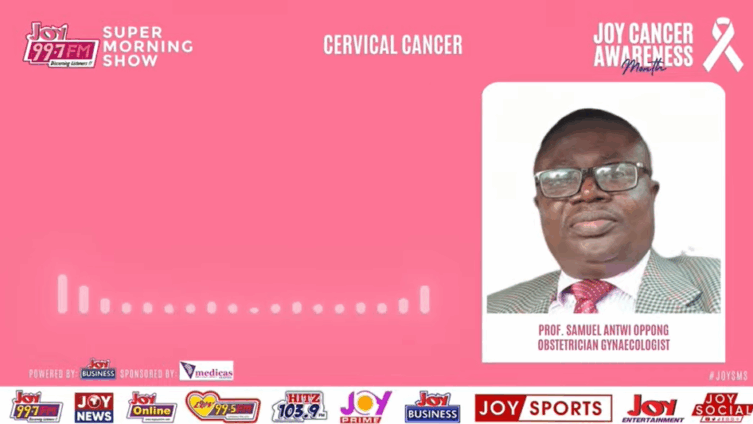
Obstetrician-gynaecologist, Professor Samuel Antwi Oppong, has expressed grave concern over the persistently high number of cervical cancer cases and deaths in Ghana, despite the disease being one of the most preventable forms of cancer in women.
Speaking on Joy FM’s Super Morning Show as part of the Joy Cancer Awareness Month, on Wednesday, October 22, Prof. Antwi Oppong revealed that from January to December each year, nearly 3,000 Ghanaian women are diagnosed with cervical cancer. Shockingly, almost half of them die within a year of diagnosis.
“In spite of the dire or gloomy picture often painted about cervical cancer, the statistics remain deeply troubling,” he said.
- slot pulsa
- situs slot 5000
- slot deposit 5000
- royalhoki77
- https://poolsafetygroup.com.au/what-we-do/
- https://patorama.com.au/helicopter-photography/
- https://reactmaintenancegroup.com.au/electrical-maintenance/
- https://www.100plumbing.com.au/work-with-us/
- slot maxwin
- https://finishingblade.ca/Banner/
- https://tubulousaustralia.com.au/gallery/
“Each year, close to 3,000 women develop the disease, and of this number, nearly half will die from it within a year.”
He noted that the high incidence may be linked to what he described as “extra pollution from previous partners.”
Professor Antwi Oppong stressed that cervical cancer is not only preventable but also far easier to prevent than breast cancer a fact that makes the high death toll all the more distressing.
“Cervical cancer is currently one of the most preventable cancers in women. It is a lot easier to prevent than breast cancer,” he said. “And that is why, ironically, more women die from cervical cancer than from breast cancer.”
He pointed out that prevention must begin with lifestyle changes, particularly in relation to sexual behaviour.
The disease is primarily caused by the human papillomavirus (HPV), which is transmitted through sexual contact.
“Cervical cancer prevention starts with lifestyle,” he explained. “The disease is acquired mainly through sexual intercourse, so reducing sexual risk can significantly lower the chance of developing cervical cancer.”
He urged young girls to delay their first sexual activity, as early exposure increases the risk of contracting HPV.
“The older you are when you have your first sexual activity, the less likely you are to acquire HPV infection,” he added.
Professor Oppong also recommended limiting the number of sexual partners, given the uncertainty over who may be carrying the virus.
In addition, he advised avoiding smoking and adopting healthy habits to support the immune system’s ability to fight off infection.
More recently, the availability of the HPV vaccine has added a powerful tool to cervical cancer prevention efforts. Professor Oppong emphasised the importance of embracing vaccination, particularly for adolescent girls.
“HPV vaccination has become more available worldwide, and it is one of the most effective ways to prevent cervical cancer,” he said.
Latest Stories
-
Tiptoe Lane’s tech takeover: The story behind Ghana’s booming informal phone market
16 minutes -
Abanga vows to use social media to counter NDC messaging ahead of 2028 elections
18 minutes -
Okai Mintah seeks Sabah Zita Benson’s support for NDC National Youth Organiser bid
32 minutes -
Okai Mintah vows to strengthen NDC campaign machinery ahead of 2028
38 minutes -
Mother of four and Jasikan teacher among new Telecel M’ahitti Promo winners
39 minutes -
International Youth Shakers Conclave 2026 set to bring global young leaders to London
40 minutes -
Gov’t is committed to addressing teachers’ conditions of service, deprived-area allowance – Education Minister
44 minutes -
GoldBod’s structure encouraging galamsey – Afenyo-Markin
46 minutes -
Tullow starts selling Jubilee, TEN crude to Ghanaian refineries
48 minutes -
Local Government Service authorises rationalisation, redistribution of staff
51 minutes -
PURC assures consumers of working to ensure quality services in Northern Region
57 minutes -
Ghana develops US$4.28bn water financing framework
1 hour -
Christian Council calls for protection of mission schools’ religious identity
1 hour -
Mahama holds discussions with India’s External Affairs Minister
1 hour -
Even when you cough, they come after you — Abanga accuses Mahama govt of criminalising free speech
1 hour