

Audio By Carbonatix
The Volta Region has recorded some 54 reported cases of cervical cancer, between January and September 2025, with about 500 reported cases seen between 2016 and 2025.
About 70% of these cases were identified when tumors had progressed to advanced stages, making survival of the patients slim.
The Ghana Health Service warns of increasing cases and, therefore, advises females between 9 and 14 years to take part in the upcoming nationwide Human Papillomavirus HPV Mass vaccination scheduled between 7 and 11 October 2025.
Cervical Cancer is caused by an infection with certain high-risk types of human papillomavirus (HPV) and transmitted through any skin-to-skin contact of the genital area, vaginal, anal, or oral sex.
It is the first most frequent disease diagnosed in females between 15 and 44 years, where cancerous tumors start developing around the cervix.
In light of this, the Ghana Health Service aims to introduce the HPV vaccine into the routine immunization, following the success of piloting the HPV vaccination campaign in 2013, in the Northern and Central Regions.
The nationwide campaign will start from 07 October 2025, and end on 11 October 2025, targeting young girls between 9-14 years.

The Acting Volta Regional Deputy Director of Public Health, of the Ghana Health Service, Hectoria Awekeya said the campaign aims to reach some 120,000 young girls in her jurisdiction to administer the single dose of the Gardasil 4 vaccine.
She said that stakeholders were being engaged to prevent incidents of vaccine hesitancy - as experienced during the coronavirus vaccine campaign - to protect the young ones against the deadly disease.
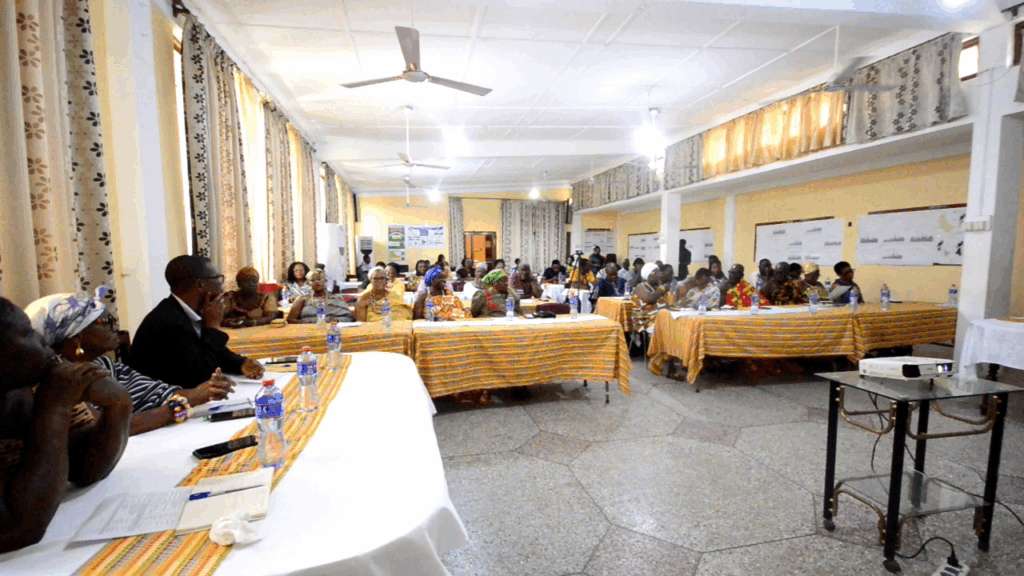
“We are looking at about 120,000 girls, our target age group is 9-14 years. We will find some of those girls in schools, out of school, and anywhere in the community. This was why we brought traditional leaders, religious leaders, school educators, both private and public, and the media. So, wherever the girls are, we will find them”, she stressed.
She explained that cervical cancer is be prevented through vaccination, with "the secondary prevention done through screening and early detection and tertiary prevention, where they have the disease and we have to prevent them from dying”.
Madam Awekeya, therefore, urged parents, guardians, and community leaders to encourage young girls between the ages of 9-14 years to take the HPV vaccine to protect them against cervical cancer.
Latest Stories
-
ICU urges GHABA members to transform hairdressing skills into sustainable enterprises
13 minutes -
Ghana eyes stronger trade ties as Australia hosts multicultural trade and investment forum
23 minutes -
Margaret-Marie Krakue
25 minutes -
Ayariga announces plans for live broadcast of MMDAs’ meetings on local radio stations
28 minutes -
Mrs Anna Tackie
30 minutes -
Ghana links Afghan heroin and Brazilian cocaine to global drug markets – Global Organised Crime Index
38 minutes -
NHIA launches nationwide inter-school quiz to deepen students’ knowledge of NHIS
44 minutes -
Political protection could be masking Ghana’s cocaine trade – Global Organised Crime Index
49 minutes -
AFCON 2027Q: ‘We have to dissolve the GFA’ – Effia MP after Black Stars lose to Gambia
51 minutes -
NPP announces voting schedule and ID requirements for October 3 national elections
53 minutes -
Lupus can mimic HIV symptoms and damage kidneys if untreated – KNUST expert
56 minutes -
Focus on Sickle Cell Foundation seeks to introduce sickle cell education through comics in Ghanaian schools
1 hour -
NPP rewrites the campaign playbok as opposition reality shapes National Executive contest
1 hour -
Road safety education will fail without enforcement – NRSA boss
1 hour -
Daily Insight for CEOs: Finishing Q3 strong and entering Q4 with purpose
1 hour