

Audio By Carbonatix
A coalition of traditional leaders, educators, journalists, local government officials, and health professionals in the Ahafo Region has launched an ambitious health drive to shield nearly 40,000 young girls from one of the world’s most preventable yet devastating diseases - cervical cancer.
The campaign, spearheaded by the Ahafo Regional Health Directorate, aims to vaccinate 39,772 girls aged nine to 14 against the Human Papillomavirus (HPV) - the virus responsible for the vast majority of cervical cancer cases.
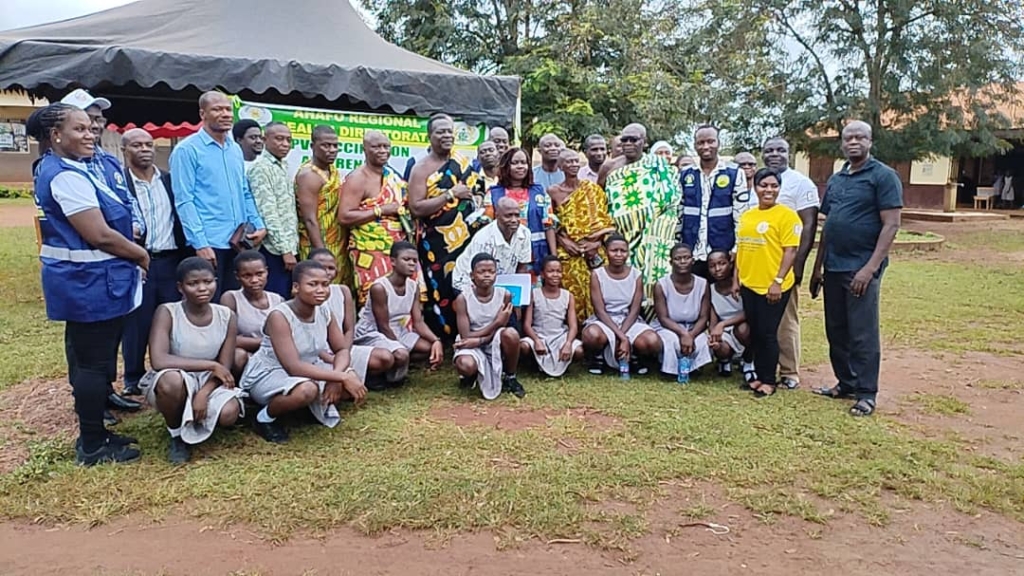
At a community durbar in Kenyasi, parents, teachers, and chiefs gathered to mark the beginning of what health officials describe as a “historic step” toward a cancer-free generation.
“Our traditional leaders will move from town to town, from classroom to classroom, ensuring every eligible girl gets her shot,” said Baffour Adjei Fofie, Akwamuhene of the Hwediem Traditional Council, underscoring the cultural backing for the effort.
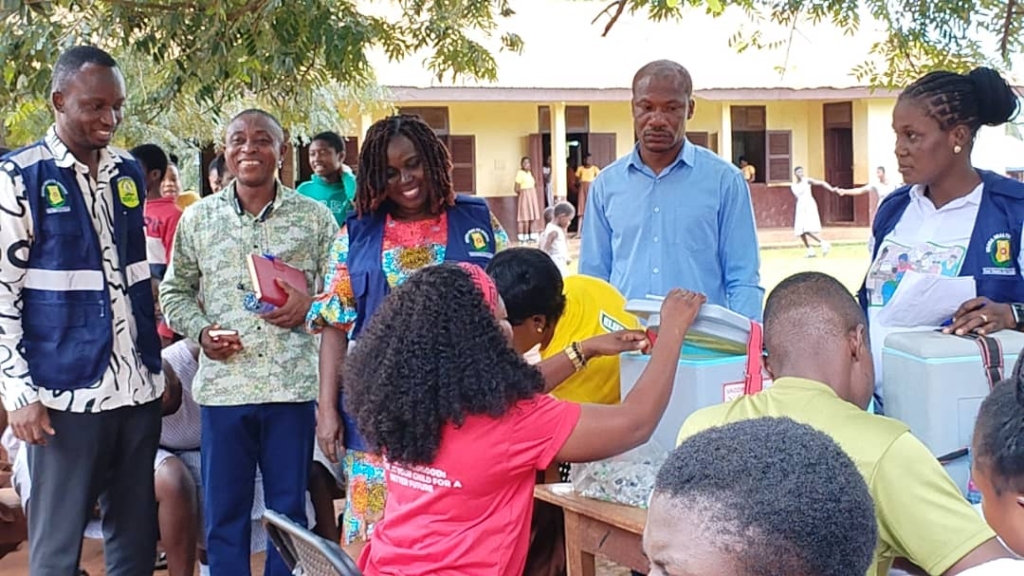
By the close of the first day, over 7,000 girls had already received the vaccine - a remarkable start toward achieving the region’s target.
The Ghana Education Service (GES) is playing a key role in the five-day campaign, ensuring schools serve as vaccination hubs and information centres.
“Our goal is full coverage,” said Appiah Kubi, Ahafo Regional School Health Education Programme (SHEP) Coordinator. “No girl should be left behind — not in the towns, not in the remote farming communities.”
Health officials say collaboration with schools is crucial, as teachers often serve as trusted voices in communities where misconceptions about vaccines can delay uptake.
Addressing the gathering, Dr Akosua Agyeiwaa Owusu-Sarpong, Ahafo Regional Director of Health Service, reaffirmed the vaccine’s safety and its proven effectiveness in preventing cervical cancer.
“This vaccine is safe, approved by the World Health Organisation, and capable of saving thousands of lives,” she said. “We are not just vaccinating girls — we are protecting future mothers, professionals, and leaders.”
Dr Owusu-Sarpong encouraged parents to ensure their daughters get vaccinated before the campaign ends on October 11, calling the HPV jab “a gift of prevention no child should miss.”
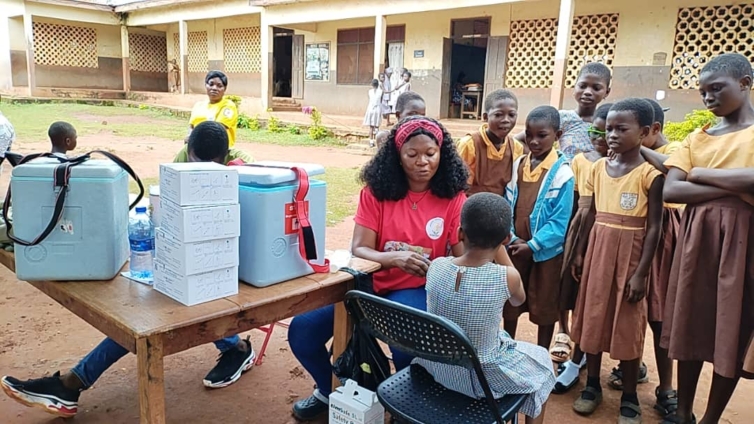
At the Kenyasi No. 2 D/A Girls Basic School, a 13-year-old student heaved a sigh of relief after receiving her shot.
“I’m happy because they said this will keep me healthy when I grow up,” she said proudly.
Health experts emphasise that HPV vaccination is one of the most cost-effective public health interventions — a simple injection that can prevent a cancer claiming over 340,000 women worldwide each year, according to the World Health Organisation.
In Ghana, cervical cancer remains the second most common cancer among women, but health officials believe that with sustained vaccination campaigns, education, and screening, the country can reverse that trend.
Latest Stories
-
Oil prices climb as traders weigh Saudi supply risk, Russian diesel flow
15 minutes -
Zimbabwean author denies using AI to write award-winning story
24 minutes -
Bank of America hit with $1.2bn fine for money laundering failings
33 minutes -
Robot seized by German police after allegedly groping teenage girl
44 minutes -
Subject EC appointment to ‘Akufo-Addo test’ – Kwapong
54 minutes -
English football’s independent regulator would quit over Man City interference
1 hour -
Anthropic seeks rehearing of case over Pentagon’s security risk branding
1 hour -
Torrential rains in Libya’s Tripoli kill two
2 hours -
Guinea-Bissau says it has not approved hepatitis B vaccine trial in newborns
2 hours -
NDC Deputy National Organizer Aspirant Hamza Umar targets grassroots mobilisation
2 hours -
Partisan appointment cycle will persist without meaningful reforms – Osae-Kwapong
3 hours -
‘This cycle is not going to be broken any soon’ – Osae-Kwapong on partisan appointments
3 hours -
Partisan appointments won’t help restore trust in EC – Osae-Kwapong
4 hours -
Villarreal fight back to beat Napoli and end losing run
4 hours -
Tresoldi nets hat-trick as Club Brugge win Inter thriller
4 hours