

Audio By Carbonatix
The Bank of Ghana says it has reached an agreement with the Finance Ministry to commit to zero financing of this year’s budget and subsequent ones.
Joy Business is learning that the proposed policy is a pre-condition for the country to secure a fund programme from the IMF.
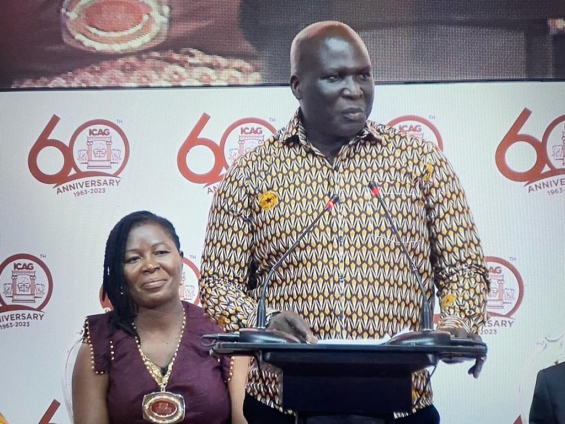
Speaking at the launch of the 60th anniversary celebrations by the Institute of Chartered Accountants Ghana (ICAG), Head of Banking Supervision at the Bank of Ghana, Osei Gyasi, said the move is also necessary to contain the country’s rising debt as well as control inflation.
“Monetary financing of the government deficit which was pursued to prevent domestic default arising from systemic auction failures during 2022 will end under the programme”, he said.
Mr. Gyasi added “to achieve this, the Bank of Ghana and the Ministry of Finance will commit to zero-financing of the budget in 2023 and beyond which is expected to trigger a disinflation path and downward trends in the policy rate as well as restore the country’s reserve buffers to at least three months of import cover by end-2025.”
Domestic Debt Exchange
According to the Central Bank’s Head of Banking Supervision, the most critical step that will draw the country closer to approval of the proposed ECF programme by the IMF board is to undertake the Debt Restructuring programme.
According to him, the Domestic Debt Exchange programme (DDE) is a guarantee to Ghana’s debt sustainability over the medium term.
“The successful implementation is expected to improve the debt metrics, compliment the current monetary policy stance and reset the economy to macroeconomic stability”, he added.
Regulatory interventions
Mr. Gyasi said in anticipation of some adverse effects of the programme on the financial sector, his outfit has issued some regulatory interventions to compliment the announced financial stability fund to mitigate the potential impact of regulated financial institutions.
He reassured that “the Bank of Ghana will engage all stakeholders and make policy interventions where necessary to ensure the impact on the banking industry is minimal.”
He however commended the ICAG for the key role it played in the process leading to the implementation of the DDE programme.
He indicated that the Central Bank’s resolve to formally engage the institute to help institutionalise and nurture the partnership to influence policy direction.
Latest Stories
-
Jerry Aye: The life & times of Robert Mugabe
4 minutes -
Asiedu Nketiah says better government begins before Election Day
13 minutes -
Colleges of Education call for National AI Policy and digital resources for teachers
14 minutes -
AngloGold Ashanti empowers 22 Sanso women through apprenticeship to entrepreneurship programme
23 minutes -
Gov’t advances National Data Exchange Hub under US$50m digital project – Sam George
30 minutes -
Alex Asmah Foundation launched in Kumasi to support youth development across Ghana
31 minutes -
School placement is absolutely free – Education Ministry
31 minutes -
Burkina Faso FA Prez Oumarou Sawadogo takes over as WAFU B President
33 minutes -
CSSPS self-placement portal opens for candidates unable to secure choices
38 minutes -
James Korsah-Brown calls for Tourism Minister to be changed
39 minutes -
Death in the dark: Family demands answers after dialysis patient dies at TTH during power outage
47 minutes -
11 Ghanaian Universities to embed One Million Coders certifications in degree programmes
48 minutes -
Government to pilot Electronic Document Wallet in fourth quarter – Sam George
50 minutes -
Kenya minister warns foreigners against ‘misusing’ visas to trade
54 minutes -
NACOC shuts down Amsterdam pub at Laboma over suspected Narcotics activities
54 minutes