

Audio By Carbonatix
A law auditing expert says the Auditor General (AG) lacks the political will to surcharge principal spending officers for supervising financial irregularities within the various State Owned Enterprises (SOEs).
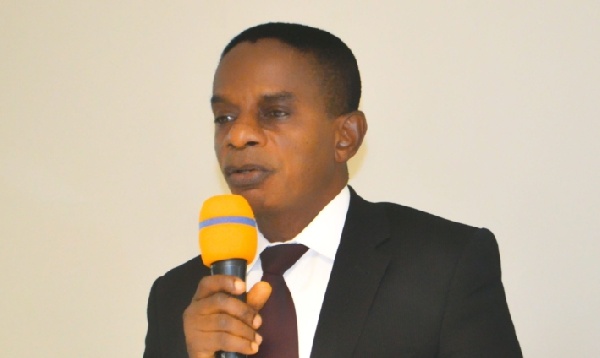
Professor Samuel Antwi said although the law gives the AG the power to surcharge, he could be afraid of losing his job since his appointment is political.
He said the AG might be removed should his activities mount pressure on the government in power.
"I think it's lack of political will on the part of the Auditor General. The law has given you power, what again are you looking for?" he quizzed.
"Let's understand the recent history of the office of the Auditor General. They [A-Gs] interface a lot with politicians and powers that be.
"When the Auditor General tries to act according to some aspects of the law, reference to recent times - of course, the Auditor General is appointed by the president so if they see that you're getting too hard on them, you can lose your job.
"You have security of tenure but they [politicians] can make your life a little bit difficult as an auditor general," he explained.
"Surcharge the principal spending officer who refused to do his work," he emphasized.
Nonetheless, the AG needs to call "the bluff of the politicians" and operate according to the law, Prof Antwi added.
According to him, it is the only way the country can properly manage and account for its finances.
The expert iterated that the country needs to be serious with its financial management.
He decried government's recent pursuit of an IMF programme, saying that the financial irregularities revealed in the AG's report could have been worth more than the $3b bailout request from the IMF.
This, he said, could have helped build many hospitals and solve other pertinent issues.
The AG's report disclosed a disturbing amount of over ¢15 billion loss due to irregularities.
According to the report, outstanding debts and loans recoverable from the total loss amount to 99.37%.
There are also cases of payroll irregularities hovering around ¢11m. Amongst these, there are procurement and contract irregularities.
The country has been experiencing financial losses over the years. Significant are those from 2018 to 2022.
In 2018, it was ¢3 billion, then moved to ¢5 billion in 2019. In 2020, it shot up to ¢12 billion, increased to ¢17 billion in 2021 then finally dropping a little to ¢15 billion in the year under review, 2022.
Latest Stories
-
The Paradox of Plenty — When every smartphone becomes a newsroom
26 minutes -
GTA sensitises taxi drivers in ‘Know Ghana’ tourism campaign
2 hours -
Archbishop Agyinasare calls for responsible speech amid growing social media abuse
2 hours -
‘It will be inexcusable for gov’t not to honour payment of teachers’ arrears by 30th October’ – Haruna Iddrisu
2 hours -
Forbes’ World’s Best Employers 2026: No Ghanaian firm ranked among 900 companies
2 hours -
Electronic processing of teachers’ data: ‘The decision is the Controller’s’ – GES boss
2 hours -
Teachers’ Strike: Haruna Iddrisu questions paper-based processing of promoted teachers’ data
2 hours -
Savannah Region: Kunfusi bridge collapses again, leaving nearly 4,000 residents cut off
2 hours -
Teachers’ strike: GES targets Monday deadline to submit promotion data to Controller
2 hours -
Inflation to average 11.3% in 2027 – Fitch Solutions
3 hours -
‘I didn’t campaign for NDC to come and do this nonsense’ – Kpebu on EOCO’s conduct
3 hours -
Fitch Solutions maintains policy rate forecast of 14% by December 2026
3 hours -
Diaspora Nasara Caucus congratulates Mohammed Ali Suraj, new NPP executives
5 hours -
Dr Antwi-Boasiako’s cybersecurity book showcased at UN crime prevention congress
5 hours -
We will empower the grassroots and protect every vote – NPP’s 1st Vice Chair Kojo Bamba
5 hours