

Audio By Carbonatix
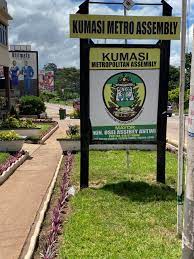
Over 120 lavatories are expected to be handed over to public basic schools in the Kumasi Metropolitan Assembly (KMA) by November this year.
In a 2017 report conducted by the Ghana Education Service (GES), it was indicated that more than 7,400 public basic schools out of the over 20,000 in Ghana lack toilet facilities. Out of this number (7400), nearly 1,500 schools in the Ashanti region lack toilet facilities.
To resolve this issue, some 120 toilet facilities have been built for basic schools in the Kumasi Metropolis under the Greater Kumasi Metropolitan Area - Sanitation and Water Project (GKMA SWP).
The facilities are awaiting commissioning.
The project coordinator of the GKMA SWP, George Asiedu affirmed in an interview that the initiative is aimed at improving access to toilet facilities in the over 1,000 public primary schools in the region.
Mr Aseidu told JoyNews, “A number of the schools in Ghana do not have access to improved toilet facilities and if we are to achieve SDG-6, we need to ensure that everyone living anywhere has access to improved toilet facilities.
“In Kumasi, we are about to hand over all the 129 facilities. We are almost at the point of handing over; all of them will be finished by November 2023,” the project coordinator further assured.
Additionally, he stated that the new facilities are gender- and disability-friendly, allowing all persons to utilise them comfortably and easily.
“Our facility, we describe it as gender and disability friendly, so within the facility, we have a girl-child changing room; when the girls, at the end of the month have their menses, they should be able to have access to a facility that they can conveniently change themselves and clean themselves... And then we’ve made provision for the physically challenged,” Mr Aseidu said.
The Ministry of Sanitation and Water Resources also hosted a three-day stakeholder forum with school management committees and Parent-Teacher Associations across the Metropolis to ensure the sustainability and upkeep of the facilities.
The Programme Manager at the Ministry, Charlotte Agyei highlighted some adverse impacts on the education of students in basic schools should the various stakeholders fail to support the ministry in ensuring a good maintenance culture for the facilities that are expected to be handed over.
“If they (female students) don’t have toilet facilities in their schools, during the five days that they are menstruating, they will not come to school. So it defeats the purpose of girls' education and girls empowerment.
“And if we have the facilities and we are not able to maintain it to stand the lifetime of the facility, then it becomes a challenge for the school,” Madam Agyei noted.
Latest Stories
-
Twelve Tribes of Israel Ghana to mark 40 years with anniversary celebration
12 minutes -
GPL 2026/27: Hearts held by Bechem as Kotoko, Samartex share spoils
32 minutes -
My Story (Kwaku Antwi-Boasiako)
38 minutes -
We expect growth rate to re-accelerate in second-half of 2026 – IC Insights
41 minutes -
The ungodliness and unrighteousness underlying the National Cathedral mess!
53 minutes -
T-bills auction: Government fails to achieve target; yield on 91-day-bill remains unchanged
1 hour -
It’s Ghana’s shame to denigrate Nkrumah when the whole world honours him as African of the Century – Asiedu Nketiah
1 hour -
No other nationalist can compare to Nkrumah – Asiedu Nketiah
1 hour -
Collateral Registry: Foreign banks accounted for GH¢19.9bn of secured credit in quarter 2, 2026
1 hour -
This government should expect scrutiny – Asiedu Nketiah
2 hours -
Two-year-old girl dies in domestic fire at Cantonments
2 hours -
Asiedu Nketiah urges better working conditions for journalists
3 hours -
JoyNews’ Precious Semevoh wins climate change reporting award at Bono GJA Awards
3 hours -
Kumasi Central Market phase 2 to begin in October after years of abandonment
3 hours -
Sentuo offers fuel supply reassurance as NPA sees steady output through December
4 hours