

Audio By Carbonatix
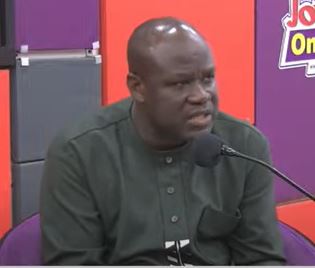
The Chief Executive Officer of the Ghana National Chamber of Commerce and Industry (GNCCI), Mark Badu-Aboagye says the structure of Ghana's taxes and the implementation of the same is a threat to the survival of businesses.
According to him, the businesses are overburdened with taxes, which makes it very difficult for them to expand.
Speaking on Joy Business’ Pre-Budget Forum, he said “Some of the taxes that we have now, they are not necessary, nuisance taxes. Those taxes were brought in purposely to solve a specific problem, for example, the COVID tax.”
He explained that this tax has accomplished what it was set up for and must be scrapped.
Although Mr Badu-Aboagye agrees that these monies were borrowed and must be repaid, he said the government must first give an account of what the money was used for.
He stressed despite the claim by the government that the money was used to support stakeholders, those monies were not free monies because the government placed more taxes on their businesses which in a way crippled their industry.
“I haven’t heard anywhere the amount that they have been able to collect from that business that they gave the money to. Otherwise, it becomes a waste of money and you come back to the individuals and businesses to tax them," he said.
He stressed that the structure should be able to generate revenue and should be able to simulate the activities of the private sector adding that "If the businesses are collapsing you end up not getting the revenue that you want."
Mr Badu-Aboagye added that the government has not been able to create a balance between revenue generation and enhancing the activity of businesses which should be the most important thing the 2024 budget must address.
On the same show, the Dean of the School of Business, Professor John Gatsi sharing a similar view, said the government must not act as though taxing businesses was the only way to generate revenue.
He said that government must make the business environment friendly which will enable businesses to expand.
“We should not make the need to raise revenue a mutually inclusive idea such that it is the only tool left for government and government must do anything possible even if the policy the government is rolling out in terms of raking in more revenue is inimical to the business environment.
Professor Gatsi stressed that if the government pushed too hard on taxing businesses, some of these taxes would be counterproductive.
He continued that, this implies that people’s commitment to the payment of taxes might be reduced and the tax effort will not yield much.
Latest Stories
-
Kushner states regret over World Cup sell-off plan
1 hour -
50,000-litre LPG tanker fire contained on Tema Motorway as Fire Service averts disaster
2 hours -
Supreme Court clears way for Trump to keep building White House ballroom
2 hours -
Amazon rigged billions in ad pricing, lawsuit from states and US watchdog alleges
2 hours -
US singer D4vd’s celebrity lawyers withdraw from murder case
2 hours -
How Shein lost its shine ahead of long-awaited stock market debut
2 hours -
OSP faces crucial test to deliver after years of public support – CDD-Ghana’s Pumpuni Asante
3 hours -
CDD calls for constitutional protection for OSP to shield anti-corruption fight
3 hours -
Allround Baby Pants launched in Ghana to ease diapering for mothers
3 hours -
Aggrieved Gold Coast Fund Management Company customers to petition Mahama over locked-up funds
3 hours -
Trump pushes Apple to change ‘Lake Ontario’ to ‘Lake America’ on its maps
4 hours -
NSMQ 2026: PRESEC, Legon dethrones defending champions Mfantsipim in thrilling battle to book semi-final spot
4 hours -
NPP set to overhaul constitution as delegates prepare to vote on sweeping reforms
4 hours -
Ghana’s cashew industry faces processing gap as Côte d’Ivoire moves to capture more value
4 hours -
“Our greatest wealth is not in our soil but our people” — Upper West Minister
4 hours