

Audio By Carbonatix
There is no free lunch indeed!
In the unprecedented times of the COVID-19 pandemic, the Government of Ghana took a bold step to provide relief to its citizens.
Between April and September 2020, over GH¢1 billion was spent to grant free electricity to lifeline consumers and absorb a substantial 50% of all electricity bills for residential and commercial customers.

However, the adage "there is no free lunch" proved true as subsequent fiscal measures aimed at recouping losses and sustaining economic recovery brought about a significant shift.
2021: A taxing twist in the tale
In 2021, the government responded to the ongoing challenges posed by the pandemic by introducing the COVID-19 Health Levy on the supply and importation of goods and services with some exemptions.
This move had a ripple effect, leading to an increase in Value Added Tax (VAT) and the National Health Insurance Levy (NHIL). The fiscal landscape was evolving, setting the stage for a delicate dance between relief and revenue generation.
2022: Lifeline consumer bracket truncated - eye clear?
To bolster revenue and address the mounting costs of power generation, the government decided, in 2022, to truncate the lifeline consumer bracket for electricity. From 0-50 kWh, it was reduced to 0-30 kWh. This shift, while driven by economic necessity, left many consumers priced out after having enjoyed free electricity during the pandemic.

The government's balancing act between fiscal responsibility and providing affordable services faced its first major challenge.
2023: Adapting to economic realities with quarterly tariff adjustments
In 2023, recognizing the need for a more adaptive approach, the government introduced a quarterly utility tariff adjustment system.
This innovative system aimed to navigate the complex economic realities, providing a more responsive mechanism for regulating utility tariffs. It signaled a commitment to finding sustainable solutions amidst an ever-changing landscape.
2024: VAT imposed on high consumption - the final chapter in the recovery exercise?
As part of the government's comprehensive COVID-19 recovery program, a new fiscal measure was implemented on January 1, 2024. VAT was charged on residential electricity customers consuming more than 30 kWh.
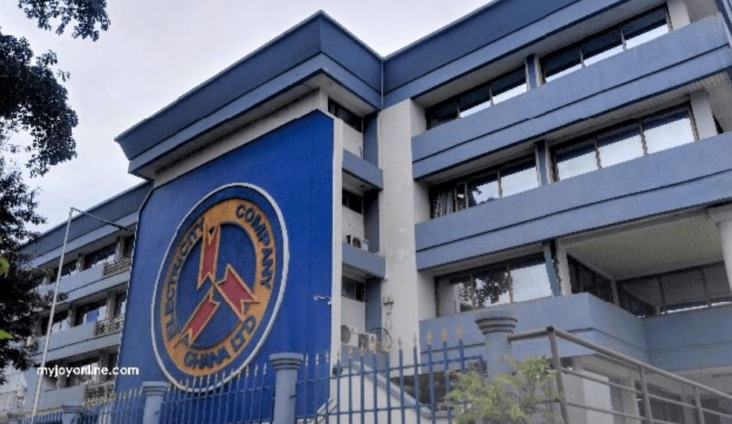
This marked a culmination of efforts to recover losses and generate revenue post-pandemic.
The government, having initially provided relief, now faced the challenging task of striking a balance between economic recovery and the financial burdens placed on its citizens.
Many consumers were priced out after enjoying power for free during the heat of the pandemic and households who enjoyed a 50% discount on their bills their the pandemic have been paying more after the free lunch and they will definitely pay more as a result of this tax move.
Follow Isaac Kofi Agyei on:
Twitter (X): @isaackofiagyei
LinkedIn: Isaac Kofi Agyei
About the writer:
Isaac Kofi Agyei is a Data & Research Analyst/Journalist at JoyNews based in Accra, where he covers mostly finance, economics, banking, and politics across Ghana and West Africa, from detailed analytical reports on all key issues to debt crises to IMF programmes. He also serves as the data and research correspondent for SBM Intelligence, an Africa-focused market/security leader in strategic research, providing actionable analyses of West Africa’s socio-political and economic landscape. With his solid academic background in economics and statistics and additional training from credible institutions such as the UNDP, Afrobarometr, Ghana Statistical Service, and a host of others, Isaac has honed his skills in effective data storytelling, reporting, and analysis.

Isaac Kofi Agyei
Latest Stories
-
Zonda Tec launches HOWO T3M truck to support agric and logistics
7 minutes -
Obuasi SHTS scandal: Eduwatch calls for sex offenders’ register and mandatory background checks for teachers
19 minutes -
GloMeF CEO urges intensified public education on new road traffic regulations
30 minutes -
‘Any tax on ChatGPT is an attack on education and innovation’- Akim Swedru, MP
34 minutes -
Obuasi SHTS sexual abuse scandal exposes systemic failure in child protection – Moving Masculinity
35 minutes -
Hubtel CEO calls for national data-sharing framework to boost AI development
37 minutes -
Twelve Golden Rules of real estate development in Ghana, Africa
42 minutes -
Five new telephony cell sites in Ashanti Region to be activated in October 2026 – Sam George
42 minutes -
Mahama cuts sod for Afienya Industrial Park, targets 120 enterprises
47 minutes -
Rush for fuel from accident tankers is stealing, punishable by law – NPA boss, Edudzi Tamakloe
53 minutes -
GhIG pushes for legislation to regulate geoscientists’ activities
59 minutes -
Mfantsipim @150: Ace Anan Ankomah leads project to preserve school’s musical heritage
1 hour -
Gov’t launches rCOMSDEP in Ahanta West, Mpohor Fiase to promote responsible community mining
1 hour -
AI is forcing professionals to rethink how they deliver value – Hubtel CEO
1 hour -
Daily Insight for CEOs: Strengthening the CEO’s Leadership Legacy
1 hour