

Audio By Carbonatix
Angola aims to hold and increase oil production beyond 1.18 million barrels per day (bpd) while positioning the gas sector to account for 25% of the country’s energy needs by 2025. To achieve this, government is inviting investment into exploration and production, with industry reforms guaranteeing both a competitive and stable investment environment.
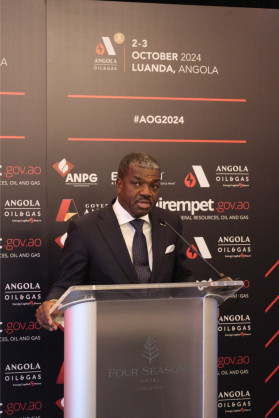
Speaking at the CERAWeek conference in Houston this week, Angola’s Secretary of State for Oil and Gas José Barroso outlined the government’s vision to achieve energy security through oil and gas production. Barroso announced that the government will continue to promote investment opportunities through the continuous running of bid-rounds offering exploration licenses to qualified oil and gas companies while maintaining a robust outreach at major international oil and gas events and Angola’s premier industry event - the Angola Oil&Gas (AOG) conference, which takes place this year on October 2-4 in Luanda.
Organized by Energy Capital&Power, AOG is the largest oil and gas event in Angola. Taking place with the full support of the Ministry of Mineral Resources, Oil and Gas; the National Oil, Gas and Biofuels Agency (ANPG), the downstream regulator IRDP, national oil company Sonangol and the African Energy Chamber.
Industry Reforms Aim to Bolster Production
Since 2017, Angola has been undertaking aggressive industry reforms to ensure a transparent and competitive oil and gas market. The country introduced a six-year licensing round in 2019 which guarantees yearly investment opportunities in exploration for foreign players. The most recent of these - a 12-block tender covering blocks in the Lower Congo and Kwanza Basins – featured 53 bids, underscoring the scale of interest in Angolan oil and gas. Going forward, Barroso explained that the country’s national regulator and concessionaire, the National Oil, Gas&Biofuels Agency (ANPG), will continue to aggressively promote the industry, pushing bid rounds in line with national production targets.
Meanwhile, Barroso stated that Angola offers regulatory flexibility with regards to oil and gas agreements. In addition to production sharing agreements under the six-year licensing round, the country introduced a risk-reducing alternative in 2020, enabling the awarding of risk service contracts when the public bid process is unlikely to succeed. A permanent offer program initiated in 2021 also enables the ANPG to negotiate new contracts with operators without offering a bid round. Additional reforms include a Tax Benefits Code enacted in 2022, creating incentives for oil companies.
According to Barroso, the government is open to discussing terms and finding a balanced agreement that provides the right returns for investors. He added that the government is open to license renewal, thereby ensuring a strong and long-term relationship between oil companies and the state.
Leveraging Gas to Unlock Economic Growth
With over 11 trillion cubic feet of proven natural gas reserves, Angola plans to leverage investments in the sector to bolster industrialization and energy access. Barroso said that natural gas is of uttermost importance for the country, serving as a catalyst for the energy transition as well as economic growth.
Currently, LNG production is declining by 10-15% per year. However, upstream developments, including the Quiluma and Maboqueiro (Q&M) gas fields – set to start production in 2026 -, stand to reverse this trend. Q&M represents the country’s first non-associated gas development and will supply feedstock for the Angola LNG project. New investments in the sector, according to Barroso, will support industrialization by supplying gas for fertilizer plants, steel plants and power generation.
The government introduced a legal framework for gas in 2018 – Presidential Decree No. 7/18 - providing attractive terms and ensuring transparency within the sector. Now, Angola is inviting foreign investors to develop the market.
Angola’s 2050 Vision Prioritizes Diversification
The Angolan government approved the strategy for Vision 2050 in 2023 – a strategic plan for the country’s long-term economic growth. Vision 2050 aims to transform Angola from an oil-driven economy by creating investment opportunities in myriad economic sectors. Over $960 billion in investment is targeted across the economy under Vision 2050, with 80% of this raised through foreign direct investment. Centered on diversification, the strategy aims to more than double the non-oil sector’s long-term growth.
However, oil remains an integral part of the country’s economic agenda. According to Barroso, with oil accounting for over 30% of GDP, 70% of government revenue and 90% of exports, the plan ensures oil and gas production remains a top priority for the next ten years. Government aims to maintain or increase production above 1.1 million bpd while diversifying the economy through investments. This, in turn, creates opportunities for players within the oil sector as well as across the entire economic spectrum. As such, the government’s pro-growth approach to investment is poised to unlock high returns for many years to come.
Join the AOG 2024 conference today and capitalize on the opportunities the growing Angolan economy has on offer. Covering the entire oil and gas value chain as well as associated sectors such as infrastructure, manufacturing, transport and ICT, the event connects companies to opportunities. Visit www.AngolaOilAndGas.com for more information.
Distributed by APO Group on behalf of Energy Capital&Power.
Latest Stories
-
‘The first game was weird’ – Sampson reflects on Black Princesses’ Ecuador defeat
17 minutes -
Charles Sampson demands more confidence in front of goal from Black Princesses
23 minutes -
‘We have shaken it up’ – Sampson says Black Princesses ready to redeem themselves
29 minutes -
Herbert Mensah takes Africa’s sports economy case to the UN General Assembly Week in New York
55 minutes -
Parrott scores again as Betis beat 10-man Lille
4 hours -
Mbappe goes joint-fifth in the list as real Madrid beat Inter Milan
4 hours -
Police arrest suspects over murder, bank robberies, gold-related attacks
4 hours -
Pragyia rider gets three months prison term for biting Police Assistant
4 hours -
Palm wine tapper jailed for stabbing farmer
4 hours -
Travel and tour agent remanded over GH¢107,000 recruitment scam
4 hours -
Taxi rank executives arrested over alleged attempted murder
5 hours -
Galamsey operator who posed as pastor to defile student jailed 15 years
5 hours -
Court sentences pub owner, shop attendant for selling expired food, sanitary offences
5 hours -
Mac Allister ‘sad’ at no Liverpool contract offer
5 hours -
Ghana pays $3.5m to University of Memphis over scholarship debt
5 hours