

Audio By Carbonatix
Patient Rights Watch Ghana is calling for a proper enforcement of the Patient's Charter to deal with the violation of patient's rights in the country.
The charter was introduced as a tool to ensure patients’ rights and dignities are protected and upheld within healthcare facilities.
But 12 years after its implementation, various assessments have highlighted challenges including ineffective enforcement in health facilities.

Violation of patients’ rights is common in healthcare institutions in Ghana.
The occurrences are often attributed to systemic and institutional challenges, such as insufficient healthcare staff, logistics, and unprofessional attitudes.
This influenced the introduction and implementation of the Ghana Patient Charter in 2002 and 2012 respectively.
The Charter highlights the patients’ rights and responsibilities in the care process irrespective of age, gender, ethnic background and religion.
President and Founder of Patient Rights Watch Ghana, Isaac Ofori Gyeabour, Esq insists enforcement of the charter will help the country.
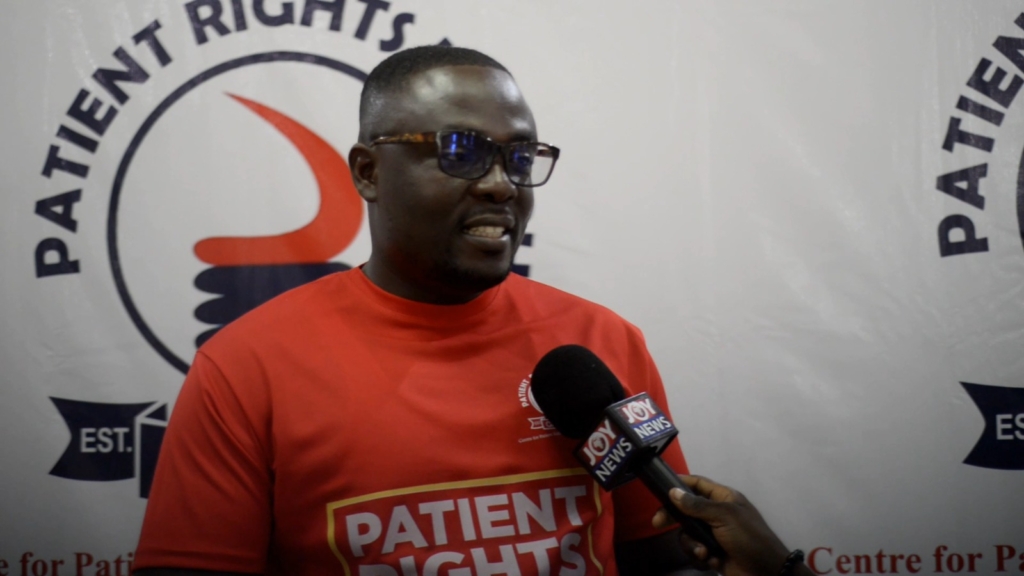
“There is so much to know about the charter, and programs like this symposium are what help. We believe the document contains enough to get us the required health we need. The only thing missing is enforcement,” he said.
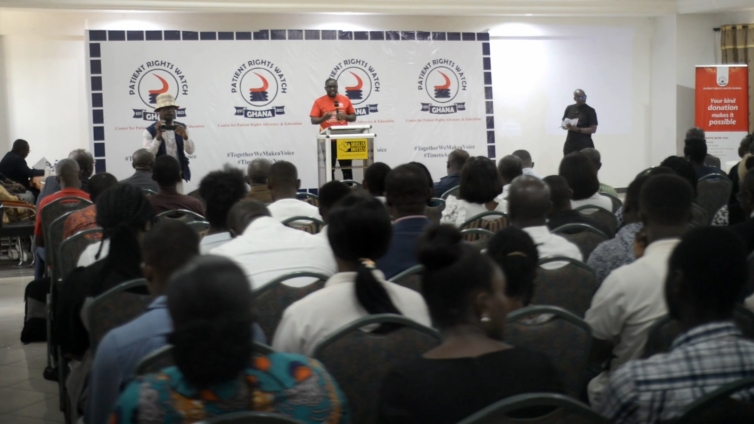
A medico-legal symposium themed: “Ghana's Patient Charter; 12 Years On” by the Patient Rights Watch Ghana seeks to create awareness and highlight shortcomings in the implementation of the Charter.
Justice of Court of Appeal, Sir. Dennis Dominic Adjei led an analysis of the legal implications of the rights and responsibilities of patients.

“Some people go to the hospital and get their conditions worsen. If there is a charter, it will bind their actions and put everyone in check,” he said
Principal Nursing Officer, Abigail Appiah indicated that an improved healthcare infrastructure and working conditions of health personnel will help lessen nurse-patient conflict.

“One nurse is to 839 patients. You can understand the pressure. We don't have the necessary logistics to accommodate and it overwhelms the nurse and conflict arises.
“We will try our best to promote good interpersonal relations with our patients. But we need many of these critical issues addressed,” she said.
Latest Stories
-
Air Pollution in Accra is not random; it is a burden carried by the poor
6 minutes -
GEXIM Bank grows loan portfolio to GH¢1.56bn as equity hits GH¢2.1bn in 2025 – SIGA Report
24 minutes -
Ghana Shippers’ Authority grows surplus by 272% as assets reach GH¢979.92m
32 minutes -
Government designates 13 blocked-out areas for small-scale mining to curb illegal mining
33 minutes -
Number of advertised jobs increased significantly in half-year 2026 – BoG
33 minutes -
GAFM demands retraction from GTEC over ‘unrecognised universities’ listing
39 minutes -
Saltpond residents renew call for return of Founders’ Day celebrations
43 minutes -
Consumer spending records mixed performance in 5-months of 2026, but manufacturing activities improved – BoG
45 minutes -
Passenger arrivals at airport increased by 3.7% in 5 months of 2026
50 minutes -
NSMQ 2026: St. Augustine’s College reach third straight semifinal after seeing off Aburi Girls, St. John’s Grammar
53 minutes -
Re: Mahama backs crackdown on airport workers begging visitors for tips
54 minutes -
Photos: 6th Akwasidae Festival in the U celebrates Asante heritage and Ghanaian unity
55 minutes -
Ghana, India explore armwrestling collaboration as Golden Arms prepare for World Armwrestling Championship in New Delhi
1 hour -
What Is Wrong With Us: We sign off on value for money before we have even defined it
1 hour -
2026 U20 WWC: Black Princesses final squad for tournament revealed
1 hour