

Audio By Carbonatix
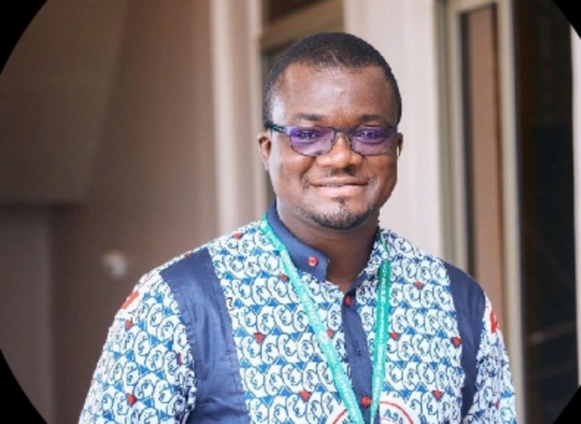
Dr Richard Selormey, General Secretary of the Ghana Medical Association (GMA), says while Ghana’s health policy documents may appear impressive, the reality within the country’s emergency care system tells a different story.
Speaking on Joy FM’s Super Morning Show on 24 February 2026, Dr Selormey acknowledged that referencing policy guidelines is commendable, but stressed that implementation remains Ghana’s greatest challenge.
“It is good that you are referencing the policy in the guidelines document. But there is always a translation from policy into reality,” he stated.
Dr Selormey noted that Ghana is not short of well-crafted health policies. However, he lamented that many of these frameworks fail at the implementation stage, resulting in lapses in emergency care and preventable deaths.
“Ghana has many beautiful policies and guidelines. But what happens on the ground is totally different from what exists on paper,” he said.
He described the situation as deeply troubling, particularly in cases involving emergency response and the preventable loss of productive lives.
“We are discussing emergency care lapses and losing productive lives unwarrantedly. There is a real problem,” he added.
According to Dr Selormey, a simple survey of health facilities would reveal worrying gaps in preparedness.
“You can go to the facilities yourself and find out how many even have standby oxygen in place, how many have the necessary professionals to operate equipment, and how many emergency physicians we actually have,” he challenged.
He pointed to persistent logistical constraints, including poorly resourced facilities and inadequate staffing levels.
Dr Selormey also highlighted major inefficiencies within the ambulance and referral systems.
“You have national ambulances on the floor, arguing for hours, trying to raise funds to pay bills before patients can even be transferred from one facility to another,” he revealed.
He described the emergency response structure as disjointed, with no centralised system to track bed availability across hospitals.
“There is no localised point where we can know how many beds are available and where the temporary bed is,” he noted.
The issue has been thrust into the spotlight following the reported death of 29‑year‑old engineer Charles Amissah, who allegedly died after being moved between three major hospitals in Accra without being admitted because of claimed bed unavailability.
Poor coordination between ambulance services and hospitals further worsens the situation, particularly during referrals.
“In a proper referral system, when a patient moves from point A, the next hospital should know they are coming and prepare for them. But that full-cycle referral system has big challenges,” he explained.
Dr Selormey warned that the continuous transfer of patients from peripheral facilities to major teaching hospitals is overwhelming the system.
He cited facilities such as Korle Bu Teaching Hospital, the Greater Accra Regional Hospital (Ridge Hospital), and Komfo Anokye Teaching Hospital as examples.
“If all the peripheries are dumping into Korle Bu and others are not resourced, Korle Bu will always have no beds. Ridge will always have no beds. Komfo Anokye will always have no beds,” he cautioned.
He emphasised the need to equip district and peripheral facilities with the required human resources and logistics to manage emergencies within communities, particularly road traffic accidents and other critical cases.
Beyond infrastructure challenges, Dr Selormey pointed to understaffing, demotivated personnel and, in some cases, individual lapses in professionalism.
He also criticised poor health-seeking behaviour among sections of the public.
“We have a population that often waits until the last minute and reports to hospitals only in emergencies instead of seeking early care,” he observed.
Latest Stories
-
Jimmy Aglah’s ‘When the River Testified’ approved by NaCCA as Supplementary Reader
6 minutes -
Hubtel willing to contribute to Ghana’s proposed AI fund – CEO
10 minutes -
Nkrumah family pays tribute to Gamal, says he died after prolonged illness
20 minutes -
Police arrest eight suspects in anti-narcotics operation at Okaishie Drug Lane
31 minutes -
Former Krowor chairman pledges grassroots empowerment in NDC regional chairmanship bid
33 minutes -
GES recommends reposting of Obuasi SHTS headmaster after August 2026 campus riot
36 minutes -
Rocky Dawuni celebrates King Ayisoba for taking traditional music global
48 minutes -
Ghana targets $5bn in annual economic gains from AI – Sam George
50 minutes -
From childhood dreams to future careers: Ecobank’s Big Pitch seeks to promote early savings and investment
52 minutes -
Public office demands make party work difficult for NDC appointees – Mahdi Gibril
53 minutes -
AI could deepen rural-urban inequality without better connectivity – Sam George
56 minutes -
One of six inmates who escaped from Konongo police cells rearrested
1 hour -
Sam George cautions ministers against reading unverified AI-generated speeches
1 hour -
Ghanaian entrepreneur Mary Nyamekye Asamoah wins Africa Travel 100 award
1 hour -
Obuasi SHTS abuse: Sanction all officials who failed to act – Moving Masculinity
1 hour