

Audio By Carbonatix
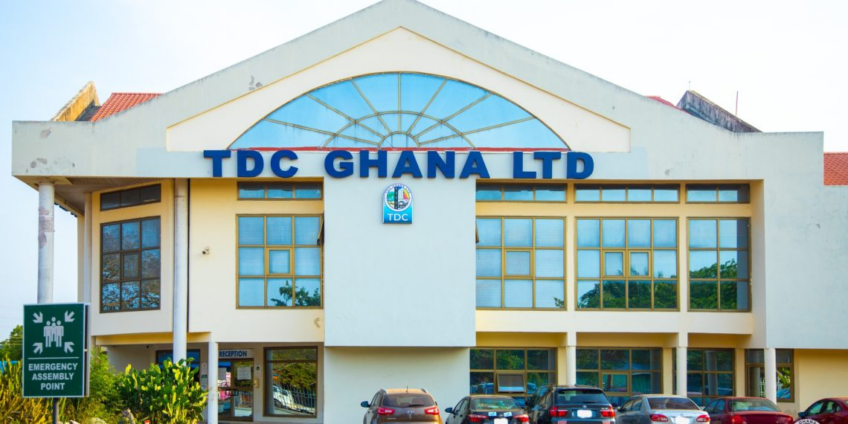
TDC Ghana Ltd has defended its legal authority to undertake development projects in Tema, insisting that its mandate to plan, lay out and develop the city predates the establishment of the Tema Metropolitan Assembly (TMA) and remains firmly grounded in law.
The clarification comes amid an ongoing dispute between TDC and the TMA over an infilling housing project at Community One, Site Three, which has generated public debate over planning approvals, land use and the respective roles of the two institutions.
In a statement, TDC argued that it should not be viewed as an ordinary private developer operating at the discretion of the Assembly, stressing that its role in the development of Tema is rooted in statutory provisions dating back more than seven decades.
According to the company, the Tema Development Corporation was established in 1952 under the Tema Development Corporation Ordinance as part of the government’s plan to develop the new Tema township and port.
It explained that approximately 63 square miles of land, later known as the Tema Acquisition Area, were compulsorily acquired by the state from the traditional authorities of Tema, Nungua and Kpone and placed under TDC’s management through a 125-year lease arrangement.
TDC stated that it was entrusted with the responsibility of planning, laying out and developing the township, leading to the transformation of Tema into an industrial and residential city. It noted that these functions were carried out under the Town and Country Planning Ordinance and subsequent amendments.
The company emphasised that the local government authority that later evolved into the Tema Metropolitan Assembly was established years after TDC had begun its work, arguing that the Assembly neither created nor granted TDC its development mandate.
Read Also: Mahama summons TDC, TMA officials over Community 1 Site 3 dispute.
Addressing the legal framework governing both institutions, TDC referred to the Tema Development Corporation (Amendment) Instrument, 1989 (L.I. 1468), saying the law transferred only certain municipal responsibilities such as the maintenance of roads, public buildings, markets, sewerage systems, parks and gardens to the Assembly.
It maintained that the amendment did not remove its central responsibility to plan, lay out and develop the Tema area, adding that it retained powers to execute housing schemes and develop industrial and commercial sites.
“TDC retained as its principal statutory object the responsibility to plan, lay out and develop the Tema area,” the statement said, arguing that municipal responsibilities assigned to the Assembly should not be interpreted as overriding or extinguishing the corporation’s development mandate.
The company further pointed to a history of collaboration between TDC and local assemblies, noting that a Joint Technical Evaluation Committee had previously been established to process development permit applications and address potential overlaps in responsibilities.
According to TDC, the arrangement recognised that both institutions have distinct but complementary mandates, requiring consultation and technical coordination rather than unilateral actions.
The company also highlighted reforms introduced in 2017 under the Statutory Corporations (Conversion to Companies) Act, which converted TDC into a limited liability company while preserving its original functions.
It said the conversion broadened its operational scope, enabling it to acquire land for real estate development and undertake the planning and construction of towns and cities both within and outside Ghana.
TDC maintained that its statutory role has been expanded rather than diminished over time and called for disputes relating to development activities within the Tema Acquisition Area to be addressed through cooperation, dialogue and mutual respect for the legal mandates of both institutions.
The statement comes ahead of a meeting convened by President John Dramani Mahama involving TDC, the Tema Metropolitan Assembly and relevant ministries to address concerns surrounding the Community One, Site Three project and determine the way forward.
Latest Stories
-
AMA completes road repairs on Kwame Nkrumah Avenue
2 minutes -
Law Students’ Network warns executive dominance could undermine constitutional review
5 minutes -
Mahama to meet relevant stakeholders over concerns about the new Customs Act
12 minutes -
CHASS demands a 20% increase in SHS funding and payment of outstanding debts
14 minutes -
Investigation launched after male body found in County Cork
16 minutes -
We have been scammed by NDC, government is only doing PR – Abanga Fuseini
17 minutes -
Tamale Teaching Hospital records 44 new breast cancer cases in six months
19 minutes -
GES declares October 30 CPD day for private school teachers; learners to observe holiday
19 minutes -
South Korea to support Ghana’s forts and castles restoration with $4.5m over five years
20 minutes -
School headscarf ban sparks rare protests in Azerbaijan and row with Turkey
28 minutes -
Ghana explores underwater sightseeing and shipwreck tourism
29 minutes -
Association of Women Lawyers calls for national sexual offenders register to protect school children
30 minutes -
Soaring commodity prices influenced our 2026 revised growth forecast of 5.7 % for Ghana – IMF
33 minutes -
Government urged to recruit more speech therapists to support children with language disorders
35 minutes -
Chef Abbys: Feeding 50,000 people, putting food security on Ghana’s agenda
1 hour