

Audio By Carbonatix
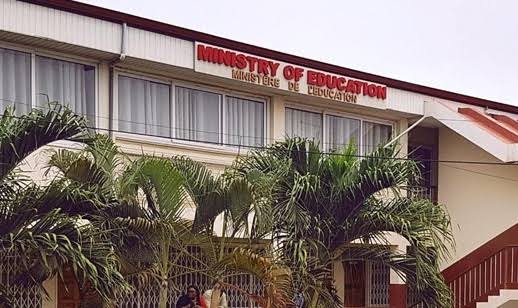
The Ministry of Education has dismissed claims that it is seeking to make Arabic a compulsory subject in Ghanaian schools, describing the reports as unfounded.
In a statement issued on Tuesday, August 11, the Ministry said there is no policy or directive to impose the study of Arabic on Ghanaian students.
“The Ministry wishes to state categorically that there is no policy or directive to impose the study of Arabic on Ghanaian students,” it said.
The clarification follows growing public discussion over the development of a standardised curriculum for the teaching and learning of Arabic in Ghana.
The Ministry also sought to separate the teaching of Arabic from religious instruction, stressing that Arabic is a language and should not be interpreted as an attempt to promote any particular faith.
“For the avoidance of doubt, Arabic is a language, not a religion,” the statement said.
“The teaching and learning of Arabic should therefore not be misconstrued as the promotion or imposition of any religious belief.”
The Ministry further clarified that the development of the standardised Arabic curriculum did not originate from the current Education Minister, Haruna Iddrisu.
According to the Ministry, the process began about four years ago with a revision of the curriculum at the senior high school level, before Mr Iddrisu assumed office.
“The Ministry further wishes to clarify that the process to develop a standardised curriculum for the teaching and learning of Arabic predates the appointment of Honourable Haruna Iddrisu as Minister for Education,” it said.
The Ministry explained that Arabic has been officially recognised as part of the primary school curriculum for decades, contributing to the establishment of English-Arabic and Islamic schools across the country.
However, it said Arabic instruction in those schools had historically taken place without a single officially approved curriculum, with individual schools developing and using their own materials.
The National Council for Curriculum and Assessment (NaCCA), as part of its mandate, subsequently developed a standardised Arabic language curriculum to provide a common framework for teaching the language.
The Ministry stressed that NaCCA’s recommendation for the adoption of the curriculum was intended primarily for existing English-Arabic and Islamic schools, as well as any other public primary school that may voluntarily choose to implement it.
“It was never meant to make the language a mandatory or compulsory subject in our primary schools,” the Ministry clarified.
It said hundreds of Islamic schools across Ghana already teach Arabic, largely in response to the educational and linguistic needs of the communities they serve.
The standardised curriculum, according to the Ministry, is therefore intended to improve structure, consistency and quality assurance in the teaching of Arabic rather than expand it as a compulsory subject.
The Ministry reiterated that Arabic remains optional for Ghanaian students generally.
“The development of a standardised curriculum does not amount to making Arabic compulsory for non-Muslim students, nor does it constitute an attempt to impose any religion on Ghanaian learners,” it stated.
“Indeed, Arabic, just like French or any other foreign language, apart from the English language, remains an optional subject in our public schools.”
The Ministry urged the public and media practitioners to verify claims about education policy through authoritative sources before circulating them.
It said misinformation on the issue could create unnecessary fear, misunderstanding and religious tension.
The clarification comes amid public debate over the place of Arabic in Ghana’s education system, with some critics raising concerns that the language could eventually be imposed on students who do not wish to study it.
The Ministry’s position is that the ongoing curriculum development is a standardisation exercise for schools that already teach Arabic or voluntarily choose to introduce it, and does not constitute a nationwide requirement for students.
Latest Stories
-
Ablakwa says Ghana could evacuate more citizens from South Africa if the situation worsens
11 minutes -
Violence against girls must be tackled through individual responsibility – Gender advocate
15 minutes -
Ghana’s BRICS bid must be guided by national interest – International Affairs Analyst
28 minutes -
Journalists look back on a decade of breast cancer reporting in Ghana
1 hour -
President Mahama ends Resetting Ghana tour of Ahafo Region
3 hours -
African negotiators seek delivery of climate commitments at COP31
3 hours -
BoG develops AI rules for financial sector
3 hours -
‘Big Push’: Government assures contractors of prompt payments
3 hours -
Court fines miner for breaking into gold buying shop
3 hours -
Tarkwa court jails labourer for three years over GH¢123,000 theft
4 hours -
GAEC must retain nuclear scientists for Ghana’s nuclear ambitions – Minister
5 hours -
Man reportedly mistaken for game and shot by hunter dead in forest
5 hours -
19-year-old mason jailed 15 years for defiling seven-year-old pupil
5 hours -
Ghana’s banking sector assets rise 20.47% to GH¢500.2bn – BoG Governor
5 hours -
22 injured as Sprinter bus overturns at Sege after tyre burst
5 hours