

Audio By Carbonatix
Bank of Ghana's new payment rule will ease the demand for dollars. A look at the trade data shows why it could also deepen a dependence Ghana can least afford.
Ghana's importers no longer have to hunt for US dollars to buy Chinese goods. Under a new Bank of Ghana policy, businesses can pay for goods from China directly in Chinese Yuan (RMB), and they can receive payments in Yuan too.
For any Ghanaian who has seen how a high dollar rate makes imports expensive, this looks like good news. But the trade data tells a more complicated story, and it starts with one uncomfortable fact: Ghana already buys far more from China than it can pay for with what it sells.
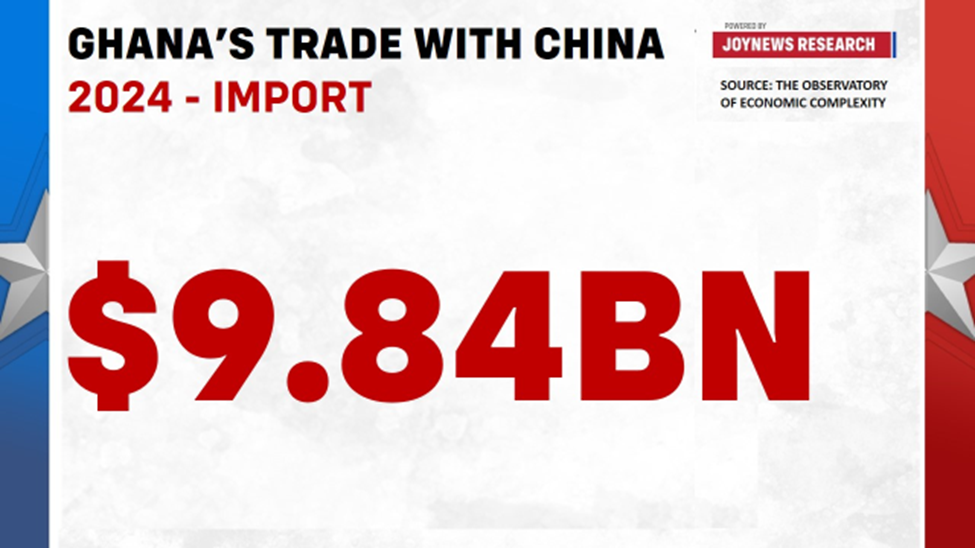
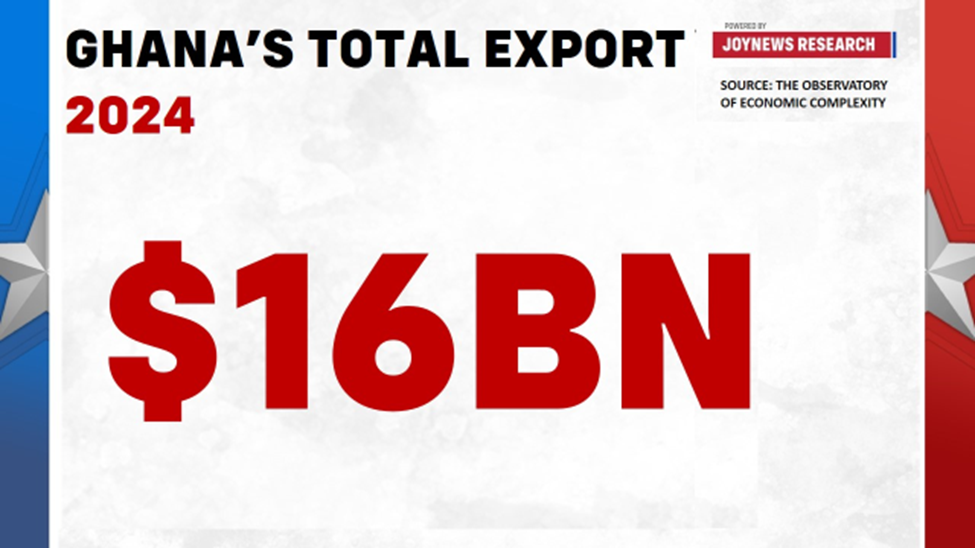
Over the past eight years, China has consistently been Ghana's largest source of imports. The most recent data, for 2024, shows that Ghana's import bill from China alone stood at $9.84 billion. This was equivalent to 61.5 percent of Ghana's total exports to all countries that year, which stood at $16 billion. This tells you that Ghana already depends heavily on China for its imports.
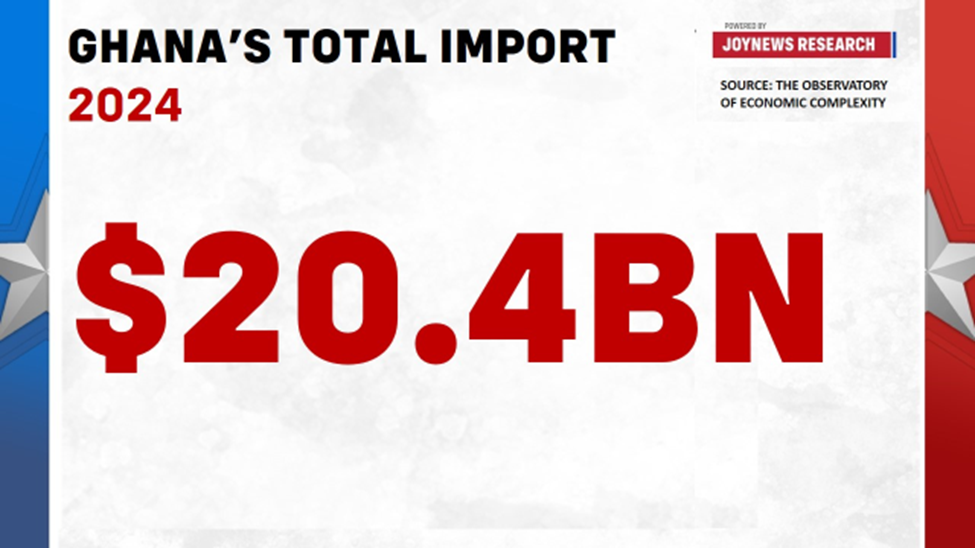
The picture gets sharper when you look at total imports. Ghana bought $20.4 billion worth of goods from the world in 2024. Chinese goods made up 48.2% of that, so almost one in every two dollars Ghana spends abroad goes to a single country.
Money does not flow back at the same pace. In 2024, Ghana sold only about $2 billion worth of goods to China. That means Ghana bought nearly five dollars' worth of Chinese products for every dollar it sold there. A gap this wide is not new. What is new is a policy that makes buying even easier.
The change works because of a Chinese payment network called the Cross-Border Interbank Payment System (CIPS). It launched on October 8, 2015, to clear and settle yuan payments across borders, and it has been built up steadily since.
Behind the network is a larger goal. Beijing wants the yuan to be used more widely around the world, and the system is a key tool for that. By 2015, the yuan had already become China's second-largest cross-border payment currency and the fourth-largest payment currency globally. For Ghana, joining this system means payments to China become faster and simpler. It also means Ghana's trade is wired more closely into China's financial infrastructure.
The upside is clear. If importers pay in Yuan, they need fewer dollars. That takes pressure off the dollar market, where supply has often fallen short of demand.
The risk is in what cheaper, easier payments encourage. When buying from China gets simpler, the incentive to buy rather than to produce gets stronger. Local manufacturers already compete against Chinese products that arrive in large volumes and often at low prices. Easier payment can widen that advantage. Over time, Ghana risks becoming a market for other countries' goods rather than a maker of its own, which would weaken local businesses and the country's wider capacity to produce.
The policy solves a payment problem. It does not solve a production problem, and the data shows the production problem is the bigger one.
If Ghana pairs the Yuan rule with real support for local manufacturers, such as cheaper financing, reliable power and a stronger push for exports, the dollar relief could give the economy room to grow. Without that, the likely result is simple: more imports, a wider trade gap, and a deeper dependence on one trading partner.
Latest Stories
-
Innovative Teachers threatens legal action over exclusion from Collective Bargaining Agreement negotiations
16 minutes -
17-member committee formed to address concerns over Adipa landfill
19 minutes -
Team Volta wins NPA 2026 Staff Welfare Week Quiz
31 minutes -
Team Eternity Ghana releases new album “The Promise – Phase 1”
35 minutes -
Inside the human genome: Why scientists are still discovering who we are
38 minutes -
PAC grills Central Regional Coordinating Council over GH¢14.9m payments processed outside GIFMIS
46 minutes -
Ghana’s industrial dream at risk? How the Yuan policy could deepen China dependence
47 minutes -
Teachers’ strike: Government has funds, but processes are causing delays – Education Committee Vice Chair
53 minutes -
Afenyo-Markin urges Christian Council to intervene over arrests linked to free speech
53 minutes -
GCB Bank urges MSMEs to formalise businesses for easier access to finance
54 minutes -
Criminal cases must be tried in ordinary courts – Prof. Oquaye opposes tribunals
55 minutes -
Ghana, India sign MoUs to deepen cooperation in agriculture, healthcare, railways and ICT
1 hour -
Pete Edochie becomes first Pan-African honouree of Ghana’s Legacy Project
1 hour -
GCB MSME Caravan Clinic unfolds in Accra, boosting support for Ghanaian small businesses
1 hour -
AMA urged to crack down on unauthorised billboards in Accra
1 hour