

Audio By Carbonatix
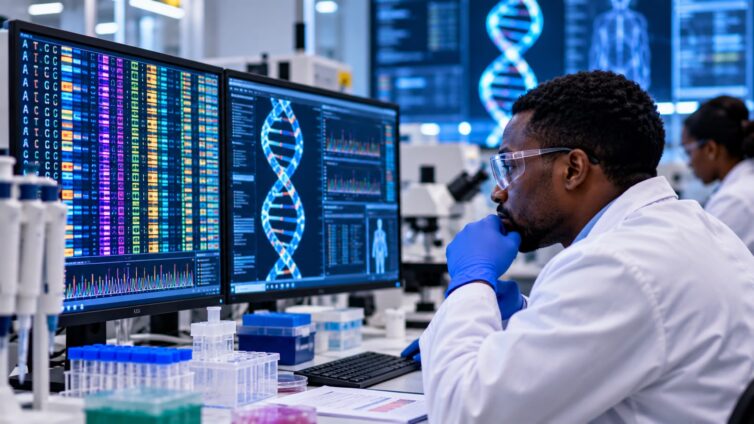
More than two decades after scientists announced the completion of the first human genome sequence, the human genome continues to yield new insights.
The Human Genome Project was a landmark achievement, but scientists soon realized that sequencing the genome was only the beginning.
The human genome contains billions of DNA bases, and understanding what they do and how differences between people affect health is an enormous scientific challenge.
Modern genomics is now moving beyond simply producing a reference sequence. Researchers are working to create a more complete picture of human genetic diversity by comparing the genomes of people from different ancestral backgrounds.
This matters because no single human genome represents everyone.
Genetic differences between populations can provide important information about disease, biological adaptation and responses to medicines. A more diverse understanding of the genome could therefore improve the accuracy of genetic research and medical applications.
The advances are particularly significant for people living with rare diseases.
Some patients spend years undergoing tests without a clear diagnosis. Genome sequencing can sometimes identify genetic variants that explain previously unexplained conditions, providing families with answers and helping doctors understand how to manage a disease.
But genomics is also raising new questions about privacy.
A person’s genome contains uniquely personal information, and some genetic information can also reveal clues about biological relatives. Protecting genomic data is therefore an increasingly important responsibility for researchers, hospitals and governments.
There is another challenge: representation.
If genomic research does not adequately represent global populations, the benefits of genomic medicine may be distributed unequally.
Scientists increasingly recognise that understanding humanity’s genetic diversity requires participation by communities around the world.
The next chapter of genomics will therefore not simply be about sequencing DNA more quickly.
It will be about understanding the enormous diversity of the human genome and ensuring that scientific discoveries benefit the people whose genetic information makes them possible.
The genome may be encoded in DNA, but people will shape its future.
Latest Stories
-
Aboboyaa Company Ltd CEO donates 5 tricycles to Ghana Prisons Service
4 minutes -
National Cathedral: ‘There’s no clarity as to what they want to use the site for’ – Afenyo-Markin on site’s future
6 minutes -
Investigators meet family, community over deaths of 3 children found in car trunk
7 minutes -
Teachers have legitimate concerns, but prolonged strike will affect pupils – Joseph Kumah
13 minutes -
Ahafo NHIA Beats 2025 Target to Secure Second Year of Universal Health Coverage
13 minutes -
Innovative Teachers threatens legal action over exclusion from Collective Bargaining Agreement negotiations
30 minutes -
17-member committee formed to address concerns over Adipa landfill
33 minutes -
Team Volta wins NPA 2026 Staff Welfare Week Quiz
45 minutes -
Team Eternity Ghana releases new album “The Promise – Phase 1”
49 minutes -
Inside the human genome: Why scientists are still discovering who we are
52 minutes -
PAC grills Central Regional Coordinating Council over GH¢14.9m payments processed outside GIFMIS
1 hour -
Ghana’s industrial dream at risk? How the Yuan policy could deepen China dependence
1 hour -
Teachers’ strike: Government has funds, but processes are causing delays – Education Committee Vice Chair
1 hour -
Afenyo-Markin urges Christian Council to intervene over arrests linked to free speech
1 hour -
GCB Bank urges MSMEs to formalise businesses for easier access to finance
1 hour