

Audio By Carbonatix
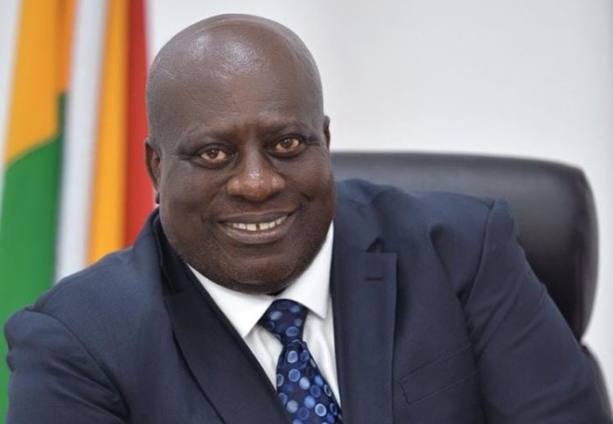
A former Chief Executive Officer for the Ghana Grid Company (GRIDCo), Jonathan Baah, says diversifying Ghana’s energy sources is one of the panaceas to the country's energy sector debts.
He said diversifying Ghana’s energy mix to include more renewable energy sources than thermal sources could reduce the cost of power generation, which is one of the major drivers of energy sector debt.
“Diversifying our energy mix to include more renewable energy sources such as solar, wind, and hydro can reduce reliance on expensive thermal power and enhance energy security. Investments in renewable energy should be accompanied by incentives and policies that can encourage private sector participation in generating electricity for the country,” he said.
Thermal generation accounts for the largest share of Ghana’s power generation, representing 66 per cent of Ghana’s thermal power generation, which is fuelled largely by natural gas but occasionally with light crude oil and diesel and 33 per cent of hydro.
The former CEO of GRIDCo said this during a training session organised by Energy News Africa to train journalists on the operations of the key players in the energy sector value chain.
Facilitators from the various departments and agencies in the energy sector took turns to educate the journalists on their duties and challenges.
Ing. Baah said delayed payments from government institutions and the high cost of producing power by the power generator also worsened the debt situation in the energy sector.
These challenges, he said, could be addressed through the implementation of cost-reflective tariffs that reflected the cost of the power generation and an effective payment schedule with the power generators, although such measures might face political challenges.
According to Edward Bawa, a member of the Energy Committee in parliament, the power sector is currently facing a $1.5 billion debt that the government is unable to pay.
Mr. Baah noted that technical losses through distribution losses by the Electricity Company of Ghana also occasioned the debt situation in the energy sector.
He said most of the infrastructure used in the distribution of electricity was old and inefficient, as it was installed as late as the 1960s.
He, however, advised the government to pursue strategic reforms and investments through enhancing and upgrading infrastructure and improving billing and metering systems to address technical and distribution losses.
Mr Baah also said effective management of the energy sector required strong government structures.
He emphasised that the strong government structure included a transparent regulatory framework and accountability mechanisms.
Latest Stories
-
Ghana struggles to raise local funds for delayed cocoa season as investors demand higher returns
10 minutes -
GSA delays laboratory equipment replacement despite available funds
31 minutes -
IERPP calls for withdrawal of proposed NPA Bill, raises concerns over BOST mandate
37 minutes -
We’re not demolishing Konkomba Yam Market – Accra Mayor dismisses Minority’s claims
43 minutes -
Nitiwul, Accra Mayor clash over Konkomba Yam Market demolition for 24-Hour-Economy market
52 minutes -
BoG urges digital asset businesses to build compliance into operations at Digital Assets Summit Africa
56 minutes -
NGIS Money Market Fund’s net assets rise 33.3% to GH¢11.78m
56 minutes -
Vaglas join Vughin to mark Dɛng Festival of Sonyor in Savannah Region
1 hour -
Ghanaian model Eligere Di Merrebel attends 2026 Venice Film Festival
1 hour -
“You can’t take our GH¢82m and run away to Nigeria” – Roads Minister fires Enchi–Elubo road contractor
1 hour -
GCB Bank unveils GH¢1m unsecured loans to boost business growth at Kumasi MSME Caravan
1 hour -
Education chanllenges: NPP not interested in gov’t failure, but we will hold them to account – Dr Kwabena Tandoh
2 hours -
Kristo Asafo Bompata branch members allege post-funeral attacks
2 hours -
‘Show up Friday or lose the contract’ – Roads Minister warns Top International over abandoned Enchi–Elubo road
2 hours -
Customs revenue jumps to $450m monthly since AI introduction
2 hours