

Audio By Carbonatix
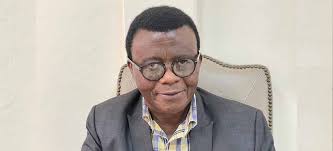
Former UN Senior Governance Advisor, Prof Baffour Agyeman-Duah, has called for a thorough reassessment of Africa's democratic systems.
He argues that the current form of democracy practiced in many African countries fails to deliver true independence and freedom, essential components of a genuine democracy.
In an interview with Joy News on Monday, Prof Agyeman-Duah reflected on the optimism that swept across Africa in the early 1990s following prolonged periods of dictatorship and military rule. “We were euphoric about the democratic changes that began in the early 90s, not just in Ghana but across the continent," he recalled. However, he noted that after three decades, significant challenges have emerged that require urgent attention.
“After 30 years of practicing democracy, we face serious challenges that need to be addressed. We must inject new energy and vigour into our democratic processes,” Prof Agyeman-Duah stated.
He stressed that while democracy is not a perfect form of government, it remains the best available option. Therefore, the focus should be on improving the practical aspects of democracy rather than questioning its principles. “The principles of democracy, such as liberty and freedom, are universally cherished. However, we need to rethink how we practice democracy in Africa,” he said.
Prof Agyeman-Duah pointed out that the practice of democracy in Africa has been undermined by both monetary and political corruption. “You have leadership that is insensitive to the people's needs; to certain critical development element that we need to address and you are not getting attention, “he explained.
He cited recent events in Kenya as an example, noting that many young people have grown disillusioned with their leaders, who they feel have compromised their future through reckless policies.
Looking ahead, Prof Agyeman-Duah urged Ghanaians to critically review their democratic practices by 2025 to ensure sustainable stability in the country.
He concluded by reflecting on the changing threats to democracy, “In the early 90s, we feared the military would be the main threat to democracy. Today, it is our political practices that pose the greatest risk.”
Latest Stories
-
‘Life Is Short’ gospel music hitmaker Bernice Offei dies at 63
31 minutes -
Ghana’s economy has moved from standing on broomsticks to concrete pillars – Mahama
43 minutes -
Systemic vulnerabilities within banking industry remain broadly subdued- BoG
44 minutes -
Ghana, Côte d’Ivoire’s export sectors face heightened risks due to El l Niño – Fitch Solutions
57 minutes -
Norway’s Princess Astrid dies two days after attending brother King Harald’s funeral
1 hour -
NCA awards 700MHz spectrum to MTN Ghana for US$109.9m
1 hour -
Saudi Arabia shuts key oil pipeline after drone attack launched from Iraq
1 hour -
Passenger train derails in France leaving at least 44 injured
1 hour -
Ukraine faces ‘toughest winter’ since Russia’s full-scale invasion, UN official tells BBC
1 hour -
Close race in Sweden as hard right eyes role in government
1 hour -
Adutwum’s spokesperson challenges Haruna’s claim he inherited current CSSPS
1 hour -
ECG’s problems are about management, not ordinary workers – TUC
2 hours -
Don’t wait for the floods to recede before going green – Prof Naana Jane
2 hours -
Big Chef Season 5: Final 10 face Omo Tuo Challenge
2 hours -
We won’t be at war with President Mahama; we need to sit up – GFA Communications Director
2 hours