

Audio By Carbonatix
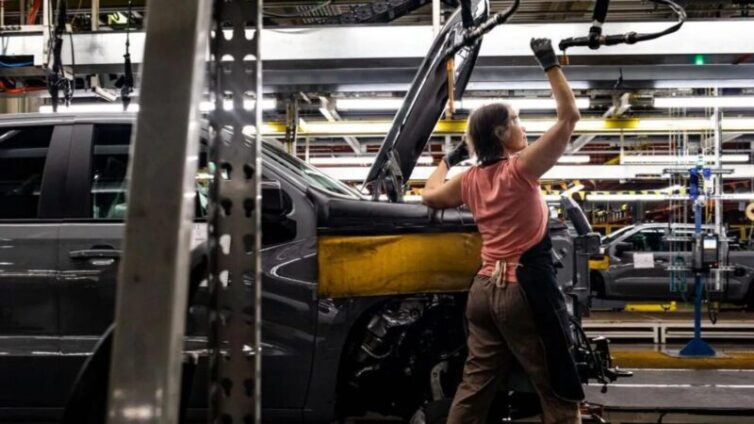
The US is planning to ban certain hardware and software made in China and Russia from cars, trucks and buses in the US due to security risks.
Officials said they were worried that the technology in question, used for autonomous driving and to connect cars to other networks could allow enemies to "remotely manipulate cars on American roads".
There is currently minimal use of Chinese or Russian-made software in American cars.
But Commerce Secretary Gina Raimondo said the plans were "targeted, proactive" steps to protect the US.
“Cars today have cameras, microphones, GPS tracking, and other technologies connected to the internet," she said in a statement.
"It doesn’t take much imagination to understand how a foreign adversary with access to this information could pose a serious risk to both our national security and the privacy of US citizens."
Chinese officials said the US was broadening "the concept of national security" to unfairly target Chinese firms.
“China opposes the US’s broadening of the concept of national security and the discriminatory actions taken against Chinese companies and products,” said Lin Jian, spokesman for China’s Foreign Ministry, in a statement.
“We urge the US side to respect market principles and provide an open, fair, transparent, and non-discriminatory business environment for Chinese enterprises.”
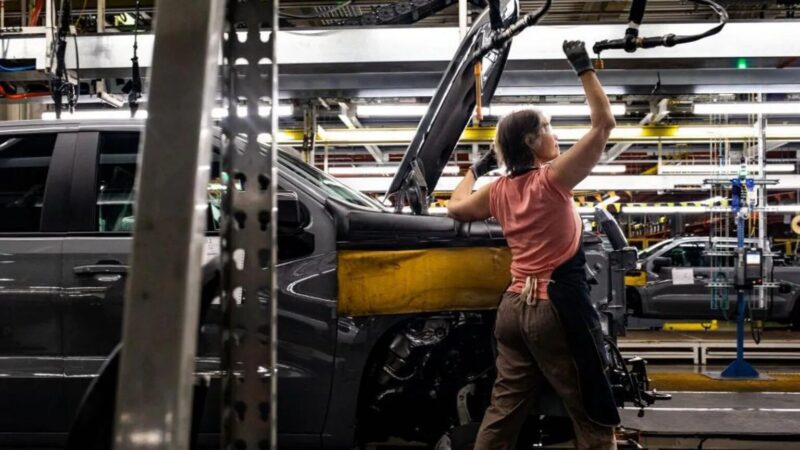
The proposal, which will now enter a comment period, is the latest from the White House aiming to limit China's presence in the car manufacturing supply chain.
The White House has also raised tariffs on electric cars, batteries for electric vehicle and a range of other items. It has separately banned the import of Chinese-made cargo cranes, warning of cyber-security risk.
The US launched an investigation in February examining the cyber risks from so-called connected cars.
The prohibitions on software would go into effect with model year 2027, while the hardware rules would be effective three years later, giving the industry more time to re-work their supply chains.
John Bozzella, president and chief executive of Alliance for Automotive Innovation, which represents big car companies, said that though there was "very little technology - hardware or software in today's connected vehicle supply chain that enters the US from China" the rule would force some firms to find new suppliers.
“I’ve said this in other contexts, but it applies here too: you can’t just flip a switch and change the world’s most complex supply chain overnight," he said.
“The lead time included in the proposed rule will allow some auto manufacturers to make the required transition but may be too short for others," he said.
He said the association would continue to share its perspective as the final rules are developed.
Latest Stories
-
Total expenditure as of July 2026 amounted to GH¢147.07bn, 16% below target – BoG
36 minutes -
Total revenue & grants stood at GH¢144.5bn in July 2026, slightly below target – BoG
52 minutes -
Ghana Sports Fund urges sports federations to submit credible proposals and measurable targets
56 minutes -
Sally Rooney books withdrawn in UK over Palestine Action support
1 hour -
Musk says US government may be behind slowdown of Ukraine drone speeds
1 hour -
Picking Chief Justices nearing retirement could give Mahama immense power – Bentil
1 hour -
Netflix to shed 1,000 jobs in steepest cuts since 2022
2 hours -
Burnham had two hospitality dinners with Man City chairman, deleted records show
2 hours -
Semenyo ‘froze’ after alleged racist abuse, court told
2 hours -
‘Shameless’ – Mourinho critical of Vinicius Jr ban timing
2 hours -
Loyalty can outweigh competence in Chief Justice selection – Bentil
2 hours -
Man City suffer as PSG masterclass sets up Champions League win
3 hours -
Customer Service Africa CEO urges business leaders to observe staff and customer interactions
3 hours -
On night of mayhem for Liverpool, Barcola arrives in style
3 hours -
Muzic Mensah finds healing and renewed love in new single ‘WayƐ Late’
3 hours