

Audio By Carbonatix
Children worldwide are more likely to experience poverty than adults, according to UNICEF. Child poverty is multidimensional, encompassing deprivation in areas such as shelter, nutrition, water, education, financial stability, and healthcare.
Since children lack the capacity to provide for themselves, UNICEF attributes child poverty largely to the circumstances of their parents, which are impacted by widening inequalities and rising global challenges such as security and environmental issues.
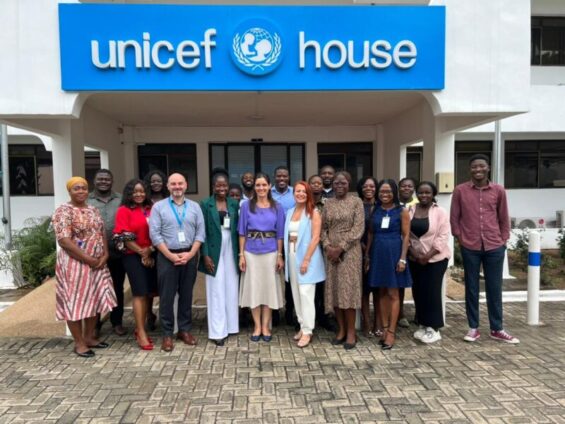
At a recent Media Café event marking International Day for the Eradication of Poverty, UNICEF Ghana's Chief of Social Policy and Inclusion, Paulina Mulhovo, revealed that around "28% of Ghanaian children are considered monetarily poor. Also, nearly three out of four children (73.4%) face multiple forms of deprivation simultaneously, while only a small fraction (2.5%) experience no deprivation at all."

These statistics underscore the depth of child poverty in Ghana and its far-reaching effects.
In an effort to address child poverty, UNICEF through its Social Policy and Inclusion Program partners is working with the Ghanaian government, including the Ministry of Finance, Ministry of Gender, Children and Social Protection, and other entities like CSOs, academia, CHRAJ, and Parliament.

On a global scale, countries like Brazil have led the way in G20 initiatives to eliminate poverty and hunger, supported by their strategic partnership with UNICEF.
Mariana Madeira, Brazil's Ambassador to Ghana, graced the media café to demonstrate her country’s commitment to tackling child poverty.
Madam Madeira emphasised Ghana's opportunity to achieve the goals of the Global Alliance Against Hunger and Poverty.

UNICEF believes that the severe consequences of child poverty can be mitigated if governments prioritize relevant policies and programs.
With policy measures such as cash transfers, health insurance, and other social protections, every child could have an equal chance at a better future.
Ending child poverty is, in UNICEF’s words, “a policy choice” that requires comprehensive, multidimensional action.
Latest Stories
-
GNFS contains fire outbreak at Teshie Lekma Road near Lekma Hospital
2 hours -
Samia Nkrumah rejects the narrative that Ghanaians were happy after Nkrumah’s overthrow
3 hours -
A Mother’s pain: Tribute by Ivan Baidoo’s mother
3 hours -
‘Forgive us for staying away’ — Samia Nkrumah leads family back to Nkroful, pledges to preserve Nkrumah’s legacy
4 hours -
Ernest Nuamah scores twice as Lyon beat Rennes
4 hours -
‘My dear Ivan’ – A father’s tribute to a son tragically killed
4 hours -
GNPC Explorco advances Voltaian Basin drilling preparations with 13.5km access road
4 hours -
Cabinet approves facility manager for Borteyman Sports Complex – Kofi Adams
5 hours -
Sanitation is improving; critics may be ‘living in another world’ – Salaga South MP replies Bekwai MP
5 hours -
Government must do more to tackle sanitation crisis – Bekwai MP
5 hours -
World Cleanup Day: GFF begins sanitation education in local communities
5 hours -
EU Ambassador, IGP discuss stronger cooperation on policing and security
5 hours -
Africa Nations Volleyball Championship: Ghana set up quarterfinal clash with Cameroon after beating Chad
6 hours -
Meet Dr Benjamin Appiah Osei — Ghana’s three-time tourism awards winner
6 hours -
UEFA & CONCACAF demand Fifa pays $10m to all 211 members
6 hours