

Audio By Carbonatix
As Ghana prepares for upcoming elections, debates about the nation’s electoral processes have intensified. Recently, the Electoral Commission (EC) decided to include Akua Donkor’s photo on the presidential ballot, sparking discussions on transparency, voter clarity, and efficient electoral processes.
This development has led to broader questions about whether Ghana’s current voting systems meet the needs of its growing democratic landscape and if a shift toward electronic voting could be the way forward.
Current Challenges in Ghana’s Voting System
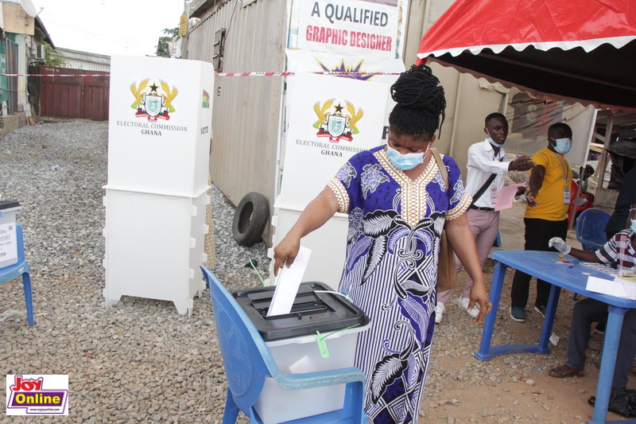
Ghana’s election process is largely manual, with ballots printed, verified, distributed to polling stations, and then counted by hand.
While reliable, this system is not without its limitations. Manual voting can result in logistical delays, security issues, and potential human error. Issues such as long queues, crowded polling stations, and time-consuming vote counting processes are common complaints.
The EC’s recent decision regarding candidate images on ballots also illustrates the difficulties of managing candidate representation and voter information in a manual system.
Despite notable improvements, such as biometric verification, Ghana’s voting process still falls short in efficiency and accessibility, especially as voter expectations rise in line with international standards.
The Benefits of Moving to Electronic Voting
Electronic voting (e-voting) could provide Ghana with a streamlined election process. E-voting allows for faster tallying, reduces human error, and simplifies logistical planning.
This system could also ensure fairer representation by reducing issues such as ballot spoilage, intimidation at polling stations, and proxy voting. With e-voting, inclusivity would improve by enabling remote access for citizens living abroad and in hard-to-reach areas.
Other nations, such as Brazil, India, and Estonia, have successfully adopted e-voting, despite initial challenges with infrastructure and cybersecurity.
For Ghana, transitioning to e-voting could start with a phased rollout, beginning with urban centers and gradually expanding.
Key Challenges in Implementing E-Voting
Despite its potential, implementing e-voting in Ghana would involve significant challenges:
- Infrastructure Needs: Establishing reliable electronic infrastructure, especially in rural regions, would be essential. While phased implementation could help, this step would require significant investment in technology and infrastructure.
- Cybersecurity Concerns: Protecting an electronic voting system from potential cyber threats would be a top priority. The government and EC would need to adopt strong encryption, data protection, and real-time monitoring to prevent fraud. Building public trust in the security of the system would be crucial.
- Public Education and Acceptance: Moving to e-voting would require a mindset shift for voters who are used to paper ballots. Education campaigns would be necessary to help Ghanaians understand and trust the system.
- Legal and Regulatory Framework: Comprehensive legal guidelines would be needed to ensure oversight, transparency, and accountability in an electronic system. Clear protocols for verification and recount procedures would also be critical.
Looking Ahead
E-voting holds promise for Ghana, aligning with its goals of modernizing electoral processes and improving efficiency. Implementing e-voting could streamline the election experience for Ghanaians, potentially reducing political tensions by making the process more transparent and accessible.
However, to make e-voting a reality, the EC and government must engage stakeholders and the public in thorough discussions to ensure an inclusive and well-prepared transition.
As Ghana looks to the future, exploring alternatives to the traditional voting system may be essential.
A well-planned shift to electronic voting could represent a meaningful evolution in Ghana’s democratic journey, but it will require thoughtful planning, rigorous testing, and public education to succeed.
Latest Stories
-
Road Minister tasks Arab Contractors to expedite Kumasi Outer Ring Road
3 minutes -
Media must strengthen fact-checking to fight information disorder – President’s Legal Advisor
5 minutes -
DVLA begins pilot of RFID-enabled number plates ahead of 2027 rollout
6 minutes -
There is more than one pathway to the future you want
13 minutes -
Government appeals to striking teachers to suspend action as FWSC talks resume
16 minutes -
Gender Ministry calls for greater industry support for women in TVET
20 minutes -
Mrs. Victoria Keren Lamiorkor Adomakoh (née Bright-Davies)
23 minutes -
WHO calls for targeted healthcare support for vulnerable communities in Upper East
26 minutes -
Man released on bail after 41 years on death row
26 minutes -
NADMO mobilises over 1,000 mattresses as relief efforts continue for Hohoe flood victims
30 minutes -
President Mahama courts diaspora investment, highlights Ghana’s economic and energy gains at UNGA – Town Hall
30 minutes -
Hohoe floods: Volta Regional Minister assures affected residents of government support
37 minutes -
Ablakwa assures Ghanaians in New York of stronger consular support and recognition of diaspora contributions
40 minutes -
Gender Ministry prepares officers to monitor LEAP payments nationwide
44 minutes -
AMA reminds drivers of yellow-plated vehicles to obtain commercial driver’s licences from Assembly
45 minutes