

Audio By Carbonatix
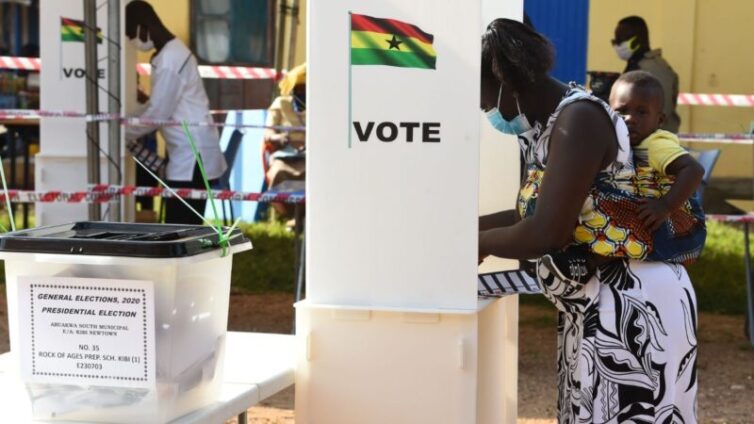
Contrary to common assumptions, the latest Afrobarometer report shows that Africa’s poorest citizens are more politically and civically engaged than the wealthy, and Ghana is no exception.
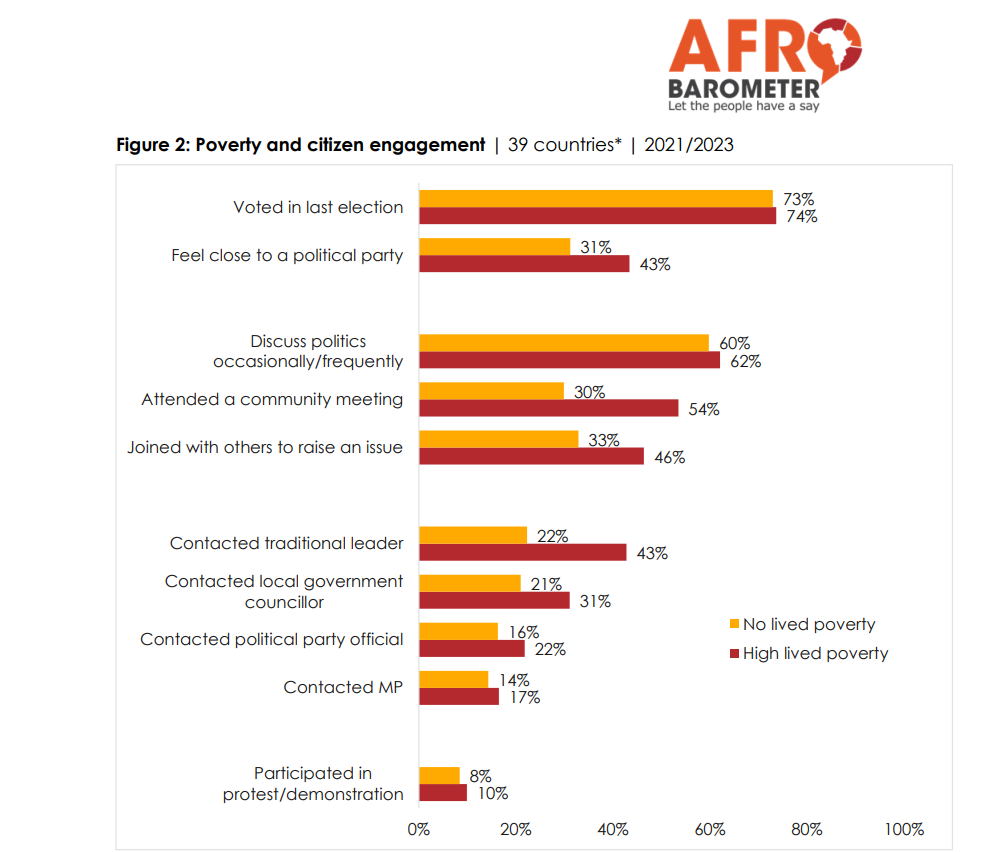
The 2025 flagship report – based on face-to-face interviews with over 53,000 people across the continent – found that people experiencing higher levels of poverty were more likely to attend community meetings, join others in raising issues, and contact local leaders than their better-off counterparts.
The findings suggest that economic hardship fuels political involvement, possibly as a form of advocacy for change.
In Ghana, respondents from poorer households reported greater engagement with traditional leaders, local councillors, and even political party officials.
“Those in communities with the greatest need are also the ones pushing for change,” said Josephine Appiah-Nyamekye Sanny, Director of Communications at Afrobarometer.
“This challenges the Global North's theory that civic participation is higher among the affluent.”
Interestingly, despite widespread urbanisation, rural and less educated citizens in Ghana were also more civically active, attending meetings and aligning with political movements more frequently than their urban, educated peers.
However, gender disparities persist. Women in Ghana and across Africa continue to engage at lower rates than men in nearly all forms of political and civic activity.
The Afrobarometer report also points to a paradox in elected leadership access. While citizens view local councillors as more responsive and accessible, Members of Parliament remain out of reach, a pattern consistent across the continent.
In terms of democratic engagement, the report finds that citizens who are satisfied with democracy and believe elections are free and fair are more likely to vote and participate constructively.
On the other hand, protest participation increases in countries where citizens lack confidence in the democratic process.
With Ghana facing similar trends, the Afrobarometer recommends increasing transparency, responsiveness, and grassroots engagement to maintain citizen trust and participation, especially among vulnerable groups.
Read the full report below:
Latest Stories
-
“US Embassy introduced TRIBE Culture Fest to NSA, GTA” – Kofi Adams
30 minutes -
“NSA did not tell us of any embassy arrangement” – Kofi Adams
53 minutes -
Glasner suffers loss on Selhurst return as Palace beat Forest
2 hours -
WAFU B U17: ‘We won but I expected more from my boys’ – Kassim Ocansey
3 hours -
Man City cruise to statement win over 10-man Liverpool
3 hours -
Be careful with cross-border lending, foreign currency exposures – BoG to financial institutions
5 hours -
GPL 2026/27: Medeama go three clear as Hearts of Oak recover and Bechem stage stunning comeback
5 hours -
Ntiamoah Foundation launches “BEYOND 20” anniversary campaign
6 hours -
Credit Risk Management Directive: BoG to begin implementation for banks, others from July 1, 2027
6 hours -
Ghana Brands Awards 2026: Leading brands, business trailblazers to shine on November 20
6 hours -
T-bills auction: Demand improves as government exceeds target by about 76%; interest rates soften
6 hours -
Ziope undertakes initiative to build a technologically inclined community, commissions self-help ICT lab
7 hours -
ECG announces power outage in parts of Tema, Central Region due to network fault, maintenance
7 hours -
When the Gospel Becomes a Weapon: The church, blackmail and the abuse of faith
7 hours -
JoyNews’ Jacqueline Ansomah Yeboah selected for UK Media Excellence for Emerging Technologies Fellowship
8 hours