

Audio By Carbonatix
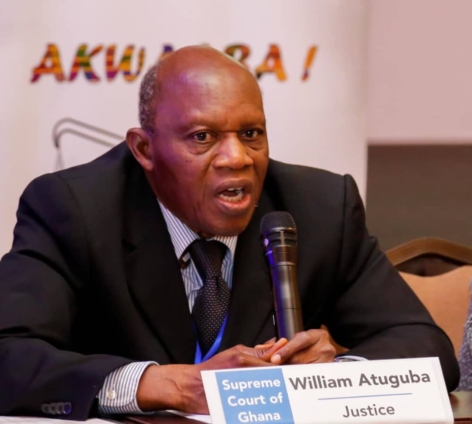
A former Justice of the Supreme Court of Ghana, who presided over the 2012 presidential election petition, Justice William Atuguba has identified the excessive influence of the executive over judicial appointments as a major threat to judicial independence and public trust in the resolution of electoral disputes in the country.
He noted that the perception of partisanship and political motivations in judicial appointments has created a "trust deficit" that urgently requires constitutional reforms to safeguard judicial independence and ensure democratic progress in Ghana.
Justice William Atuguba made these remarks during the Ghana Election Roundtable, organised by the pan-African think tank, the Africa Governance Centre, under the theme *“The Judiciary and Ghana’s Electoral Democracy.”*

The event brought together a distinguished panel of experts and activists from law, academia, and governance to deliberate on key issues surrounding electoral dispute adjudication in Ghana. Reflecting on his experience with the 2012 election petition, Justice Atuguba highlighted how scrutiny over which the President appointed each justice led to misplaced expectations about the hearing's trajectory and outcome.
Professor Ernest Kofi Abotsi, Dean of the UPSA Law School, echoed Justice Atuguba’s concerns, arguing that executive control over judicial appointments fundamentally undermines the judiciary's independence.
He remarked, "In people’s minds, once the President appoints the Chief Justice and key members of the Supreme Court, it becomes an executive judiciary."
Professor Abotsi proposed adopting systems from other jurisdictions to reduce executive influence and called for merit-based appointments focused on integrity to restore public confidence in the judiciary.
Doug Coltart, a Zimbabwean lawyer and human rights advocate, added international context by drawing parallels with Zimbabwe’s judicial system.
He recounted how judges in Zimbabwe were allegedly incentivised with unbudgeted financial benefits tied to election outcomes.
"In Zimbabwe, just months before the 2023 elections, judges were given unbudgeted $400,000 loans with no repayment terms, undermining public confidence in their independence," Coltart said. He warned of the long-term harm caused by such practices, stating that politically driven judicial appointments erode trust not only in the judiciary but also in democracy itself.
Meanwhile, Justice Sir Dennis Dominic Adjei, a Judge of the Court of Appeal in Ghana and the African Court of Human and Peoples’ Rights, underscored the judiciary’s internal responsibility to uphold impartiality.
He stressed, “Judges must always remind themselves of their judicial oath—to perform their duties without fear, favour, or ill will.”
While acknowledging the need for structural reforms, Justice Adjei argued that judges must prioritise their ethical obligations regardless of the appointing authority, ensuring fairness and justice in their rulings.
Latest Stories
-
Scrap 15% priority placement quota for SHS admissions – GNAPS
17 minutes -
IFC Managing Director Makhtar Diop to visit Ghana for investment talks
24 minutes -
GPRTU opposes auctioning broken-down vehicles after 21 days
50 minutes -
Nigerian Goodnews Aina crowned J30 Accra champion as Ghana’s Gwendolyn Duvor Klu retires in final
3 hours -
WACCE urges gov’t to declare state of emergency in galamsey-prone areas
3 hours -
NACOC boss calls for practical cross-border action against drug trafficking
4 hours -
Ghana calls for stronger regional cooperation to combat drug trafficking
4 hours -
Ablakwa presents bicycles to 100 North Tongu day students
4 hours -
Ablakwa supports 2,269 North Tongu SHS students with essential items
4 hours -
Dr Bawumia expresses sympathy with farmers over their inability to sell their produce even at reduced prices
4 hours -
Constitutional review: Govt must keep discussions open – Dr Tandoh
4 hours -
GPL 2026/27: David Gyamfi hat-trick fires Ashantigold to historic first victory
4 hours -
Ericsson celebrates 150 years of global innovation, 30 years of partnership and digital transformation in Ghana
5 hours -
Ghana’s Ambassador to Serbia hosts African ambassadors’ September meeting in Belgrade
5 hours -
Ghana closer to terrorism threat than ever before – WACCE
5 hours