

Audio By Carbonatix
Former President Nana Addo Dankwa Akufo-Addo has acknowledged that economic difficulties and persistent public protests during his tenure played a key role in diminishing his government’s popularity.
He admitted that the economic downturn, exacerbated by global challenges, fuelled widespread dissatisfaction among Ghanaians, leading to increased public demonstrations.
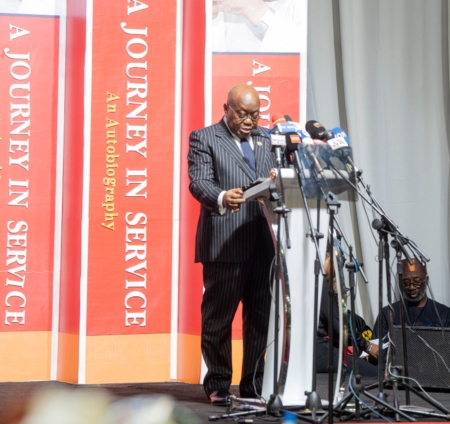
Speaking at the launch of a book by former Nigerian Military President, General Ibrahim Babangida, Akufo-Addo reflected on the economic turbulence that defined his presidency, particularly during the COVID-19 pandemic.
He noted that the crisis severely affected Ghana’s financial stability, limiting the government’s ability to sustain economic growth and meet public expectations.
Akufo-Addo conceded that the economic strain led to nationwide protests, with citizens expressing frustration over rising costs of living and policy decisions.
While he acknowledged that these demonstrations were not as severe as the Structural Adjustment Programme (SAP) riots that swept through Ghana and other African nations in the 1980s, he admitted that they were significant enough to weaken public confidence in his administration.
“We faced a major economic crisis and, with the world’s capital markets closed to us, we ended up going to the IMF. Not an easy decision to make. The economic difficulties brought people onto the streets,” he stated.
He further explained that his government had few options to navigate the crisis due to the limited accessibility of international capital markets.
As a result, the administration was ultimately compelled to seek financial assistance from the International Monetary Fund (IMF) to stabilise the economy.
“Even though the demonstrations were not on the scale of the SAP riots described in the book, they were serious enough, feeding into the growing disaffection against the government,” he noted.
Mr Akufo-Addo maintained that while the global economic downturn posed significant challenges, his government took difficult but necessary measures to restore economic stability.
He stressed that the long-term impact of those decisions would be evident in Ghana’s economic trajectory, urging future leaders to learn from the experience and prioritise policies that foster resilience in times of global uncertainty.
Latest Stories
-
Parrott scores again as Betis beat 10-man Lille
2 hours -
Mbappe goes joint-fifth in the list as real Madrid beat Inter Milan
2 hours -
Police arrest suspects over murder, bank robberies, gold-related attacks
2 hours -
Pragyia rider gets three months prison term for biting Police Assistant
2 hours -
Palm wine tapper jailed for stabbing farmer
2 hours -
Travel and tour agent remanded over GH¢107,000 recruitment scam
2 hours -
Taxi rank executives arrested over alleged attempted murder
3 hours -
Galamsey operator who posed as pastor to defile student jailed 15 years
3 hours -
Court sentences pub owner, shop attendant for selling expired food, sanitary offences
3 hours -
Mac Allister ‘sad’ at no Liverpool contract offer
3 hours -
Ghana pays $3.5m to University of Memphis over scholarship debt
3 hours -
Fidelity Bank champions value chain approach to unlock Ghana’s agricultural potential
4 hours -
People don’t remember style of play – GFA Comms Director defends Quieroz appointment
4 hours -
Finance Ministry needs ‘refresher course’ in own records over GES recruitment – Adutwum’s spokesperson
4 hours -
Techiman 24-hour market project on course as Regional Minister inspects work, hails construction quality
4 hours