

Audio By Carbonatix
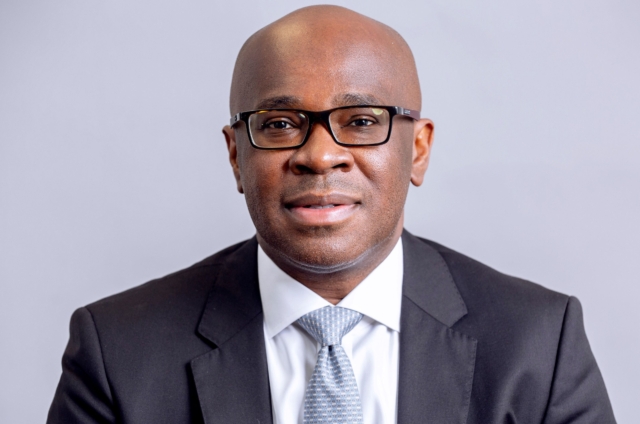
President of the Ghana Association of Banks, Kwamina Asomaning, has dismissed the notion that higher compensation is the key to eliminating fraud in the banking sector.
He argues that while pay structures in the industry can always be improved, financial crime is more deeply rooted in personal values and institutional culture rather than salary levels.
Speaking on PM Express Business Edition on Joy News on Thursday, the Managing Director of Stanbic Bank Ghana noted that banking professionals are among the most privileged in Ghana’s workforce.
Yet, instances of misconduct have not necessarily been driven by financial hardship but rather ethical lapses.
“I think in the context of our economic situation, we must all admit—those of us in the banking sector admit—that we’re very privileged to have so many of the opportunities that we have.
"Yes, there might be issues with compensation at particular levels or with a few institutions, but broadly, I find that the levels of compensation in the sector are not bad. They are decent,” he explained.
He challenged the assumption that financial crimes in banks are predominantly committed by lower-paid staff.
“It will surprise you that in the instances where we have found staff to have misconducted themselves, it is not the most vulnerable, the least paid staff who have done so,” Mr Asomaning revealed.
“And so I’m not convinced that higher levels of compensation would address that.”
Instead, he emphasised the moral and ethical upbringing of banking professionals, both within their personal lives and within the institutions that employ them.
“I think it’s just the moral fabric of the individuals we’ve attracted, or how we grow them, and what sort of values we’re instilling in them. We just have to take responsibility.
"Obviously, the society in which we operate plays a role, but once they come within our domain, we have a responsibility to instil in them good values and good character,” he stressed.
Beyond compensation, Mr Asomaning also addressed the high-pressure targets that banks set for their employees.
He acknowledged that while targets can be tough, they are necessary for maintaining the profitability and sustainability of financial institutions.
“The targets are tough. I mean, banks are not non-governmental organizations. They are profit-making entities, and we get compensated at a level that ensures that you know, we not only put something on the table for ourselves but return decent profits to our shareholders,” he stated.
While admitting that banking is a high-stakes industry, he urged financial institutions to strike a balance between setting ambitious goals and ensuring that work environments do not push employees toward unethical behavior.
“Yes, it’s a tough environment. It’s not for everybody. And I just would hope that there’ll be a decent balance between ensuring that everyone has targets to keep us focused and ensuring that we’re returning profits that are commensurate with the capital that has been given to us as stewards.
"But at the same time, it’s important to make sure that the lifestyle that we bring people to lead is a balanced one and doesn’t encourage excessive risk-taking or generate misconduct issues,” Asomaning advised.
His remarks come at a time when financial institutions in Ghana are grappling with increased cases of fraud, including internal breaches by employees.
His comments reinforce the need for banks to prioritize ethical training, corporate values, and robust oversight mechanisms rather than assuming that financial incentives alone can prevent fraud.
Latest Stories
-
Dolly Parton laid to rest alongside husband in Nashville
1 minute -
Accra Mall celebrates Legends Reimagined with Weekend Vibes this September
1 minute -
Barcola joins Liverpool from PSG in £123m move
5 minutes -
Tibule Advertising marks ‘Gong Gong Awards’ debut with a win for indomie
8 minutes -
Nurturing market-ready solutions that create jobs: KIC AgriTech Challenge Pro teams first pitch commenced
11 minutes -
Teacher unions to call off planned strike after engagement with Education Minister
17 minutes -
EPA more than triples accumulated fund to GH¢375m in a single year under Prof. Browne Klutse – SIGA
24 minutes -
Imaging professionals trained on Ghana’s first paediatric cancer imaging protocol
30 minutes -
‘Bawumia will become President whether NDC likes it or not’ – Amin Adam
31 minutes -
Financial irregularities in some state institutions drop significantly to GHC 7.69 billion in 2025 – Nyarko Ampem
32 minutes -
Shalom Shotokan Karate-do celebrates students at Karate grading ceremony
33 minutes -
Gov’t challenges ABL’s claim that beer tax changes threaten 2,000 jobs
56 minutes -
Ghana’s small businesses don’t have a marketing problem. They have a capacity problem.
1 hour -
GNFS intensifies fire safety campaigns across Eastern Region
1 hour -
One dead and more than a dozen missing after ‘terrifying’ flash flood hits Grand Canyon
1 hour