

Audio By Carbonatix
Security Lecturer at the Kofi Annan International Peacekeeping Training Centre, Dr Victor Doke, has expressed deep concern about recent attacks on some police personnel in the volatile town of Bawku in the Upper East region.
In an interview on Joy FM's Middaynews on Thursday, April 10, he suggested that the attack was a clear sign of serious mistrust between the people and the security agencies deployed in the conflict-prone area.
This, he explained, is because the people believe that their operations may be skewed to support one faction of the conflict — a development he says is dangerous for peace-building efforts.
“The people who do not trust the security services in Bawku may have observed or concluded that the security forces are engaging in activities they perceive to be supporting one side of the conflict. And this will not be tolerated,” Dr Doke explained.
“The attack on state security is an indication of strong mistrust. And this is very critical. It’s very, very dangerous when the security personnel, who are supposed to protect lives and enforce the law, face such distrust from the very people they are supposed to protect,” Dr Doke added.
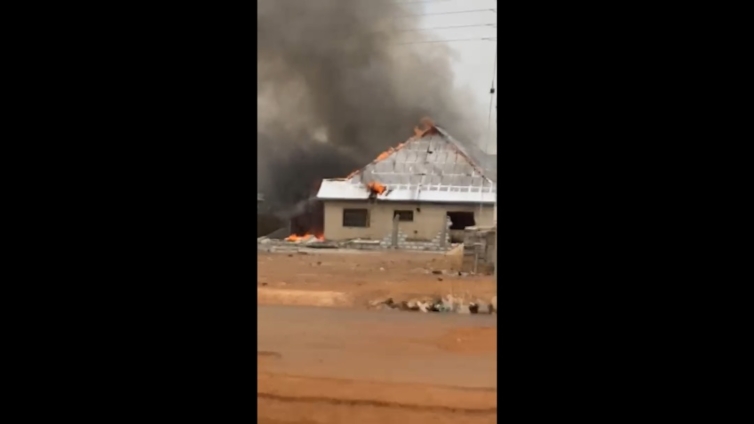
This follows the latest surge in violence in Bawku, where renewed clashes on Wednesday afternoon led to the death of one person and the setting ablaze of the private residence of the Bawku Divisional Police Commander, ACP Adamu Seidu, in the Upper East Region.
He noted that while security agencies may be undertaking peacekeeping efforts in the area, the perception of bias — whether real or imagined — is damaging the credibility of the state’s peace mission.
He added that such a situation points to entrenched positions among the youth in Bawku, making the search for lasting peace even more difficult.
“To achieve peace, you need trust among all stakeholders — and this includes the security apparatus. Without that trust, peace efforts are almost impossible,” he emphasised.
Dr Doke suggested that while current security measures like curfews, patrols, and an increased presence of personnel may help manage violence in the short term, sustainable peace will require a different approach.
He proposed that peace-building activities should not solely be left to security agencies, but must involve neutral state institutions like the National Peace Council or civil society organisations.
“For activities aimed at fostering coexistence between the factions, it is critical that these initiatives are led by neutral bodies. If the security agencies take the lead without transparency and trust, the youth may read ill motives into their actions,” he warned.
Dr Doke called for enhanced collaboration between security agencies and all stakeholders, especially the grassroots, to rebuild trust in the Bawku area.
Latest Stories
-
Power restoration fault suspected in Kumasi Central Market fire
5 hours -
The 7-foot giant of Ngleshie Amanfro: Seven-foot Ghanaian Ephraim Saawa dreams of joining the national basketball team
5 hours -
Government promises support for Kumasi Central Market fire victims
5 hours -
Vibes The Movie: Big Ghun’s Ghanaian film earns five nominations at 2026 REFFA
6 hours -
MamaCare CEO warns unresolved conflicts among health workers could undermine maternal and neonatal care
6 hours -
Health professionals urged to translate medical knowledge into practice to save mothers
6 hours -
Retired judge Justice Francis Korbieh charges 1,568 new lawyers to uphold integrity
8 hours -
Conflicts among care providers linked to maternal, neonatal deaths – Expert
8 hours -
GIS marks 10th TIME conference, champions improved teaching practices
8 hours -
BRICS Or Balance? What Ghana’s bid really means
9 hours -
GPRTU wants full TRAFFITECH-GH implementation to start in 2027
9 hours -
How 10-mile walks for basic education birthed a 50-year legal career for Justice Korbieh
9 hours -
Mahama announces plans to import electric wheelchairs for PWDs
9 hours -
KGL U17 Colts 2026: Western beat Prempeh Elite Academy to set up final final with Greater Accra Region
9 hours -
Late Solanke strike salvages 10-man Spurs draw at Man United
9 hours