

Audio By Carbonatix
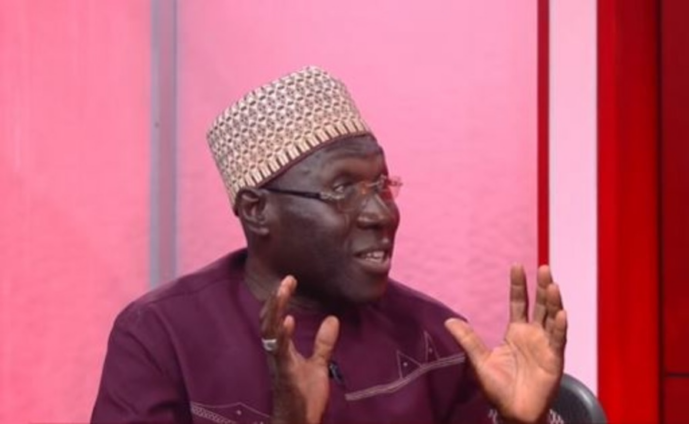
Former Member of Parliament for Tamale Central, Inusah Fuseini, has argued that Ghana’s four-year presidential term is sufficient to ensure accountability, citing the political trajectory of former President John Dramani Mahama as clear evidence.
Speaking on JoyNews’ Newsfile on Saturday, December 27, Mr Fuseini said the existing constitutional arrangement allows voters adequate opportunity to assess leadership performance and make informed electoral decisions.
“I think four years is enough to hold our elected representatives accountable, and John Dramani Mahama has demonstrated that clearly in this term of his presidency,” he said.
His comments come amid renewed national debate following proposals by the Constitution Review Committee (CRC) to extend the presidential term from four to five years.
The CRC, chaired by Professor H. Kwasi Prempeh, recently presented a summary of its findings to President John Dramani Mahama. Among its recommendations is a proposal to lengthen the presidential term, with the committee arguing that a five-year mandate could enhance policy continuity, deepen reforms, and improve overall governance stability.
According to the committee, frequent elections under the four-year cycle often compress the effective governing period, as administrations spend significant time transitioning into office and preparing for re-election.
Professor Prempeh has clarified that the document presented to the President was only a summary report, stressing that the full and final report — containing detailed reasoning and public consultation outcomes — will be released in January.
The CRC has maintained that its proposals are not intended to weaken democratic accountability but to strengthen institutions and improve the efficiency of governance, while remaining within Ghana’s constitutional and democratic framework.
However, Mr Fuseini’s remarks underscore concerns shared by critics of term extensions, who argue that shorter mandates keep leaders more responsive to citizens and prevent the concentration of power.
The debate over term length has featured prominently in public discourse, with proponents highlighting development planning and policy continuity, while opponents insist that electoral oversight every four years remains a critical safeguard for Ghana’s democracy.
As discussions continue, the CRC’s final report is expected to shape broader national consultations on whether constitutional amendments are necessary to recalibrate the balance between stability and accountability in Ghana’s governance system.
Latest Stories
-
Hawa Koomson pledges experienced and mature leadership of NPP women’s wing
29 minutes -
Young woman found dead at Kasoa Peace Town
1 hour -
Playback: The Law examined lawful arrest in Ghana
1 hour -
Mahama urges African governments to treat healthcare as an investment, not budget cost
2 hours -
Bawumia congratulates John Boadu and new NPP executives, pledges support ahead of 2028
2 hours -
‘No talent should be left out’ – Bawumia pledges inclusive NPP campaign for 2028
2 hours -
Prof. Mike Oquaye recounts how he blocked the Special Prosecutor’s attempt to arrest Bawku Central MP
2 hours -
Make health sovereignty a priority for Africa – Mahama
3 hours -
Dorimon Naa, Wa West DCE lead massive clean-up exercise; threaten sanctions against recalcitrant residents
3 hours -
Photos from Adom FM Y2K Jam
3 hours -
Praye Tiatia steals the show at Adom FM Y2K Jam [Watch]
3 hours -
Boakye Agyarko congratulates John Boadu, pledges support for NPP leadership
3 hours -
Antwi HiMight thrills fans with Antwi ne Antwi hits at Adom FM’s Y2K Jam [Video]
3 hours -
Amb. Edward Boateng congratulates Boadu, Kodua on election wins
4 hours -
John Boadu pledges to rebuild NPP from grassroots and restore ‘winning machinery’
4 hours