

Audio By Carbonatix
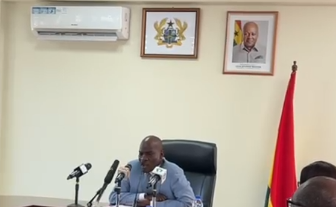
The Minister for Education, Haruna Iddrisu, has proposed that Ghana consider a ten-year transition period, after which no private university will be allowed to operate in the country without a charter.
According to the Ghana Tertiary Education Commission (GTEC), only twenty-four private tertiary institutions in the country have been granted a charter.
Addressing the GTEC during the inauguration of the Commission, Haruna Iddrisu acknowledged the regulatory autonomy of the Commission but suggested that private universities must gradually be brought under stricter regulatory oversight.
"I have no power to interfere with your regulatory regime," he said. "There is strong demand from private universities, and they are awaiting my position on this matter. However, I don’t want to go against regulatory principles and values."
He continued, "The issue of compulsory charters should be looked at by your Commission. Even though it is not the intention of the Ministry or government to interfere with your regulatory mandate, questions have been raised as to whether the charter should be compulsory. As I consider your determination, I also want to remind private universities that they cannot remain independent forever. At some point, they must accept the need for regulatory guidance and support."
He further explained that, while this is not yet official policy, he believes a solution should be worked out, where every private university is given a moratorium, while still adhering to the current regulatory framework.
"Today is 2025, and Ghana will follow a roadmap that, in the next decade, as I have suggested, no private university will be allowed to operate without a charter. Between now and then, subject to those who qualify and are issued permits, the rest should prepare accordingly. In fact, we will likely need to work on strengthening their faculties as well".
He concluded by reaffirming his support for the Commission, stressing that "standards and quality should never be compromised in the name of affiliation with another institution."
"We are satisfied with the exercise of the regulatory mandate so far, but we must find a way to regulate those private universities."
Ultimately, we must ask ourselves how we can ensure access to higher education for all Ghanaians," he concluded.
Latest Stories
-
Ghana concludes evacuation of citizens from South Africa; total returnees reach 1,900 – Ablakwa
6 minutes -
Africa must define its own green transition path – Prof Fatima Denton
29 minutes -
WASSCE 2026: English Language performance falls to 62.4% – WAEC
52 minutes -
WASSCE 2026: Social Studies records sharp rebound as Maths, Science also improve
1 hour -
2026 WASSCE entry rises by 11% as 512,862 candidates sit exams
1 hour -
WASSCE 2026: English Language performance falls to 62.4% – WAEC
1 hour -
WAEC cancels 2026 WASSCE results of 8,295 candidates over examination irregularities
2 hours -
WAEC releases provisional 2026 WASSCE results for 512,862 candidates
2 hours -
CJ’s remarks on SOEs were made in good faith, not to undermine judicial independence – Judicial Service
5 hours -
Bright Future Alliance pays courtesy call on Akufo-Addo, invites him to African Leaders of Influence Lectureship Series
5 hours -
This is an attempt to break the Minority caucus – Patricia Appiagyei on alleged GH¢70k payment
6 hours -
‘OSP hasn’t contacted me’ – Patricia Appiagyei assures cooperation if invited
6 hours -
I find it strange that this memo was purportedly written by me – Patricia Appiagyei
6 hours -
Ayariga calls for stronger church partnership to tackle sanitation, environmental challenges
6 hours -
I don’t think we have an industry – Patchbay Band manager
7 hours