

Audio By Carbonatix
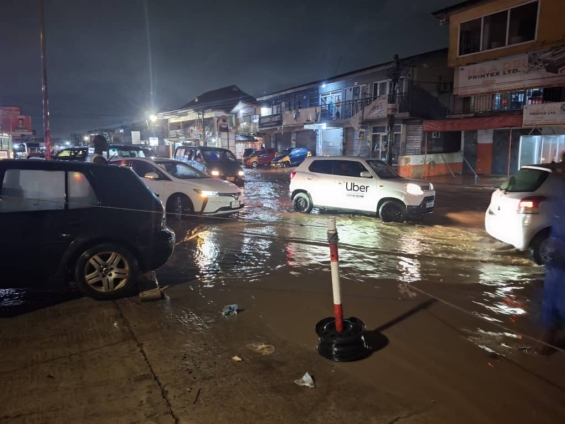
The devastating floods that submerged large parts of Accra on May 18 have reignited calls for Ghana to operationalise a long-planned parametric flood insurance scheme designed specifically to protect urban areas like the capital.
After hours of relentless rainfall, major roads were transformed into rivers, homes inundated, and hundreds of families displaced.
The aftermath–stranded commuters, flooded schools, and destroyed livelihoods-was all too familiar for a city that has long grappled with flooding.
Experts say this latest disaster could have had a far less damaging impact had Ghana activated a ready-to-launch flood insurance mechanism tailored to Accra’s vulnerability.
The scheme, developed since 2022 in partnership with the United Nations Development Programme’s Insurance and Risk Finance Facility (IRFF), the Insurance Development Forum (IDF), and Germany’s Federal Ministry for Economic Cooperation and Development (GIZ), is built to respond rapidly to such disasters.
Under the proposed parametric insurance model, payouts are triggered automatically when rainfall or flood levels exceed pre-defined thresholds, without the need for post-disaster damage assessments.
Within 7 to 10 days, emergency funds would be released, enabling authorities to launch immediate relief and recovery operations.
“This is not a concept — it’s a complete, ready-to-deploy solution,” said UNDP Ghana’s Specialist in Insurance and Risk Finance.
“Had it been in place, emergency funds could have already supported displaced families with shelter and food, cleared blocked drains, assisted informal traders, and begun repairs to schools, roads, and clinics.”
A contingency plan prepared by the National Disaster Management Organisation (NADMO) is already aligned with the insurance model, ensuring swift deployment of resources during crises.
In addition, the Insurance Resilience Solutions Fund (ISF) has committed up to USD 2 million in premium support over three years, reducing the cost burden on Ghana.
Despite these promising foundations, the scheme remains dormant.
UNDP Ghana is now urging swift action from key stakeholders — including the Ministry of Finance, NADMO, the National Insurance Commission, metropolitan authorities, and development partners — to:
Accept the ISF premium support and sign implementation agreements.
Embed the insurance mechanism into city-level and national disaster response plans.
Use Accra as a pilot to scale the model to other flood-prone cities like Kumasi, Takoradi, and Tamale.
Raise public awareness of insurance as a vital tool for disaster risk financing, not a luxury.
Ghana has faced catastrophic floods before, most notably the June 3, 2015, flood and fire disaster that claimed over 150 lives.
Yet the country continues to rely heavily on reactive disaster management rather than proactive resilience-building.
“The May 2025 floods should be the turning point,” UNDP emphasised.
“We cannot afford to keep rebuilding after every storm.
We must protect before the next one hits.”
With climate change intensifying the frequency and severity of extreme weather events, Accra and other urban centres are increasingly vulnerable.
But the tools to respond effectively already exist — what is needed now is the political will and coordinated action to use them.
Let May 2025 be remembered not as another missed opportunity, but as the moment Ghana moved from planning to protection.
Latest Stories
-
“NSA did not tell us of any embassy arrangement” – Kofi Adams
9 minutes -
Glasner suffers loss on Selhurst return as Palace beat Forest
2 hours -
WAFU B U17: ‘We won but I expected more from my boys’ – Kassim Ocansey
2 hours -
Man City cruise to statement win over 10-man Liverpool
2 hours -
Be careful with cross-border lending, foreign currency exposures – BoG to financial institutions
4 hours -
GPL 2026/27: Medeama go three clear as Hearts of Oak recover and Bechem stage stunning comeback
4 hours -
Ntiamoah Foundation launches “BEYOND 20” anniversary campaign
5 hours -
Credit Risk Management Directive: BoG to begin implementation for banks, others from July 1, 2027
5 hours -
Ghana Brands Awards 2026: Leading brands, business trailblazers to shine on November 20
5 hours -
T-bills auction: Demand improves as government exceeds target by about 76%; interest rates soften
5 hours -
Ziope undertakes initiative to build a technologically inclined community, commissions self-help ICT lab
6 hours -
ECG announces power outage in parts of Tema, Central Region due to network fault, maintenance
6 hours -
When the Gospel Becomes a Weapon: The church, blackmail and the abuse of faith
7 hours -
JoyNews’ Jacqueline Ansomah Yeboah selected for UK Media Excellence for Emerging Technologies Fellowship
7 hours -
Mental Health Alliance urges government to operationalise Mental Health Fund
7 hours