

Audio By Carbonatix
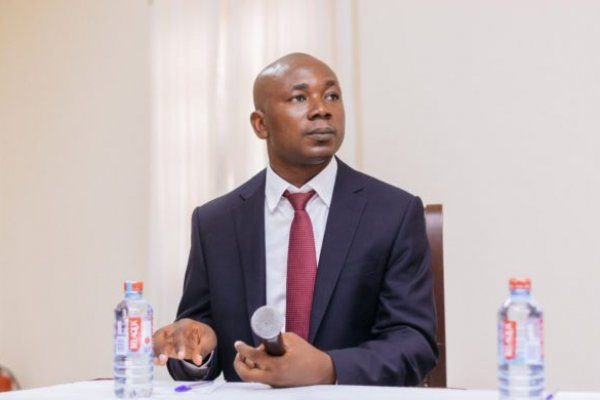
Economist and Professor of Finance at the University of Ghana, Godfred Bokpin, has described stabilising the cedi between GH₵10 and GH₵12 as the right path for Ghana’s economy, emphasising the need for predictability over sudden fluctuations.
Speaking on Joy FM’s Super Morning Show during a discussion on cedi value Prof. Bokpin noted that the Central Bank had long aimed to manage the exchange rate, even though it was not initially communicated to the public.
“I have indicated much earlier that the central bank was targeting the exchange rate. They didn’t want to communicate that to the market at the initial stage, so it was not just a more recent meeting where they decided on it. They knew largely where they were heading to,” he explained.
He added that the recent appreciation of the cedi was not entirely due to natural market forces but also a result of direct interventions.
“That is why we said that what we witnessed in terms of the strengthening of the local currency was not just the forces of demand and supply. There were some interventions to cause the strengthening,” he said.
Prof. Bokpin argued that the pace of appreciation was too aggressive, making it difficult for businesses and the broader economy to adjust effectively.
“We were confirmed that the rate of facilitation was too aggressive to enable planning and the entire economy to adjust to the strengthening of the currency. And to that extent, you could not describe that as stability. That was more of a disruption. The disruption could cause negative or positive effects, and it was very difficult for people to play along or even plan. It was quite unsettling,” he added.
He revealed that some stakeholders had already anticipated that the cedi would eventually settle around GH₵10, give or take, as early as a month prior. For him, the key going forward is to ensure genuine and lasting stability.
“It’s also good that there’s now some level of clarity that yes, we need to stabilise beyond the aggressive strengthening. We need to stabilise it. Stability is preferred over swings whether appreciation or depreciation. It’s neither good for businesses nor for central banking in the first place,” he said.
Prof. Bokpin also clarified that economic stability does not imply a fixed exchange rate, but rather predictable and moderate variations.
“Of course, we also do know that stability in economics is not the same as the same price or fixed price over time. We still expect that there will be some kind of variation in the rate, but it should not be significant enough to cause disruptions or uncertainty when it comes to planning,” he noted.
He cautioned against celebrating the cedi’s recent strengthening too quickly, pointing out that it came with trade-offs for both the private sector and government.
Latest Stories
-
Ofori-Sarpong named Alumni President of the Year, honoured for PRESEC dormitory project
34 minutes -
Germany commits $132m to Ghana for skills development and training university – Pelpuo
35 minutes -
‘Influence should go beyond visibility’ – Taadi Banyinba GH launches The TB Impact
40 minutes -
Videos: Government announces emergency LEAP package for Hohoe flood victims
44 minutes -
Salomey Baffoe’s children are crying for their mother – Family appeals for her release
46 minutes -
Shortage of trained investigators and prosecutors hampers Ghana’s fight against money laundering – Report
46 minutes -
GoldBod generates US$1.87bn in September FX operations, exceeding monthly target
47 minutes -
Roads Minister says it is time to change one-year defect liability period for contractors, consultants
47 minutes -
Nana Asamoah takes Highlife across five West African languages
54 minutes -
UNICEF Ghana launches first Children’s Film Festival to amplify children’s voices
59 minutes -
Ghana must close gaps that allow drug trafficking – Dr Pelpuo
1 hour -
Emmanuel Osei: President Mahama, dissolve GFA and save our soul
1 hour -
Uganda Airlines to launch direct Accra-Entebbe flights from October 27
1 hour -
Ghana records surge in 2025 tourism receipts as Ahafo Region honors top industry players
1 hour -
I don’t have an official car, I use my own – Pelpuo
2 hours