


Audio By Carbonatix
Every morning, tens of thousands of riders in Africa wake up with the same goal: to move. To deliver food. To transport laboratory samples. To carry goods across cities that never rest. But what we often forget is that they aren’t just moving people and parcels. They’re moving economies. They’re moving communities forward.
And increasingly, they’re doing it, quietly, cleanly, on electric vehicles.
But for the EV transition to work at scale in Africa, it must work for them. It must work on their terms and within their realities. That’s why battery swapping isn’t a convenience. It’s a lifeline.
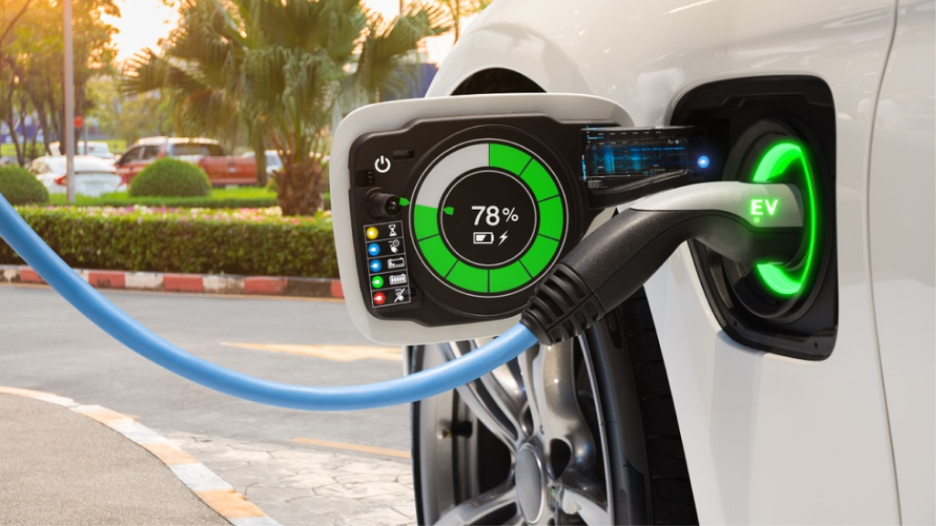
The Hidden Cost of Plug-in Charging
Let’s be honest: the traditional EV model wasn’t built with African cities in mind.
The long charging times.
The dependence on a weak grid.
The lack of space.
The high cost of hardware.
For a rider earning by the hour, every minute spent charging is money lost.
When grid outages or fuel scarcity hit, the entire system slows, except the people who still need care, food, and transport.
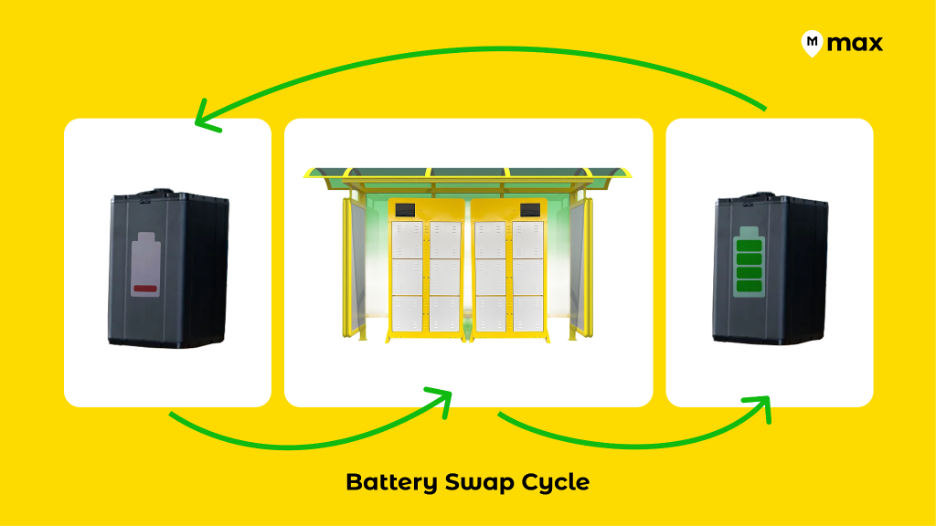
Battery Swapping: Designed for Real Life
At MAX, we didn’t just deploy EVs—we spent time with the people who use them. What we heard was clear:
“I want to make more profit for my business.”
“The rising price of fuel is affecting my business.”
"I can’t afford to spend long hours charging batteries.”
So we listened. And we built a system around those voices. With a growing number of battery swap stations across Nigeria, riders can now exchange a depleted battery for a full one in under 3 minutes.
More than 20,000 swaps later, we’re seeing the real-world impact—not in data, but in people.
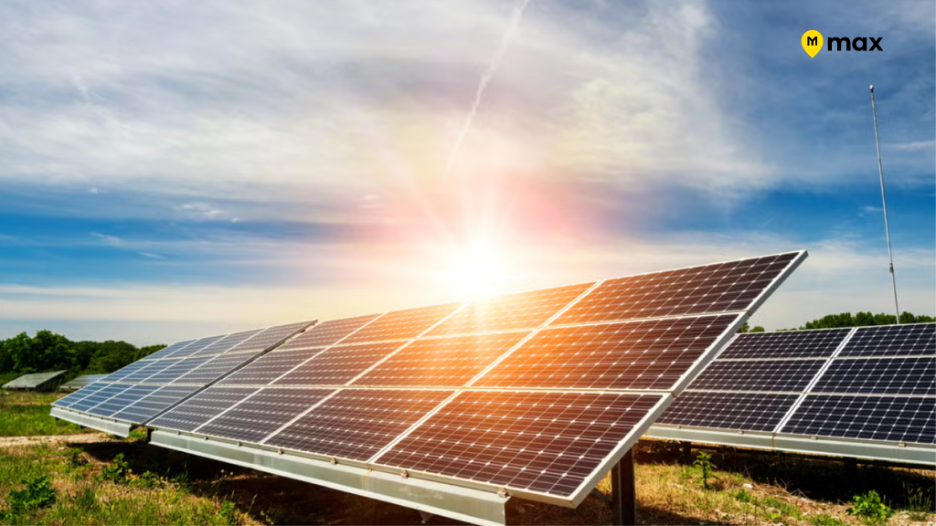
Powering It All with the Sun
In places where grid power is unreliable—or nonexistent—we've turned to the one thing Africa has in abundance: sunlight.
Our solar-powered swap stations aren’t just energy solutions. They’re justice in action.
They bring clean, decentralised power to the informal workers often excluded from modern infrastructure.
Across our cities, we’re proving that climate solutions don’t have to wait on perfect conditions. They just need to be built for the people who need them most.
What We’ve Learned
This is what real inclusion looks like: Dignity through uptime. Riders don’t lose income waiting to charge.
- Access over ownership. No credit history? No problem. Pay as you earn.
- Clean energy without the cost. Solar reduces both emissions and expenses.
- Trust above all. Every swap station is a promise: your next ride is ready.
What Needs to Happen Now
Battery swapping works. But it needs support:
- Finance that includes the informal sector
- Policies that prioritise people, not prestige projects
- Duty waivers and incentives for two- and three-wheelers
- Partnerships that bring scale without losing the soul
This is where climate meets humanity.
Where infrastructure meets dignity.
And where innovation finally puts people at the centre.
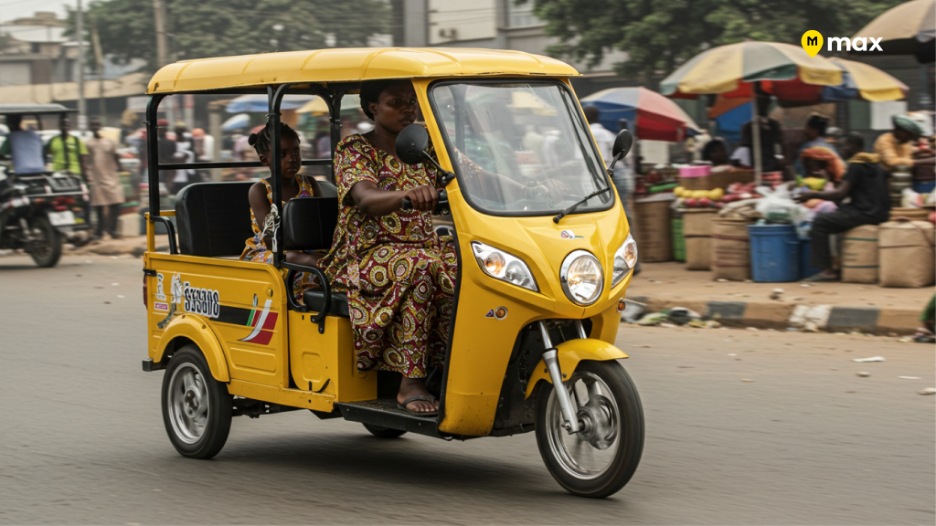
Riding Towards The Future
Imagine a delivery bike rider in Lagos who no longer queues for fuel, significantly improving his delivery timelines. A mother in Abuja who can use an electric tricycle to move her ill child to the hospital in spite of the fuel scarcity.
A farmer in Accra who sends her produce to market daily, on a solar-powered EV she doesn’t even own.
That’s not the future. That’s today. And with battery swapping, it’s spreading.
At MAX, we’re not just moving vehicles. We’re moving people forward—with clean energy, flexible tools, and radical inclusion.
The EV revolution can work in Africa. But only if it works for everyone.
Latest Stories
-
Xbox boss ‘thinking about affordability’ of next-gen console
8 minutes -
How Dolly Parton’s business savvy helped her succeed far beyond the charts
1 hour -
Unexpected chat between OpenAI agents led to Hugging Face hack
1 hour -
Williams sisters given US Open doubles wildcard
3 hours -
Gold Refining Costs: Small-Scale miners say Ghana must prioritise jobs and value addition
3 hours -
Look beyond the losses – Small-scale miners say gold refinery could cut youth unemployment
4 hours -
GoldBod must bear the cost – Small-scale miners back higher operational costs to protect jobs
4 hours -
Liverpool to face Tottenham in EFL Cup third round
4 hours -
‘0% chance’ – Atletico hit back at Barca over Alvarez transfer row
4 hours -
Villa close to £65m move for Chelsea’s Jackson
5 hours -
Savio scores on debut as Spurs bounce back to beat Charlton
5 hours -
Uefa to push to remove Infantino after dropping boycott
5 hours -
GH¢1.7bn GoldBod loss misconstrued – IEA
5 hours -
Mahama unveils Bawku Revitalisation Fund Committee
5 hours -
Christians urged not to hide their gifts for church development
5 hours