

Audio By Carbonatix
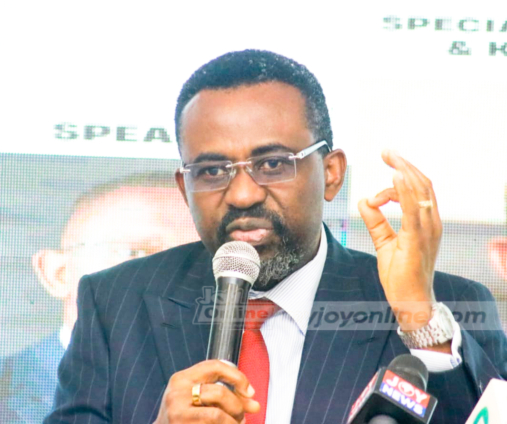
Bank of Ghana (BoG) Governor, Dr Johnson Asiama, has justified the Central Bank’s recent regulatory guidelines on the importation and exportation of foreign currencies, as well as rules on pricing and advertising in dollars.
He explained that the directives are not new but part of the Bank’s renewed effort to strictly enforce existing Foreign Exchange and Anti-Money Laundering regulations.
“These are not new issues, but the difference now is that we are closing the gaps, tightening oversight, and enforcing discipline,” Dr. Asiama told Joy Business.
The Governor noted that some businesses have criticised the guidelines as harsh, but argued that the practices being targeted undermine the strength of the cedi.
“I want to assure you that the Bank of Ghana and other agencies like the Ministry of Finance are acting firmly to tackle them,” he added.
Background
On August 27, 2025, the BoG announced amendments to its guidelines on the importation and exportation of foreign currency.
The Bank emphasised that the directive aligns with global Anti-Money Laundering standards.
It reminded travellers that carrying more than $10,000 (or its equivalent in other foreign currencies and monetary instruments) without declaration is prohibited.
The Bank also reiterated that unlicensed forex dealings, black market transactions, pricing or advertising in foreign currencies, issuing receipts, or making and receiving payments in dollars within Ghana are strictly banned under the Foreign Exchange Act, 2006 (Act 723).
Unauthorised Foreign Transactions
Dr. Asiama disclosed that rules on cash declarations at borders have been tightened to align with global best practices.
“We are re-enforcing a long-forgotten rule that travellers must complete foreign exchange declaration forms for amounts above $10,000, and large amounts exceeding $50,000,” he explained.
He also revealed that an interagency task force is investigating the misuse of import declaration forms, with several culprits already confessing to misconduct.
“Those who exploit the loopholes, whether offshoring, feeding the black market, or filing fake imports, will face firm sanctions,” he stressed.
On large corporate foreign exchange withdrawals, the Governor said new restrictions were necessary to correct market distortions.
He emphasised that companies are expected to use traceable, electronic settlement channels rather than bulk cash.
According to him, some of the bulk withdrawals from the banking system were being diverted to the black market in “millions of dollars weekly.”
He assured that the Bank of Ghana is shutting down such practices to stabilise the market.
Latest Stories
-
Ghana’s BRICS move requires clear strategy to manage risks – Godfred Bokpin
1 minute -
Pay teachers realistic income – Duncan Amoah to gov’t
17 minutes -
Bechem to become chicken capital of Ghana – Mahama projects
19 minutes -
Gov’t targets recruitment of 16,500 health professionals in 2026
40 minutes -
Two-week strike will not derail academic calendar – GNAT President
55 minutes -
Headmaster detained after BBC investigation into alleged sexual abuse of students
1 hour -
GNAT pushes for clear implementation procedures of teachers’ conditions of service
1 hour -
Recurrent strikes threaten quality of education and academic calendars – Prof Bokpin
1 hour -
‘Cockroach’ group leaders among hundreds detained in Delhi protest
2 hours -
Don’t let speed of information become your judgement – CJ tells new lawyers
2 hours -
World Cup visa scandal: People have leveraged public office to facilitate fraud – Senyo Hosi
2 hours -
Glut! Farmers count losses as prices crash, customers happy
3 hours -
GSA postpones auction of unserviceable vehicles
3 hours -
Man charged with attempted murder after stabbing
3 hours -
World Cup visa scandal: Senyo Hosi says issue goes beyond calls for Sports Minister’s resignation
3 hours