

Audio By Carbonatix
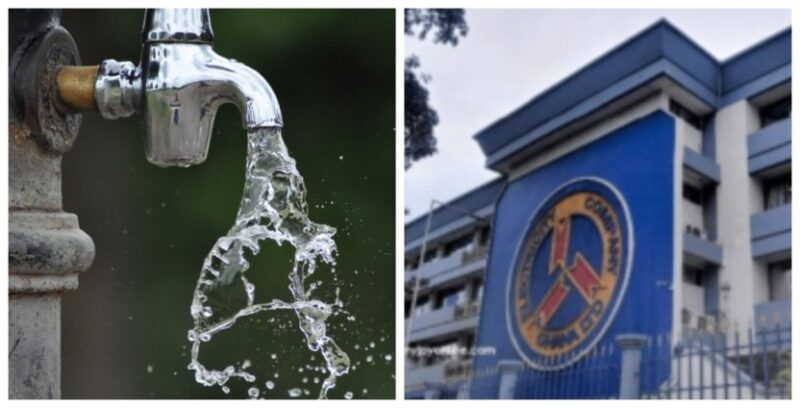
The Electricity Company of Ghana (ECG) and Ghana Water Limited are under intense pressure after three business associations launched a scathing attack.
Three associations, including the Food and Beverages Association (FBA) and Ghana Union of Traders Association (GUTA) and Ghana Plastic Manufacturers' Association, described the companies as "leaking baskets" plagued by waste and inefficiency and are demanding immediate reforms under the government's reset agenda.
The associations are petitioning the President to launch an Executive Reform Agenda committee within 30 days to tackle challenges such as technical and commercial losses, revenue collection, and other operational shortcomings.
They want the committee’s work anchored to key performance indicators enforced by a presidential task force.
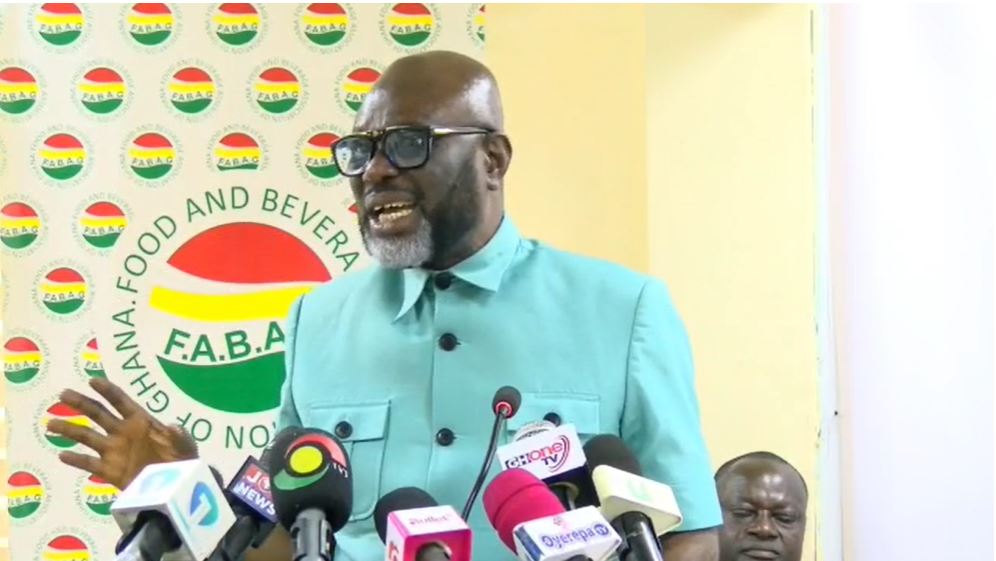
President of the Food and Beverages Association, John Awuni,urged the President to “Let the reset agenda that his excellency sold to Ghanaians and which we bought kick start at the ECG and the Ghana Water Company respectively."
“The Auditor-General’s reports over the years, together with data from the Energy Commission of Ghana, reveal that ECG in particular is bleeding money through inefficiency, corruption, and waste. We therefore, ladies and gentlemen of the press, call on His Excellency the President — and hereby petition him — to launch an executive reform agenda anchored on measurable key performance indicators, to be enforced by a Presidential Task Force,” he added.
The group also slammed the companies’ proposed tariff increases of 225% for ECG and 280% for Ghana Water, saying it is unreasonable for monopolistic utility companies to be incurring losses year after year.
Mr Awuni said members are not willing to pay higher tariffs to companies “riddled with waste and corruption.”
“We are hereby warning that approving new tariff hikes for utilities, especially the ECG and the Ghana water company, without deep reforms, would be a profound injustice to the businesses and households of Ghana,” he warned.
President of GUTA, Joseph Obeng, noted that Ghanaian traders struggle to export goods because of the country’s high utility rates and warned that the government’s 24-Hour Economy initiative could fail if the utility situation is not addressed.
According to him, the earlier these issues are dissected, the better for the economy and its industrialization.
“We don’t have to continue to increase and increase while businesses suffer. It does not make us competitive,” he lamented
Latest Stories
-
Government has improved sanitation in one-and-a-half years — Salaga South MP
2 hours -
Nkwanta North Assembly to appear before Parliament over DACF sanitation spending
3 hours -
Mourinho prints out ‘red card’ incidents after Real lose derby
3 hours -
Atletico beat 10-man Real in feisty Madrid derby
3 hours -
Twelve Tribes of Israel Ghana to mark 40 years with anniversary celebration
4 hours -
GPL 2026/27: Hearts held by Bechem as Kotoko, Samartex share spoils
4 hours -
My Story (Kwaku Antwi-Boasiako)
4 hours -
We expect growth rate to re-accelerate in second-half of 2026 – IC Insights
4 hours -
The ungodliness and unrighteousness underlying the National Cathedral mess!
4 hours -
T-bills auction: Government fails to achieve target; yield on 91-day-bill remains unchanged
4 hours -
It’s Ghana’s shame to denigrate Nkrumah when the whole world honours him as African of the Century – Asiedu Nketiah
5 hours -
No other nationalist can compare to Nkrumah – Asiedu Nketiah
5 hours -
Collateral Registry: Foreign banks accounted for GH¢19.9bn of secured credit in quarter 2, 2026
5 hours -
This government should expect scrutiny – Asiedu Nketiah
5 hours -
Two-year-old girl dies in domestic fire at Cantonments
6 hours