

Audio By Carbonatix
King Charles and Pope Leo made history in the Sistine Chapel by praying side by side - a first for the leaders of the Church of England and Catholic Church.
Under the scrutinising eyes of Michelangelo's Last Judgment, when Pope Leo said "let us pray", it meant everyone, including the King, closing a gap that stretched back to the Reformation in the 16th Century.
With music and prayers about nature that would bridge any theological divide, the service offered the King and Queen some calm amid scrutiny over Prince Andrew during their Vatican visit.
But despite the significance of the state visit, there was no escaping the media - with questions about Andrew's links to sex offender Jeffrey Epstein that show no sign of abating.
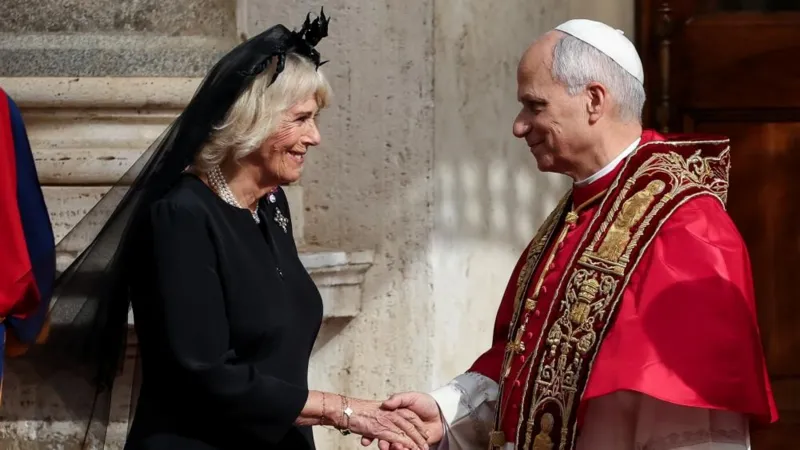
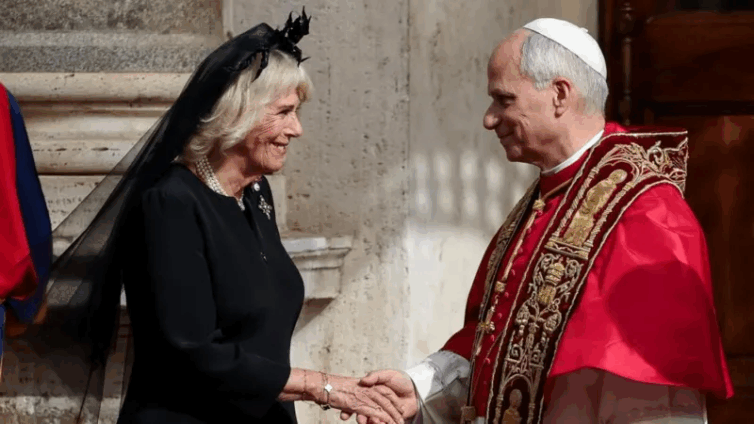
Even here, as he met the Pope inside the Vatican, the King commented that the cameras were a "constant hazard".
Rather laconically the Pope said: "You get used to it", as he too has faced a rapid lesson in the unrelenting attention that comes with such a high-profile role, although it still seems a surprise to hear a Pope speaking in such relaxed American tones.
There might be irritation at the media during such moments, but without the press such state visits wouldn't really exist.
It's all about big images for the media to capture, because no members of the public are allowed past the security barriers to watch.
It's the intruding lenses of the cameras and the words rushed out for news websites that give such moments shape and impact. Otherwise they could do a state visit on Zoom.

There were many such elegantly choreographed moments in this whistle-stop visit to the Vatican, a city state where every corner could be a postcard, creaking under the weight of its own history and architectural splendour.
In the Sistine Chapel the Catholic and Anglican choirs literally sang from the same hymn sheet. The images of harmony and unity were there in abundance. Once hostile churches were now the closest friends.
Surrounded by Renaissance masterpieces, this was a meeting in one of the great cradles of Western civilisation. A lover of art, music and religion, this must have been a big occasion for King Charles.
But actually later in the day there seemed to be a more intense moment, something that gave the King and Queen a chance to pause for more private prayer and reflection.
At the church of St Paul Outside the Walls they walked down some steps to the tomb of St Paul, one of Christ's apostles. It was like walking down to the roots of Christianity. They waited there a moment and there were some prayers recited.
The King and Queen, who had switched to a white outfit after wearing black to meet the Pope, walked back up the main body of the church, where another congregation were waiting. Maybe they could have done with a few more minutes in such a simple and sacred place.
But they returned to the huge and gorgeously embellished basilica above. Even by the epic standards of churches in Rome, this was remarkably massive, with choirs once again to fill the operatically high ceilings.

As the day ended, the King and Queen and Vatican will have seen this visit as fulfilling its historic purpose, binding the Catholic and Anglican churches together at the top in a knot of friendship, as they often already can be at the grassroots.
There were exchanges of gifts, including an icon given to Pope Leo, reflecting the King's fascination with the Orthodox Church and its images.
There were also knighthoods exchanged between King Charles and Pope Leo, but at the moment there might be a question about the value of honours.
For Buckingham Palace, it will have been the completion of a state visit that had previously been postponed by the ill-health of Pope Francis. And it might have been a welcome pause from the growing pressure for answers about Prince Andrew.
Maybe the message was about reconciliation, even if it takes centuries. In the Sistine Chapel there was a serene moment with the singing of a piece by the English Catholic composer Thomas Tallis.
He lived in south London during the some of the vicious and violent religious conflicts of the 16th Century, making his music against this troubled background.
Five centuries later, his music was being played for a King and a Pope, who were no longer fighting but were on same side.
Latest Stories
-
Power restoration fault suspected in Kumasi Central Market fire
4 hours -
The 7-foot giant of Ngleshie Amanfro: Seven-foot Ghanaian Ephraim Saawa dreams of joining the national basketball team
5 hours -
Government promises support for Kumasi Central Market fire victims
5 hours -
Vibes The Movie: Big Ghun’s Ghanaian film earns five nominations at 2026 REFFA
5 hours -
MamaCare CEO warns unresolved conflicts among health workers could undermine maternal and neonatal care
6 hours -
Health professionals urged to translate medical knowledge into practice to save mothers
6 hours -
Conflicts among care providers linked to maternal, neonatal deaths – Expert
7 hours -
GIS marks 10th TIME conference, champions improved teaching practices
7 hours -
BRICS Or Balance? What Ghana’s bid really means
8 hours -
GPRTU wants full TRAFFITECH-GH implementation to start in 2027
8 hours -
How 10-mile walks for basic education birthed a 50-year legal career for Justice Korbieh
8 hours -
Mahama announces plans to import electric wheelchairs for PWDs
8 hours -
KGL U17 Colts 2026: Western beat Prempeh Elite Academy to set up final final with Greater Accra Region
9 hours -
Late Solanke strike salvages 10-man Spurs draw at Man United
9 hours -
Gender Ministry to monitor welfare of Nana Akua Addo’s children amid domestic violence case
9 hours