

Audio By Carbonatix
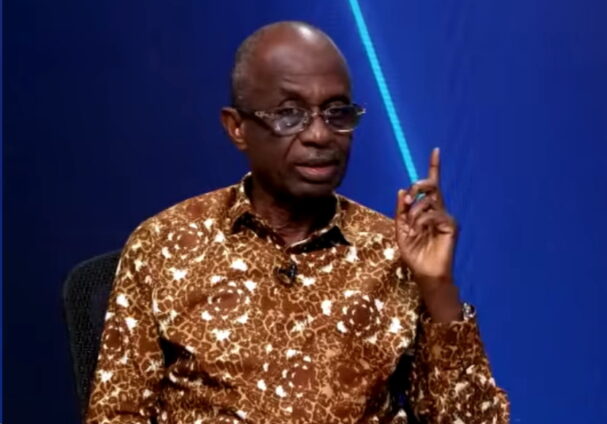
National Chairman of the National Democratic Congress (NDC), Johnson Asiedu Nketia, has called for major reforms within African political parties, arguing that they must move beyond their traditional focus on winning elections and become permanent institutions for democratic governance.
He said political parties could not credibly defend democracy at the national level if they failed to uphold democratic principles within their own structures.
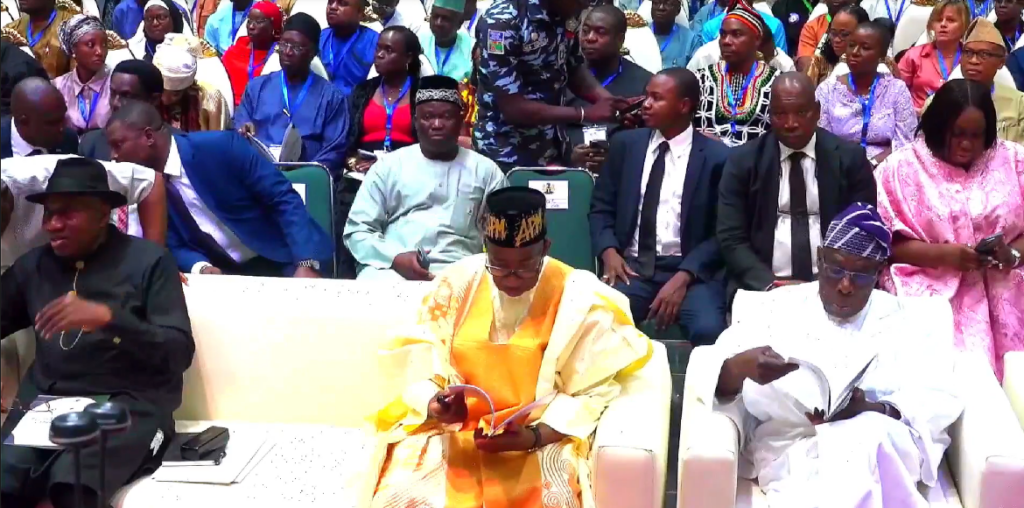
Mr Asiedu Nketia made the call on Tuesday, August 11, 2026, at the 2026 Goodluck Jonathan Foundation Democracy Dialogue in Bauchi, Nigeria.
The dialogue, held under the theme "Beyond Elections: Can Political Parties and the Judiciary Save African Democracy?", brought together political leaders, members of the judiciary, civil society representatives and other stakeholders to discuss the future of democracy on the continent.
Speaking on a panel on political parties and the judiciary, Mr Asiedu Nketia said political parties had responsibilities that extended beyond organising campaigns and contesting elections.
"Political parties cannot save democracy when they function only as electoral machines, instruments of patronage or vehicles for individual ambition," he said.
He described political parties as important public and constitutional institutions responsible for recruiting leaders, developing alternative policies, organising political participation and connecting citizens to the state.
"A party that demands credible national elections must conduct credible internal elections. A party that condemns authoritarianism in government must tolerate legitimate disagreement within its own structures," he said.
Cost of politics
Mr Asiedu Nketia identified the rising cost of political participation as one of the major threats to internal party democracy.
He cited research by the Westminster Foundation for Democracy and CDD-Ghana which found that the cost of contesting parliamentary office increased by 59 per cent between the 2012 and 2016 electoral cycles, reaching an average of GH¢389,803.
He also cited a later CDD-Ghana study which estimated that a viable parliamentary campaign by 2020, including the cost of maintaining a constituency presence, could cost approximately GH¢4 million.
He warned that the high cost of political participation could result in political parties selecting candidates based more on their financial capacity than their competence.
"When entry into political leadership becomes this expensive, parties risk selecting the wealthiest rather than the most capable, while elected officials may enter office burdened by financiers and expectations of repayment," he said.
He called for reforms to reduce the financial barriers to political participation and ensure that people without wealthy sponsors could compete for political office.
Women and youth
Mr Asiedu Nketia also criticised the limited representation of women and young people in political leadership.
He noted that women occupied only 40 of Ghana's 276 parliamentary seats, representing 14.5 per cent, although women constitute slightly more than half of the country's population.
Young people between the ages of 15 and 35, he said, constituted 38.2 per cent of Ghana's population, yet no member of the current Parliament was aged 30 or younger at the beginning of the legislature.
He urged political parties to create practical pathways for women and young people to progress from campaign mobilisation into policy development, party leadership, Parliament and executive responsibility.
"Political parties must create practical pathways that move women and young people beyond rallies and campaign mobilisation into policy development, party leadership, Parliament and executive responsibility," he said.

Parties need policy institutions
Mr Asiedu Nketia further called on political parties to rebuild their policy, civic education and leadership-development functions.
He said parties should maintain permanent research institutions, train candidates and office holders and develop systems to assess governments formed in their name.
"Democracy suffers when public office becomes the first place at which political leaders begin to learn the responsibilities of government," he said.
He argued that parties should be judged not only by their ability to win elections but also by the quality of leaders they produce and the policies they develop.
'Power is temporary'
Mr Asiedu Nketia said political parties should not be treated as the private property of founders, financiers, office holders or temporary leaders.
He said democratic parties must practise internally the principles they promise to uphold when elected to government.
Concluding his argument, he urged political parties across Africa to abandon the approach of becoming active only during election periods.
"Political parties must cease to be seasonal electoral machines and become permanent democratic institutions," he said.
He added that political parties must remember that political power is temporary and that the state ultimately belongs to the people.
Latest Stories
-
Hotline Documentary: ‘Silent Football’ to air on JoyPrime and JoyNews today
2 minutes -
NDPC examines how evidence shapes Ghana’s development planning and policy decisions
3 minutes -
Education Ministry calls urgent talks to break GAUA strike deadlock
5 minutes -
NCCE engages women in North East Gonja on rule of law, anti-corruption
14 minutes -
NDPC reviews 2004 planning guidelines to reflect changes in decentralised system
20 minutes -
Trade Ministry commends Prisons Service for using art to drive inmate rehabilitation
26 minutes -
Books, brushes and second chances: Dr Abena Asomaning launches three titles to support prison outreach
33 minutes -
Treasury bill auction oversubscribed by 53.5% as yields fall across maturities
35 minutes -
NPP warns aspirants premature campaigning could jeopardise eligibility for primaries
41 minutes -
Ghana courts investors in Bangkok after exit from $3bn IMF bailout
46 minutes -
8 arrested over alleged internet fraud initiation assault in Bono Region
50 minutes -
BoG proposes 30-day liquidity buffer requirement for banks
57 minutes -
BoG plans reviews of banks’ cybersecurity compliance
1 hour -
GRA cautions taxpayers against attacking tax officials
1 hour -
Invest Ghana Summit to drive value addition, industrialisation
1 hour