

Audio By Carbonatix
George Sarpong, Executive Secretary, National Media Commission (NMC), has cautioned political parties against becoming unwitting tools for foreign actors seeking to manipulate Ghana’s information environment.
He said foreign information manipulation and interference (FIMI) was an emerging threat that exploited genuine information, rather than necessarily relying on falsehoods, to create divisions and weaken social cohesion.
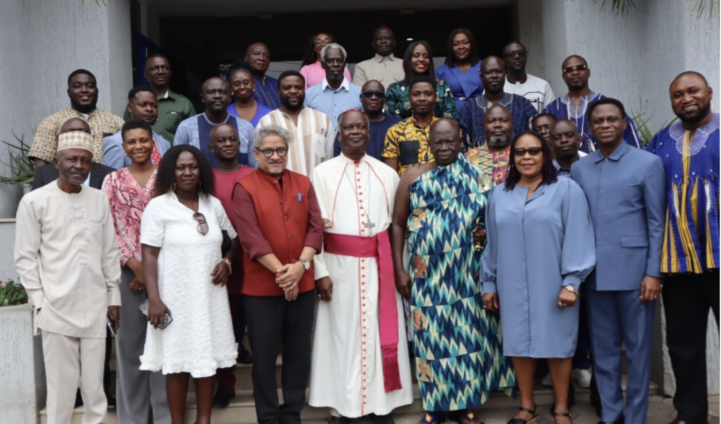
Mr Sarpong gave the caution at an inter-party dialogue organised by the National Peace Council (NPC), in partnership with the United Nations Development Programme (UNDP) and Catholic Relief Services, under the Political Party Trust Building Programme.
He said FIMI worked by selecting truthful but potentially explosive information, removing it from context and amplifying it through algorithms to make it viral.
“FIMI works with truthful material. Everything that FIMI uses is truthful. But what it does is to select materials that are explosive, can harm society, put them out of context, and support them on algorithmic push,” he said.
Mr Sarpong said political parties were particularly vulnerable because their leaders and communicators could be used to deepen existing divisions between competing political groups.
He said FIMI also targeted institutions that served as pillars of national and social stability, including the NPC, religious leaders and traditional authorities.
“Political parties, you are the key vector that FIMI uses to destroy society,” he cautioned.
Mr Sarpong urged political parties to recognise that attacks and provocations between them could sometimes be exploited by third parties seeking to destabilise the country.
He said the exploitation of domestic vulnerabilities, polarisation, distrust and attacks on institutions were among the methods used by foreign interest groups to interfere in societies.
Mr Sarpong also warned against the exploitation of nationalism, particularly among young people, through online narratives that glorified unconstitutional changes of government.
He said political parties must work together to protect Ghana’s democratic system rather than view every political contest as a battle between opposing parties.
“We all need to work together to protect the state from FIMI implications,” he said.
Mr Sarpong said parties could help reduce FIMI by establishing clear communication standards and codes to guide their members and supporters.
He urged party leaders to identify potential risks of misinformation and manipulation, develop mitigation strategies and take responsibility for their surrogates and communicators.
“Please, take responsibility for this subject. Learn to devise core messages on key public policy issues. It is not everything you have to speak on if your party doesn’t have a central idea on it.
“To reduce FIMI, political parties must stop rewarding communicators who relied on inflammatory and provocative language to gain attention,” he said.
Mr Sarpong said rewarding such conduct encouraged young people to adopt increasingly extreme forms of political communication in the hope of gaining recognition or positions when their parties gained power.
He advocated discipline and progression systems within political parties to provide members with clear pathways to leadership, rather than encouraging provocative public behaviour to attract attention.
Mr Sarpong also proposed the establishment of a Ghana Media Observatory involving experts, the NPC, the United Nations Development Programme (UNDP) and political parties to monitor potentially harmful political communication.
He said the proposed mechanism could provide advice on dangerous content and help political actors de-escalate tensions before they became major national issues.
Most Rev. Emmanuel Kofi Fianu, Chairman of the NPC, said the dialogue formed part of the Council’s quarterly engagements with political parties.
He said the previous dialogue, held on February 23, 2026, discussed vote buying, monetisation of elections and proposals for campaign spending limits for individuals and political parties.
Most Rev. Fianu said the current dialogue focused on media excesses, inflammatory political discourse, and strengthening inter-party dialogue and security to sustain Ghana’s democracy and peace.
He urged political parties and citizens to critically examine political statements and media content that inflamed tensions and find ways of toning down political language.
“The fruits of our dialogue should be seen in the reviews and decisions of the various political parties,” he said.
The programme brought together representatives of political parties and other stakeholders to deliberate on building trust, promoting responsible political communication and strengthening Ghana’s democratic processes.
Latest Stories
-
Photos: Mahama commissions 85-bed Police Hospital ward, donates two ambulances
9 minutes -
GTEC directs Ghana’s public universities to reopen by October 16 and begin lectures on October 19
10 minutes -
Star Oil donates GH¢1million towards construction of new CID facility
14 minutes -
Court hands Adjetey Sowah, two others lifetime bans after Amputee Football legal dispute
23 minutes -
NDC appoints Julius Kwame Anthony as a Deputy Communications Director
24 minutes -
Ghana repatriates 120 Nigerians rescued from suspected cybercrime centres
28 minutes -
NPP rejects Emelia Agbenyo’s appointment as Deputy EC Chair, demands withdrawal
33 minutes -
EOCO grants Suame MP John Darko enquiry bail in GH¢27m SIC investigation
36 minutes -
NPP cannot question EC appointment after appointing own people to Commission – Kwakye Ofosu
42 minutes -
BoG deepens public trust with regional stakeholder forum in Techiman
51 minutes -
‘We have turned the tide’ – Ato Forson says Ghana is ready to take off
56 minutes -
Police arrest man captured in viral video assaulting wife in Agona Nkwanta
58 minutes -
KATH Mother and Baby Unit construction stalled for 14 months over unpaid contractor arrears
1 hour -
Government wanted to ‘tilt the balance’ with new EC appointments – Kwakye Ofosu
1 hour -
Angry Tema Community 25 residents threaten to sleep at GWL over water shortage
2 hours