

Audio By Carbonatix
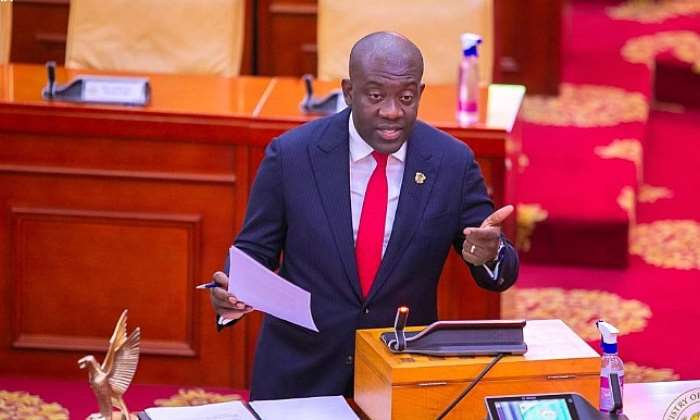
Member of Parliament for Ofoase Ayirebi, Kojo Oppong Nkrumah, says the recent surge in Ghana’s public debt by more than GH¢70 billion in just three months is evidence that the country’s economic fundamentals remain weak, despite earlier claims of improvement.
Speaking on Newsnite on Joy FM, the Ranking Member on Parliament's Economy and Development Committee cautioned against what he described as the government’s earlier celebration of temporary declines in headline debt figures.
He argued that those movements were driven largely by exchange rate effects and debt restructuring rather than meaningful fiscal or monetary reforms.
“You recall that we cautioned the government against celebrating temporary movements in headline numbers while ignoring the structural weaknesses that are still underneath the economy,” he said on Monday.
According to the former minister, the earlier slowdown in debt accumulation was not the result of changes in government spending patterns or revenue mobilisation, but rather two short-term factors, a sharp appreciation of the cedi and the impact of the domestic debt exchange programme.
“But nothing significantly had changed both on the fiscal or on the monetary side,” he stressed.
Mr Oppong Nkrumah argued that the recent 20 per cent depreciation of the cedi over the past three months has quickly reversed those gains, pushing the debt stock up by about GH¢70 billion.
He explained that about GH¢50 billion of the increase could be attributed mainly to exchange rate movements, which inflate the cedi value of Ghana’s foreign-denominated debt without any new borrowing.
“Just a small depreciation in three months and the debt stock has gone back up by about GH¢70 billion because the structure and the fundamentals have not changed,” he said.
Beyond currency effects, Mr Oppong Nkrumah pointed to additional factors contributing to the debt increase, including a US$360 million facility from the World Bank, which he said government attempted to present as a financing arrangement rather than a loan when it was brought before Parliament.
He also noted that about US$1 billion worth of restructured debt is now being capitalised and treated as new disbursements in the government’s accounting, even though no fresh funds have entered the economy.
“Even if you account for those two, you still have about a GH¢50 billion change in our debt stock, which is mostly because of the currency,” he added.
Latest Stories
-
Ghana’s mining deaths fall sharply, but Chamber insists ‘three deaths are too many’
3 minutes -
Tatale Sanguli officials destroy expired food products, warn traders
9 minutes -
Police arrest two watchmen over alleged defilement of 14-year-old student
15 minutes -
The woman behind General Mosquito: Could Ghana be meeting its next First Lady?
16 minutes -
Court remands man over alleged Labone bank robbery attempt
20 minutes -
Supreme Court to rule today on challenge to legal vacation warrants
26 minutes -
Tamale Metropolitan Assembly distributes 10,000 bags of fertiliser to farmers
31 minutes -
TUSAAG suspends strike, resumes work after renewed talks with government
35 minutes -
PIAC marks 15 years of oil revenue accountability and transparency
42 minutes -
Adongo calls for non-political interference in $1.46bn Heritage Fund review
47 minutes -
FDA records GH¢70m surplus in 2025 amid concerns over ageing lab equipment
48 minutes -
Arise Ghana demands stronger commitment to end galamsey
50 minutes -
96% of Ghanaian pensioners willing to work beyond retirement age – Study
54 minutes -
Ghana gets nuclear power plant simulator
60 minutes -
Temporary Akosombo power control facility to be ready by September – Energy Ministry
1 hour