

Audio By Carbonatix
Ghana’s building construction sector recorded a further slowdown in inflation in November 2025, offering relief to contractors, developers and households, amid easing cost pressures.
According to the latest Prime Building Cost Index (PBCI) released by the Ghana Statistical Service (GSS), overall building construction inflation declined to 5.9% in November 2025, down from 7.8% in October 2025. This marks the seventh consecutive month of decline in construction inflation.
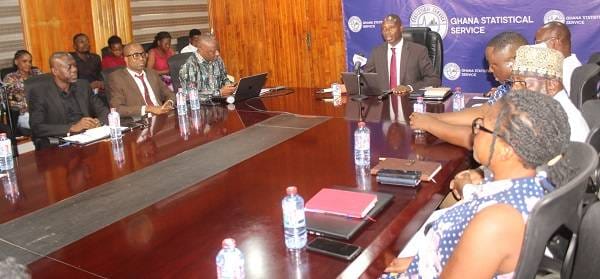
The data was presented in Accra by Omar Seidu, Acting Deputy Government Statistician, who highlighted improving cost conditions across key components of the construction industry.
Despite the year-on-year slowdown, the overall prices of building inputs rose marginally by 0.4% month-on-month between October and November 2025, reflecting moderate price adjustments within the sector.

Labour and Materials Costs Ease
The report showed a significant easing in labour-related pressures. Year-on-year labour inflation fell sharply to 12.7% in November 2025, from 13.7% in October 2025. On a month-on-month basis, labour prices increased by 2.6%, suggesting continued demand for skilled labour, albeit at a slower pace.
Materials inflation also showed improvement. Year-on-year materials inflation declined to 4.2% in November 2025, down from 6.3% in October 2025, while materials prices recorded a slight 0.1% decrease month-on-month.
Similarly, inflation for plant slowed, with year-on-year plant inflation easing to 5.3%, from 7.0% in October 2025. However, plant prices declined by 0.7% month-on-month, indicating reduced short-term cost pressures in that category.
Equipment Records Highest Inflation
At the sub-group level, the report revealed mixed trends. Equipment recorded the highest inflation rate at 15.2%, reflecting continued cost pressures in machinery and tools used in construction.
In contrast, reinforcement materials recorded the lowest inflation rate of minus 7.3%, suggesting falling prices for key inputs such as steel reinforcement.
Outlook for Construction Sector
The sustained decline in construction inflation is expected to support ongoing infrastructure projects, private real estate development and housing affordability, particularly if the trend continues into early 2026.
The Ghana Statistical Service noted that the Prime Building Cost Index remains a critical tool for monitoring cost movements in the construction industry and guiding policy, investment and contract adjustments.
Latest Stories
-
Ghana’s Rahim Ibrahim makes Champions League debut in PSG thrashing
16 minutes -
Tariq Lamptey suffers another injury setback at QPR
34 minutes -
PRESEC, Augusco and Accra Academy battle for 2026 NSMQ crown today
50 minutes -
GH₵12 addition to cement price: GPHA clarifies attribution to port congestion
52 minutes -
Pythagoras won’t balance your books
54 minutes -
Pay me by Sept. 11 or face the court – Kow Essuman demands salary, benefits from Finance Minister
1 hour -
Bawumia’s destiny lies in the hands of God; not you – Muslim Forum for Peace and Unity replies Rev. Owusu Bempah
1 hour -
NPP NEC meets today to discuss and approve party’s position paper on Constitution Review proposals
1 hour -
Today’s frontpages: Thursday, September 10, 2026
1 hour -
Ghana Garden and Flower Show returns on Sept 11 with focus on green jobs, business and wellbeing
1 hour -
Titus-Glover camp says Mustapha Salam wasn’t pressured to withdraw from National Organiser race
2 hours -
Ghana’s acclaimed Christian – Muslim unity bigger than Owusu Bempah’s hatred and bigotry – Muslim Forum for Peace and Unity
2 hours -
Karpowership lights up young minds on International Literacy Day
2 hours -
Banking sector NPLs fall to GH¢19.9bn as asset quality improves
2 hours -
Republic Bank Ghana, UPSA sign strategic MoU to advance professional development and industry-academia collaboration
2 hours