

Audio By Carbonatix
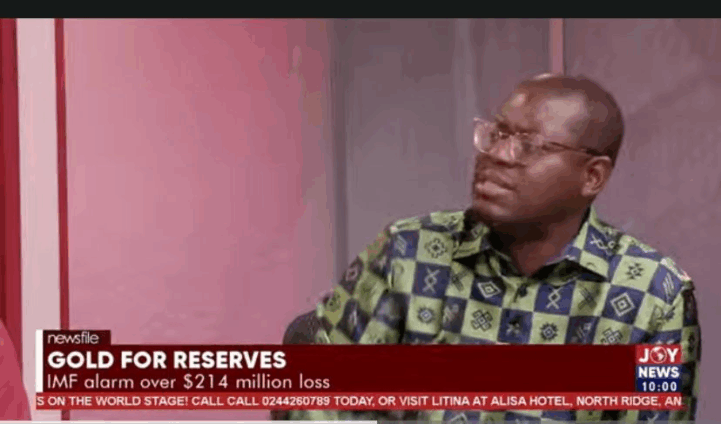
Honorary Vice President of IMANI-Africa, Bright Simons, has called for stronger scrutiny of the cost and efficiency of government institutions, arguing that institutions created to drive national development must still be held to strict performance and sustainability standards.
Speaking on JoyNews' Newsfile on Saturday, January 3, Mr Simon said debates surrounding the GoldBod, the Bank of Ghana, and gold market interventions reflect a broader national challenge, noting that similar efficiency concerns cut across many state institutions.
“There are many policy institutions in this country where we assume efficiency simply because they are not profit-oriented. That assumption is dangerous,” he cautioned.
To support his argument, Mr Simon cited the Ghana Cocoa Board (COCOBOD), describing it as a statutory public institution established to promote the cocoa sector, improve farmer welfare, and generate foreign exchange, rather than to make profits.
“COCOBOD is not a limited liability company, yet we carefully track its losses and are rightly concerned about their impact on the sector,” he noted.
He said successive COCOBOD chief executives have repeatedly raised concerns about how persistent losses burden the cocoa industry, adding that his own analysis shows that COCOBOD’s losses over the past four years are significantly lower than losses being discussed in some other policy interventions.
According to Mr. Simon, if the state is prepared to rigorously assess COCOBOD’s use of resources, the same standard must apply to other policy-driven institutions, including those involved in gold market operations.
“It is the same logic. If we demand efficiency in one policy institution, we cannot excuse inefficiency in another,” he stressed.
Mr. Simon also pointed to fuel pricing and subsidies as a familiar example of the cost implications of public policy, noting that fuel prices have a cascading effect on inflation, industrial activity and household welfare.
“Fuel touches every part of the economy. That is why governments subsidised it for many years to protect businesses and ordinary citizens,” he explained.
However, he warned that when subsidies become unsustainable, the government is forced to introduce corrective measures, including taxes, to recover mounting costs.
“The fact that a policy is beneficial does not mean we should ignore inefficiency. At some point, the bill must be paid,” he said.
He urged policymakers to balance developmental objectives with efficiency, transparency and fiscal discipline, warning that failure to do so could pose long-term risks to the country’s economic stability.
Latest Stories
-
CSA demands faster sharing of cyber threat intelligence among financial institutions
6 minutes -
CSA warns Ghanaians to verify money requests as AI makes online fraud harder to detect
11 minutes -
NEIP CEO urges Africa to build systems that turn ideas into businesses
13 minutes -
Global Organised Crime Index says cybercrime is undermining Ghana’s digital sector
13 minutes -
Global Organised Crime Index says fraud and tax evasion are widespread across Ghana’s economy
16 minutes -
Threats to journalists limit coverage of cocaine trade in Ghana – Global Organised Crime Index
19 minutes -
Kumawu MP commissions 4-unit nurses’ quarters at Bodomase
19 minutes -
Two arrested after suspected narcotics intercepted at Kasoa
20 minutes -
‘Our pipes stock are all gone’ — Duraplast marketing manager counts losses after Avenor fire
24 minutes -
Ntim Fordjour calls for cancellation of Ghana-Colombia maritime deal over drug trafficking concerns
26 minutes -
Daily Insight for CEOs: The CEO’s Q4 leadership priorities
29 minutes -
Cybersecurity is a business risk, not just an IT issue – CSA Director-General
29 minutes -
NSA releases 70,072 postings for 2026/2027 national service year
31 minutes -
Osu residents oppose road expansion over planned demolition of ancestral homes
32 minutes -
Kwakye Ofosu calls Aboagye ‘neophyte and time waster’ over cocaine debate
33 minutes