

Audio By Carbonatix
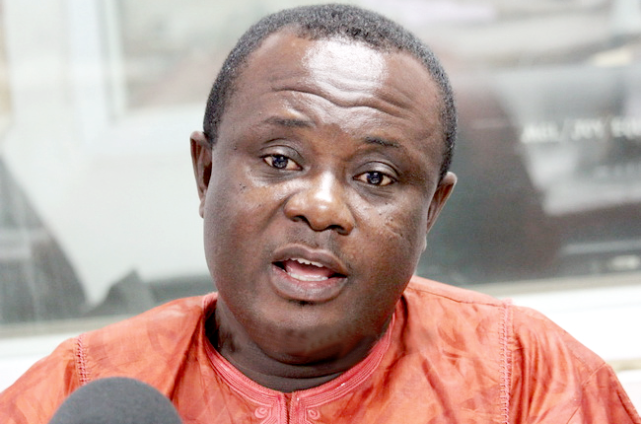
Former Ashanti Bekwai MP Joseph Osei Owusu says the credibility of the internal election process rested on one clear principle: agreed rules applied equally to all candidates in the upcoming NPP presidential primaries.
Speaking on Joy News’ PM Express on Wednesday, he said the process began with clarity, not improvisation. “First, we started with the rules. How are we going to play the game?” he said.
According to him, the rules were formally shared with every contestant. “We brought the rules, we distributed them to all the contestants, and we sat together with them,” he said.
He said that even those who could not attend in person were represented.
“Some appeared in person. Others sent their representatives. But we went through the rules together and agreed these are the rules we’ll play by,” he said.
That agreement, he noted, was critical to trust. “If I allow you to breach the rule without sanction, then I have not provided sufficient basis to be confident in me,” he said.
He said consistency followed from that point. Attention then shifted to the delegate register.
“There was a 2023 register, which at the conference we agreed will be used for this election,” he said.
But constitutional changes made updates unavoidable.
“At the same conference, we amended the Constitution to allow new entrants, people like me, who otherwise would not have been delegates, to become delegates,” he said.
That decision, he explained, required careful handling to avoid suspicion.
“So we had to compile the list and give confidence that nothing was being done to favour any candidate,” he said.
He said candidates were involved at every stage. “We invited them to participate at every stage of the compilation,” he said.
Verification, he added, happened openly at the constituency level. “Once people filled their forms, we sent groups to the constituencies,” he said.
“At verification, the constituency executives were there. The contestants’ agents were also there,” he said.
Disputes were not ignored. “Where there were disagreements, we didn’t let them die down. They were brought to us,” he said.
He said disputed cases were reviewed jointly. “We sat together with the representatives of the contestants and went through the controversies,” he said.
Outstanding issues were then handled by a smaller body. “We formed an in-house committee to investigate and report,” he said.
Latest Stories
-
Chief Justice’s comment on state institutions ‘extremely unfortunate’ – Baffour Awuah
5 minutes -
Justice moves fast for opponents, slow for allies – NPP accuses CJ
6 minutes -
Awudi wins Emerging Act of the Year at Ghana Music Awards USA
10 minutes -
Call A-Plus to order – Effutu Traditional Council tells gov’t after deadly New Winneba clash
11 minutes -
NPP accuses Chief Justice of neglecting dilapidated courts
15 minutes -
Matilda Domfegro crowned Miss Tourism Ghana 2026
19 minutes -
Check out the offerings of vendors for Joy FM’s Back-to-School Discount Fair
27 minutes -
‘Resign and join NDC’ – NPP tells Chief Justice over alleged political commentary
32 minutes -
Minority caucus demands immediate recruitment of qualified graduates with disabilities
41 minutes -
Underage riders driving motorcycle crashes, union claims
44 minutes -
About 14,800 candidates with aggregates 6–12 apply for 1,300 Achimota places – CSSPS
57 minutes -
PETROSOL engages dealers to strengthen retail network and improve customer experience
1 hour -
GRIDCo warns encroachers as activities under high-voltage lines threaten power supply
1 hour -
The coup doesn’t need soldiers anymore: Social media and the new assault on African democracy
1 hour -
Works and Housing Minister pushes to cut Kaneshie road closure from one year to 6–9 months
1 hour