

Audio By Carbonatix
Ghana has emerged as a regional leader in financial readiness, scoring a high of 72 per cent in financial services according to the latest World Bank Business Ready (B-Ready) 2025 report.
While the nation outperformed many sub-Saharan African peers in regulatory frameworks, recent findings highlighted a critical need to bridge operational efficiency gaps to compete on the global stage.
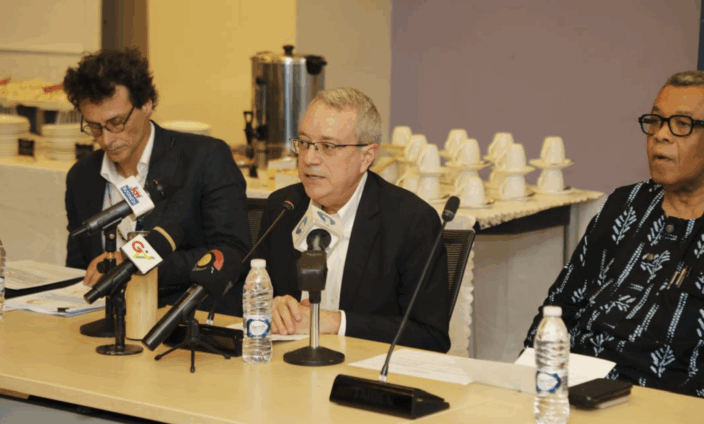
The findings were shared during a dissemination event in Accra on Thursday.
The B-Ready assessment evaluated economies across three main pillars: Regulatory Framework, where Ghana scored 69; Public Services, 50; and Operational Efficiency; 52.
The report identified financial services and labour as Ghana’s strongest points.
With a 72 per cent score in the financial sector, Ghana was lauded for its well-developed regulations regarding secured transactions and electronic payments.
In the labour category, the country’s performance placed it in the top 20 per cent of all measured economies globally with a score of 71.
Beyond these areas, Ghana also showed strong performance in business entry and utility services, where it maintains high transparency regarding tariffs and access.
Currently, Ghana’s regulatory pillar is the strongest among its regional peers, with its public services score lagging only behind Togo.
Mr. Robert Taliercio, the World Bank Division Director for Ghana, Liberia, and Sierra Leone, noted that while Ghana had qualified strongly in “World Cup terms,” there remained a significant “delivery gap” to close.
He emphasised that the gap between strong rules and slower delivery shaped how investors assessed risk, cost, and predictability.
He noted that gross capital formation in Ghana was only about 10 per cent of GDP compared to 30 per cent in industrialising economies like Morocco.
Mr Taliercio said those findings were directly to the government’s 24-Hour Economy programme, stating it was not about working endlessly but about system readiness to ensure ports, utilities, and regulators operated with the reliability required by modern industry.
Mr Kyle Kelhofer, the IFC Senior Country Manager for Ghana and Liberia, said the session was action-focused to bridge the gap between policy intent and operational reality.
He noted that no one understood those constraints better than the businesses that navigated the system daily and urged stakeholders to propose practical solutions to reduce operational delays.
Mr Kelhofer stressed that the World Bank and IFC were not merely restating challenges but were committed to defining solutions that improved firm productivity and unlocked the private investment necessary for job creation.
The World Bank identified several areas where Ghana had room to grow, specifically in market competition, which scored only 34 per cent as well as business insolvency and dispute resolution.
A key example of the efficiency hurdle is found in international trade; while Ghana has strong regulations, it takes an average of 23 days for import clearance, significantly longer than the eight days recorded in peer economies like Cameroon.
To unlock its full potential, the report suggested that Ghana focused on streamlining export restrictions and enhanced the transparency of licensing and penalty procedures.
It acknowledged that Ghana had recently implemented a Trusted Trader programme, a move expected to significantly improve border management efficiency and boost Ghana’s scores in the next assessment cycle, painting a positive outlook for the future.
Latest Stories
-
I have no issue with John Boadu; we’ll work together – Justin Kodua
1 hour -
Adom FM Y2K Jam delivers a night of music, fashion and nostalgia
2 hours -
Lawrence Kobena Nsarko Otoo, Esq
3 hours -
Bel-Aqua intensifies mental well-being campaign ahead of 15th anniversary
3 hours -
From banking to party finances: Alfred Kwadwo Thompson elected NPP Treasurer
3 hours -
George Christian Papa Mends
3 hours -
Ali Suraj elected NPP NASARA Coordinator
3 hours -
Mustapha Hamid misses out on NPP Vice Chairmanship by 31 votes despite early poll lead
3 hours -
Kojo Bamba, Henry Nana Boakye and Nana Akomea elected NPP Vice Chairmen
4 hours -
From Delta Force to NPP First Vice Chairman – Kojo Bamba’s political journey
4 hours -
Police restore calm at Larteh following Odwira festival disturbance
5 hours -
‘All the camps will dissolve’ – Bawumia demands one NPP for 2028
5 hours -
There is no time to waste – Bawumia orders NPP to begin 2028 work
5 hours -
Sarkodie visits MobileMoney Fintech LTD
5 hours -
John Boadu unveils new NPP strategy to win back youth and modernise party
5 hours