


Audio By Carbonatix
The 5th industrial revolution today is deemed fast-paced for the corporate world, where organisations and investors are allocating huge sums to technology, a strategic AI-driven performance system, and talent acquisition with strong creativity and machine learning capabilities.
And as management, CEOs, boards of directors, and investors set sail to fund and find systemic, mechanistic ways to increase productivity, profitability, and performance, the most important assets, the “human resource”, are under-resourced, eroding the gains being made.
Emotion, the quiet and most potent gift to human beings, is neglected in the quest for increased productivity, profitability, and performance, and it fights back like an autoimmune disease, quietly eroding decision quality and leadership credibility from within.
Emotions, feelings, and moods are neurological, intergenerational (practitioners' insights on trauma), and transmitted through magnetic flux/field (an exploration from the works of the HeartMath Institute) or quantum entanglement (an emerging area of applicability from quantum mechanics).
I often paraphrase that “culture (traditions, beliefs, behaviour, attitude, mindset) will either eat strategy for breakfast or stimulate, enable and influence strategy for innovation, effective leadership and corporate ecosystem growth”. Because what drives culture in this sense is emotion, which is neurological and can be passed down through generations.
Workplace negative emotional climate at the low-hanging fruit level is the coffee dispenser gossip, the in-groups, the tribal & blocs, the racial caucus, the incessant culture of complaining, management-focused HR, and the lack of open-door practices, taking the glory of subordinates and teams, shirking blame to teams by leaders, etc. These also allow the elephants in the room, dark “tetrad” personalities (Machiavellians, sadists, narcissists, and psychopaths) at managerial and C-suite levels. The World Economic Forum, in a published leadership article, stated that a culture of chronic complaining rewires employees' brains toward negativity.
In the 2023 report by Gallup, low employee engagement, driven by a lack of psychological safety, burnout, etc., costs the corporate world $8.8 trillion. McKinsey also reported that misaligned decision-making costs Fortune 500 companies $250 million annually. In Australia, according to Deloitte, mental health costs the corporate ecosystem $60 billion. What this means for CEOs is that the buck for the negative impact ends with them, which is why most Fortune 500 leaders suffer from burnout.
In a study conducted by the American Psychological Association, it is reported that employees in toxic environments are more than twice as likely to rate their mental health as poor or fair, with workplace stress significantly reducing engagement and performance.
Finally, a study in the American Journal of Preventive Medicine estimates that burnout among employees costs business owners and their investors 3.3–17.1 times the cost of training per employee and 0.2-2.9 times the average cost of health insurance. Companies with 1000 employees lose around $5 million annually. In effect, HR departments are always on the hot seat to calm waters, hire or fire, etc.
The above information is the monetary and corporate cost, but the question we mostly don’t ask is what drives these investments down. Or how much does workplace negative emotional climate cost the employee's body and mind? I do express that, if the placebo effect is true at the neurological and cellular levels of the employee, then the nocebo effects are also scientifically neurological and ecological.
One of the longest studies conducted in the scientific and academic practices, dating back to 1934, is the Harvard Adult Development study, which is running to date with over 1000 participants, to understand what constitutes happiness or a happy life, summed it all up to “good relationships” and that “good relationships keep us healthier and happier”.
According to the Gallup report on the importance of workplace best friends, employees are significantly more likely to engage customers and internal partners, get more done in less time, support a safe workplace with fewer accidents and reliability concerns, innovate and share ideas and have fun while at work.
At the core of our humanness and being is relatedness and connectedness, which is summed in the neuroscience axiom that “neurons that fire together wire together.
The absence of high emotional intelligence, psychological safety, and trust, along with chronic complaining, pessimism, blame game & ego-driven defensiveness, micromanagement, disengagement, loss of hope, incivility, and hostility among staff and from supervisors and managers, rapidly diffuses into a negative emotional climate that undermines both human and financial capital.
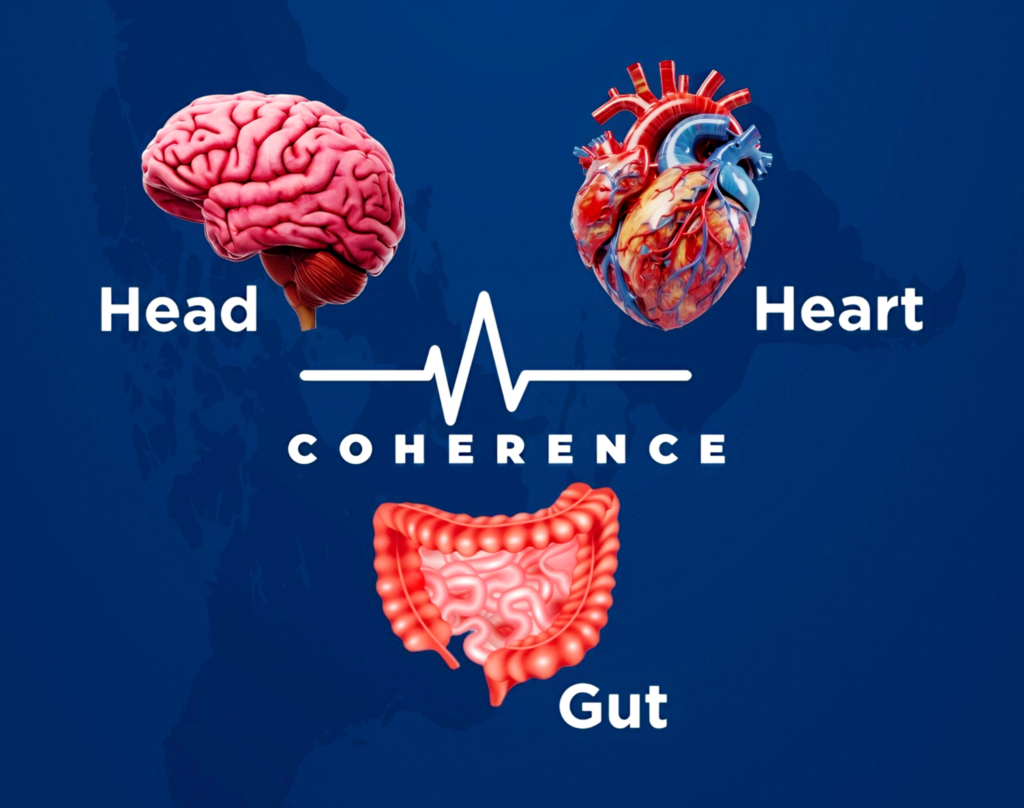
Consistent, sustained exposure to negative workplace energy triggers stress responses across the 3 brains (head, heart, and gut). In the head (cephalic) brain, the amygdala, limbic system, hippocampus, and prefrontal cortex are impaired, hindering effective functioning.
The heart (cardiac) brain also suffers from incoherence in its magnetic field due to overwork, which affects compassion, empathy, emotional regulation, values, purpose, connection, and relationships, leading to cardiac attacks, hypertension, and other conditions.
The gut-brain struggles to rest and digest, which supports mood regulation, serotonin production, and healthy microbiomes. Finally, the autonomic nervous system is always in a loop of fight, flight, and frozen states, which compound anxiety, high cortisol levels, depression, autoimmune diseases, etc.
I recommend executive and leadership coaching as one of the interventions to mitigate a negative emotional climate in the workplace.
Gleaning from many studies, surveys and research from the International Coaching Federation and other human capital development bodies, coaching significantly impacted emotional and social intelligence competencies of leaders in terms of their overall emotional quotient (EQ), intrapersonal competency, interpersonal skills, stress management, self-regard and empathy.
This is possible across teams and groups when the services of executive coaches who are worth their salt are used for team and group coaching.
In my work with senior leaders, I have observed that structured neuro-emotional intelligence interventions, when applied at the team level, have a transformative impact on personal and professional development with emotions, feelings, moods, etc.
Neuro-emotional intelligence training (NEIT) is a cutting-edge, turnkey neuroscience-based embodied facilitation and learning methodology, reviewed and endorsed by the Institute of Commercial Management, United Kingdom.
NEIT augments corporate enculturation that focuses on understanding, embodying, and managing the relationship (coherence, regulation and congruence) among our three (3) brains (head, heart, gut), pelvis (pelvic brain by Bryon Robinson in the “forgotten books”), and the autonomic nervous system, and on the impact of emotions, feelings, moods, attitudes, mindset, and behaviour.
Neuro-emotional intelligence training is one of the essential interventions to address the highlighted costs and challenges of the corporate ecosystem in this BANI era.
The expected outcomes are managing stress and emotions in the workplace; well-being and workplace psychological safety; building better relationships and teamwork; effective systemic thinking and an agile ecosystem; improving communication and negotiation skills; reducing apathy and low performance; enhancing decision-making and problem-solving abilities; and facilitating strategic people management.
In a global business environment characterised by disruption and hybrid work structures, emotional collective effervescence is crucial. Organisations that treat neuro‑emotional intelligence as a strategic embodied intervention and integration will stimulate growth, whereas their peers that tolerate the corrosive effects of negative emotional climate will not. Neuro-emotional intelligence is not merely a soft skill; it is a competitive imperative advantage.
By: Scofray Nana Yaw Yeboah, MCC, FInstCM
Transformational Executive Coach |mBIT Master Coach | mBIT Trainer | Lead Consultant and Trainer – Zoweh Global Consult
Email: Scofray@gmail.com | Website: www.coachscofray.com | Cell: +233 243 085 932
Latest Stories
-
Supreme Court rejects Solomon Asamoah’s bid to overturn Sky Train ruling
1 minute -
Nungua Traditional Stool, WT Plastics partner to establish factory, create 1,400 jobs
3 minutes -
Mahama describes Ghana’s religious diversity as its greatest treasure, defends fairness to all faiths
8 minutes -
Police to arrest motorists who use pedestrian footbridges – ACP Obeng
9 minutes -
KNUST announces revised reopening dates, lectures begin October 19
22 minutes -
GoldBod, military engineers partner to reclaim galamsey-damaged Tano Nimri Forest
23 minutes -
NACOC educates 450 Koforidua SHS students on dangers of drug abuse
23 minutes -
First-year students stranded as Obuasi SHTS remains closed over misconduct probe
25 minutes -
Court halts promotion of 40 police officers pending IGP’s appeal
28 minutes -
Gender Ministry deploys teams nationwide to monitor LEAP cash grant payments
33 minutes -
GNFS contains Somoco warehouse fire; bushfire near TTU in Takoradi
33 minutes -
Recurring teacher-student sexual abuse cases give cause for worry – Salaga South MP
37 minutes -
D-Black shocked as only 16 radio and TV stations pay music royalties
42 minutes -
Former SIC Savings and Loans MD Amma Frimpomaa Dwumah honours EOCO invitation
55 minutes -
Meta removes 3.7 million accounts in international fraud crackdown linked to UK, US victims
57 minutes