

Audio By Carbonatix
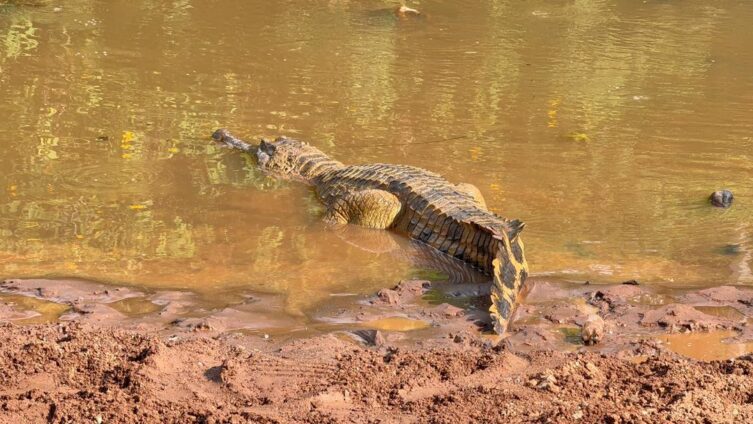
For centuries, the West African Slender-snouted Crocodile swam the Tano River in peace. Not because it was fierce. Not because it was hidden. But because the people who lived beside it believed: this creature was not to be touched.
That sacred tradition, passed down through generations, forbade hunting the reptile. And the community obeyed.
But belief alone has never stopped a river from dying.
The Silent Crisis Beneath the Surface
Today, along the Techiman-Tanoso stretch of the Tano River, something is terribly wrong.
The water is slowly being poisoned. Nesting grounds along the banks have been trampled and degraded. Pollution from farms and human settlements seeps into the very habitat that sustains one of the world's rarest crocodiles.
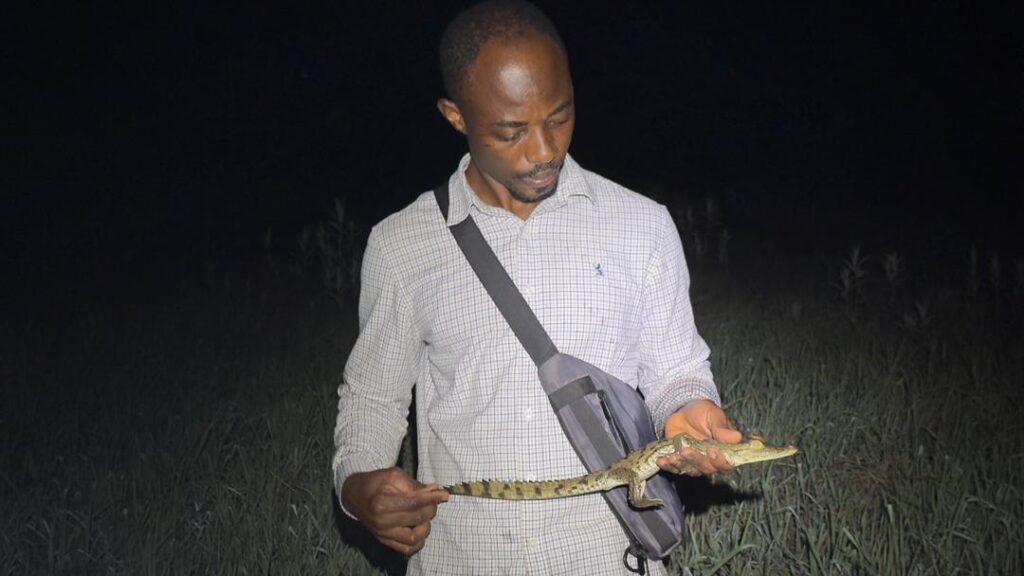
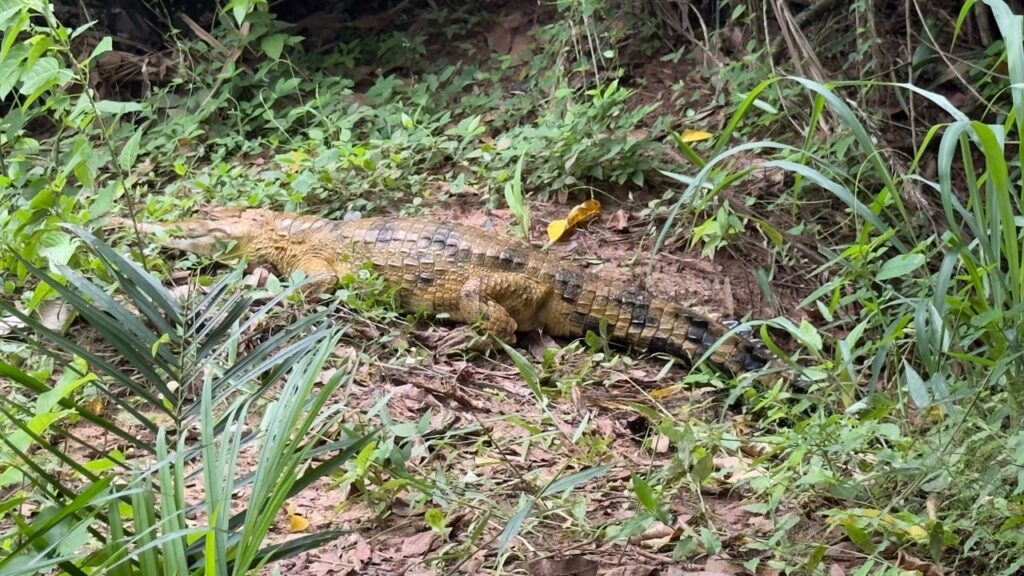
The West African Slender-snouted Crocodile is listed as Critically Endangered. Few viable populations remain anywhere on Earth. And here in Ghana—home to the largest unprotected group of this species—extinction is not a distant threat. It is knocking on the door.
"Without protection of their habitat, one of the rarest crocodiles in the world could disappear from this region forever," warn conservationists at the Threatened Species Conservation Alliance (THRESCOAL).
A New Chapter: The Crocodile Sanctuary
That is why THRESCOAL has launched an ambitious new project: a dedicated Crocodile Sanctuary along the Tano River.
Amoah Emmanuel, Founder and Executive Director of the alliance, says the sanctuary is about more than saving a single species. It is about saving an entire ecosystem—and the people who depend on it.
Speaking on the sidelines of the official launch, Amoah Emmanuel painted a vision of what the sanctuary could achieve.

"This move will protect the Tano River and sustain the livelihoods of the native population," he said. "Beyond the protection of the crocodiles, the project will also aid tourism. We expect visitors from around the world to come through its tourism potential."
For Amoah Emmanuel, the crocodile is not an obstacle to development. It is an asset—one that, if protected, can bring jobs, visitors, and international attention to the Techiman area.
Nananom: "A Dream Come True"
For the traditional rulers of the Techiman Traditional Council, the sanctuary represents something deeply personal.
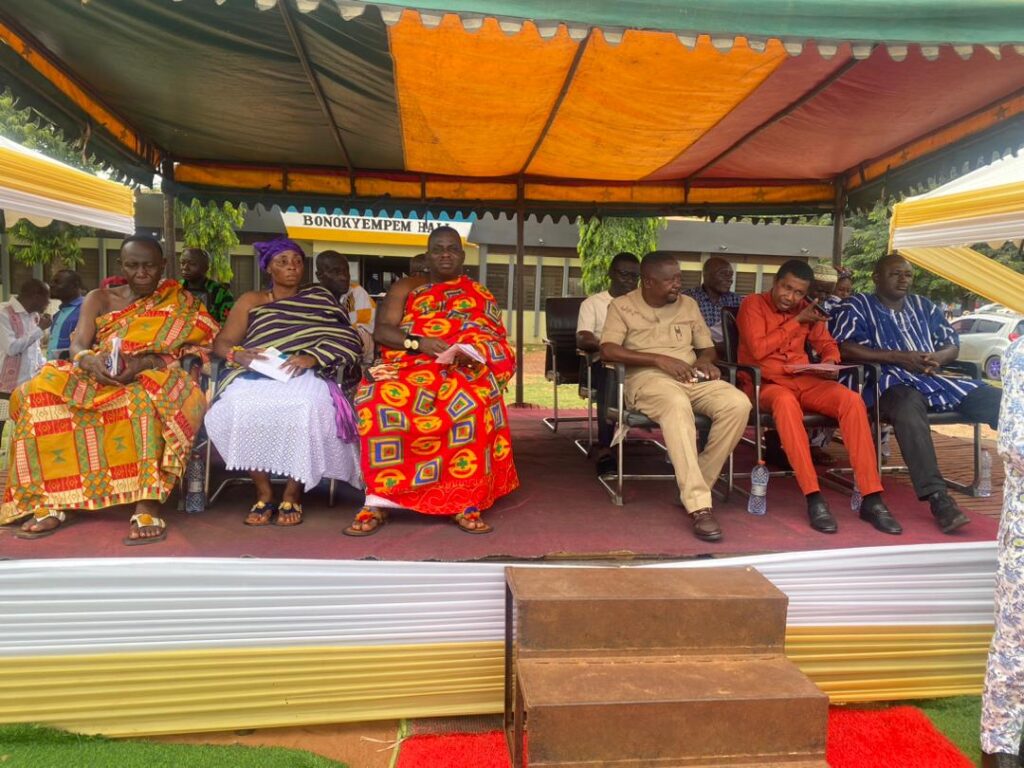
Nana Asare Baffoe II, the Bamirihene and Tuntuhene, did not hide his emotion.
"This is a dream come true for Nananom," he said. "We have watched our sacred guardian slip away for years. Now, we will do everything within our means to make this project a success."
But the chiefs are not just offering blessings. They are offering action.
Nana Asare Baffoe II announced that traditional authorities will enforce strict penalties for anyone who violates the sanctuary's buffer zone rules. And beyond punishment, there will be restoration.
"Nananom will lead a crusade of planting more trees along the river to help save it," he vowed.
Farmers Choose Cooperation
Even those who once farmed closest to the river are coming on board.
The secretary of the local farmer group—whose members have long cultivated land near the water's edge—said the farming community understands the urgency.
"We are committed to cooperating with the authorities to help make this project a success," he stated.
"We must preserve the water body and its species."
It is a significant shift. For years, farming activities have contributed to the degradation of nesting sites. But now, the men and women who work the land are becoming its protectors.
What Happens Next?
The sanctuary is still in its early stages. No fences have been built. No tourist boats have arrived. But the foundation—community backing, traditional authority, and conservation expertise—is now in place.
The challenges remain enormous. Pollution does not disappear overnight. Restoring nesting grounds takes time. And the crocodile population is already fragile.
But for the first time in years, the Tano River has something it desperately needed: a plan.
A Final Word from the River
As the sun sets over Techiman-Tanoso, the river flows on—slow, brown, and ancient. Beneath its surface, the Slender-snouted Crocodile waits. It does not know about sanctuaries or buffer zones or tree-planting crusades.
But the people do.
And for this rare and sacred creature, that may finally be enough.
Latest Stories
-
Conviction should not be required to recover unexplained wealth – Agyebeng
4 minutes -
Persistent SOE losses will no longer be absorbed by national budget – Mahama
6 minutes -
CAF CC: ‘Nations FC will do much better than we did in Mali’ – Dennis Korsah
19 minutes -
Digital fraud incidents rise 98% between 2022 and 2025 – BoG
33 minutes -
Only 72 of 148 state entities signed performance contracts in 2025 – SIGA
35 minutes -
38 African scientists, 17 global experts storm Kumasi as KNUST opens GPOL optics hub
38 minutes -
Forged certificate scandal in security recruitment poses grave threat to national stability – Jatikay Centre
49 minutes -
UK deepens reliance on Musk’s SpaceX, spending nearly $40 million on satellite services
1 hour -
Anti-corruption fight going nowhere without institutional independence – Kissi Agyebeng
1 hour -
Minority demands documents to account for GH¢49.7m South Africa evacuation cost
1 hour -
Iceland to propose whaling ban, leaving Norway and Japan isolated
1 hour -
‘Significant casualties’ after fire on cargo ship in eastern China
1 hour -
Ghana must build a national reading culture to drive knowledge economy—Educationist
1 hour -
When fifty-five thousand children fail, who else has failed?
1 hour -
Russian drone incursion delays Zelensky flight
1 hour