

Audio By Carbonatix
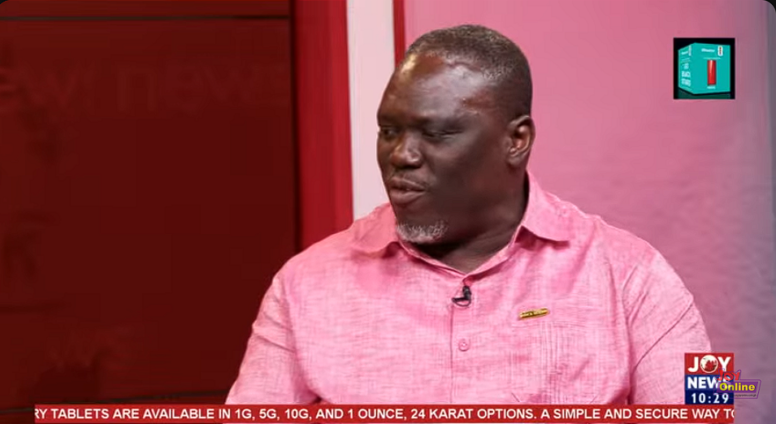
External Member of the Monetary Policy Committee of the Bank of Ghana, Prof Ebo Turkson, says Ghana’s fight against inflation since 2022 could not have succeeded without significant economic costs.
Speaking in his personal capacity on JoyNews’ Newsfile on Saturday, May 2, 2026, he explained that the central bank’s monetary policy mandate is a public good, but achieving price stability inevitably involves trade-offs.
“The central bank and its monetary policy mandate are a public good. Like building roads, we incur a huge cost. Any monetary policy that the central bank does, the objective analysis of that policy is whether it met its mandate or not.
Of course, as economic policy comes at a cost, and therefore, we would not expect the central bank over the years when the crisis started in 2022 to be successful at this mandate without incurring any cost,” he said.
Prof. Turkson stressed that monetary policy should be assessed based on whether it meets its mandate, particularly controlling inflation, rather than whether it avoids economic costs.
He noted that Ghana’s inflation crisis peaked in December 2022, when inflation hit about 54 per cent, forcing policymakers to adopt aggressive measures to stabilise the economy.
“At the height of the crisis in 2022, inflation hit 54 per cent. There was a need to use all the tools available to bring it down,” he stated.
According to him, the Monetary Policy Committee deployed tight policy measures to withdraw excess liquidity from the economy through the banking system, in a bid to control demand-driven inflation alongside supply-side pressures.
He explained that this involved raising the policy rate and conducting liquidity mop-up operations, which significantly increased interest costs on the central bank’s balance sheet.
“When bonds are sold to take out liquidity, the interest rate is closely linked to the policy rate. As we fought inflation at 54 per cent, the policy rate went up, and interest costs also rose,” he said.
Prof. Turkson added that the Bank of Ghana has continued liquidity management operations over the years as part of efforts to restore macroeconomic stability.
His comments come in the wake of the Bank of Ghana reporting a GH¢15.6 billion loss, a development that has sparked renewed public debate over the cost and sustainability of the central bank’s monetary policy interventions during the inflation fight.
He maintained that while the measures were costly, they were necessary to prevent a deeper economic crisis and restore price stability.
Latest Stories
-
Gauff’s flaw forgotten on winning US Open return
8 minutes -
Birds stop play but Medvedev flies into third round
20 minutes -
LA Clippers fined $30m by NBA over Leonard scandal
31 minutes -
Uber to cut over 3,000 jobs in major global restructuring
40 minutes -
Tiger Woods gets five-year driving ban after reckless driving plea
49 minutes -
South African airline behind daring stadium stunt cancels next flyby
58 minutes -
PURC urges ECG to address outages, metering delays
1 hour -
Police engage traders over alleged harassment, extortion on Aflao-Accra highway
1 hour -
Uber shuts operations in Nigeria and Uganda with immediate effect
1 hour -
Netherlands moves billions in gold to London in ‘crisis preparedness’ move
2 hours -
Legal vacation does not halt urgent court cases – Chief Justice
2 hours -
Keta residents react with mixed feelings to fresh fuel price hike
2 hours -
Managing Director on GH¢150,000 bail over five dud cheques
2 hours -
BOSTenergies reports strong 2025 performance, pays first-ever dividend to government
3 hours -
Carlos Queiroz reappointed as Black Stars head coach
3 hours