

Audio By Carbonatix
British High Commissioner to Ghana Christian Rogg has raised concern over the role of fake news in deepening tensions in Bawku, warning that false information can trigger violence if left unchecked.
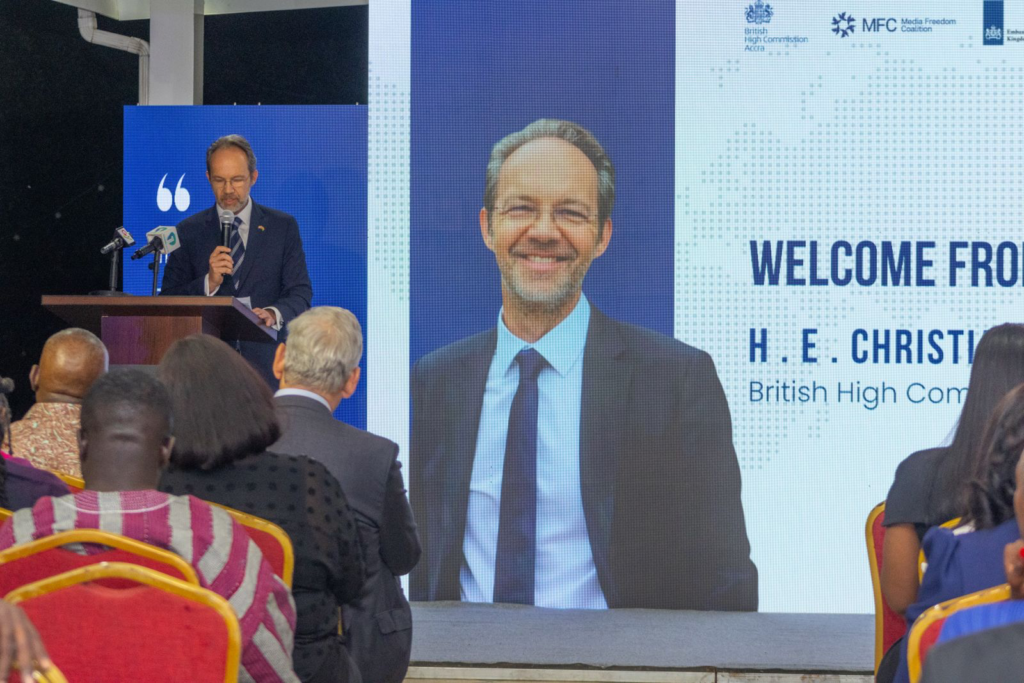
Speaking at his Accra residence on Wednesday to mark World Press Freedom Day, he said the dangers of misinformation and disinformation have become more pronounced as digital platforms reshape how information is produced and shared.
Mr Rogg said that while technology has expanded access to information, it has also created serious risks.
“We are also seeing the downside of that trend, the misinformation and disinformation that I’ve mentioned, but also we’re seeing growing pressure and threats towards journalists, and we’re seeing an erosion of public trust as a result.”
According to him, such developments go beyond isolated incidents.
“We’re seeing that what could be isolated incidents ultimately amounts to trends that can weaken democratic processes, that can lead to the shrinkage of civic space, and that can breed tensions, and that can breed even violence if they’re not addressed.”
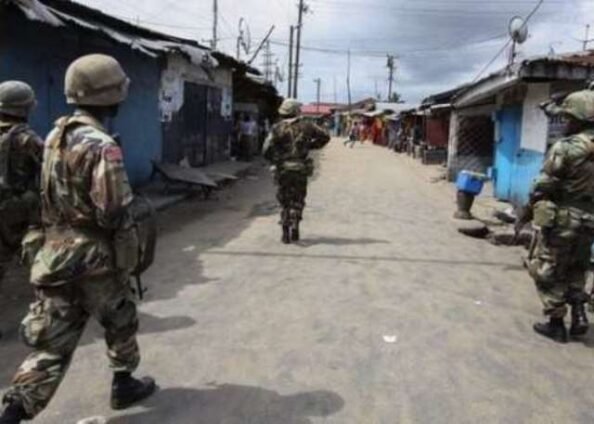
The British envoy pointed directly to Bawku as an example.
“When you look at local conflicts, for example, the conflict in Bawku, you can see that both the government and civil society has repeatedly expressed concerns over fake media stories over fake accounts that are spreading information that are inflaming tensions deliberately and unnecessarily.”
Mr Rogg said the threat is not unique to Ghana.
He cited the unrest that followed the murder of three young girls in Southport two years ago, saying online misinformation quickly escalated into riots and street violence in several parts of the United Kingdom.
“A lot of that, that violence, that disorder, was whipped up online by people who were spreading news, sometimes inflammatory information that had no, no, no basis.”
He said the challenge is increasingly organised and cross-border.
“There’s data that shows that since the year 2022, Russia has sponsored 80 documented disinformation campaigns in 22 African countries, very much focused on undermining security.”
He added that research from the Africa Centre for Strategic Studies shows West Africa is the region most targeted, accounting for nearly 40 per cent of the total.
Mr Rogg said these realities make independent journalism more important than ever.
“We know that independent journalism strengthens information integrity. We know that it acts as a vital counterweight to Disinformation and Propaganda.”
He ended with a call for collective action.
“Press Freedom is not self-sustaining. It requires vigilance, partnership and political will.”
He said the moment should be used to renew “a commitment to truth, a commitment to accountability and a commitment to the democratic values that depend on the free press.”
Latest Stories
-
Mahama cautions Ghanaians not to take religious freedom for granted
12 minutes -
We need development pathway, not selection exercise – Sports Minister urges football stakeholders
19 minutes -
Government prioritises foundational learning to improve education outcomes
25 minutes -
Ghana, Côte d’Ivoire deepen maritime security cooperation through joint boundary inspection
31 minutes -
Three-hour rainfall exposes poor drainage system in Kadjebi
37 minutes -
Ghana, China push AI innovation in healthcare
44 minutes -
Give young people skills and the systems to create jobs
57 minutes -
Food inflation never responded – Dr Yamson says Ghana must stop throwing money at short-term fixes
1 hour -
Oil set for second weekly rise as unsettled US-Iran war crimps supply
2 hours -
US teen drops lawsuit against Meta, Google and Snap ahead of trial
2 hours -
Meghan could return to acting once back in UK
2 hours -
Bali jails Swiss tourist for insulting sacred Day of Silence
2 hours -
At least 50 killed, mostly children, as overloaded boat capsizes in Nigeria
2 hours -
Cameroon president returns home after 10-week absence
2 hours -
Mineworkers demand release of $34.5 million in trapped savings
2 hours