

Audio By Carbonatix
Ghana’s current power challenges appear to reflect a difficult mix of infrastructure vulnerability, financial pressure, fuel-supply uncertainty, and political tension.
While government officials have often attributed recent outages to technical incidents, some critics suggest that these incidents may also point to deeper structural weaknesses within the power sector.
On paper, Ghana appears to have significant installed generation capacity. Industry estimates have often placed installed capacity at around 6,000 MW, compared with peak demand reportedly around 4,300 MW. If accurate, this suggests that Ghana’s current challenges may not be solely about insufficient generation, but rather about transmission reliability, dispatchability, grid resilience, and the financial sustainability of the power sector.
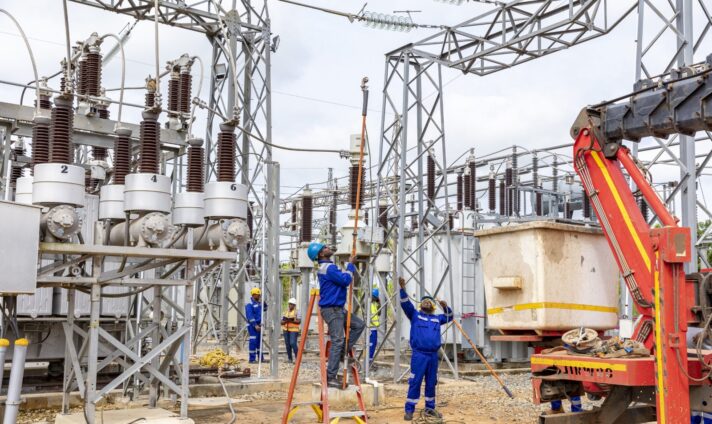
Recent incidents, including the reported Akosombo substation fire, allegedly affected the ability to transmit or dispatch a portion of available power.
Some industry observers have suggested that a significant amount of power may have been temporarily constrained or “stranded,” although the precise figure remains subject to verification. If true, the incident may raise questions about grid redundancy, backup systems, and the need for continued investment in transmission infrastructure.
The sector also appears to remain financially fragile. Government has reportedly made substantial payments toward arrears owed to fuel suppliers and Independent Power Producers over the past 18 months.
However, some market participants suggest that significant obligations may still remain outstanding. Certain estimates place these unpaid balances in the hundreds of millions of dollars, though the precise amount should be confirmed through official sources.
To be Ghana’s Energy Minister or Finance Minister today is almost like being a one-legged man with no crutches in a butt-kicking competition.
The sector is under pressure from every direction: suppliers seeking payment, consumers resisting tariff increases, political actors debating responsibility, and an aging grid expected to support a modern economy.
As one GRIDCo employee is alleged to have remarked, though the quotation has not been independently verified:
“We still operate with some infrastructure from the 1950s. When the center cannot hold, things fall apart.”
The Fuel Factor
Fuel remains one of the largest cost drivers in Ghana’s power sector. Ghana continues to rely in part on imported or price-sensitive feedstock, and some thermal plants are reportedly exposed to expensive liquid fuels.
At the same time, Ghana is often described as having meaningful domestic gas potential, which could help reduce costs if brought on stream reliably and affordably.
The challenge, according to sector observers, is not simply whether Ghana has gas resources, but whether those resources can be developed, transported, and integrated into the power system quickly enough. As some industry sources put it, that task is easier said than done.
Against this background, some analysts view liquefied natural gas, or LNG, as a possible transition bridge toward improved energy security. However, Ghana’s LNG pathway has also attracted scrutiny, particularly in relation to the Tema LNG project and the commercial challenges allegedly associated with it.
The Helios Investment Group LNG Challenge
Several years ago, Helios Investment Group, a London-based Africa-focused investment firm, became associated with an ambitious LNG infrastructure project at Tema. The project was widely expected to contribute to Ghana’s energy security and potentially position the country as a regional LNG hub.
Publicly available information and industry estimates have suggested that the overall project exposure may have been substantial, with some market participants placing the figure above $300 million.
That figure has not been independently verified for purposes of this commentary and should not be treated as a confirmed valuation, loss, liability, or write-down.
What was once viewed as a promising strategic infrastructure project has allegedly faced commercial and operational headwinds.
Asset Performance
Some industry sources allege that the Tema LNG-related investment may have experienced valuation pressure or commercial underperformance.
There have also been reports that one purpose-built vessel is located in Tema, while a related vessel may not have entered full commercial operation as initially expected. These claims remain unverified and should not be treated as established facts.
Financial Pressure
There have also been market allegations of financial pressure surrounding the project, including claims of delayed vendor payments and financing-related stress.
These matters have not been independently confirmed. Any assessment of such claims should be based on audited accounts, lender records, regulatory filings, court documents, or official statements from the parties involved.
Legal and Commercial Risk
Market participants have also speculated about possible legal or commercial disputes involving parties connected to the broader project structure. At this stage, any such potential dispute should be treated as unverified unless and until formal proceedings are filed or official records become available. No conclusion should be drawn regarding liability, breach, misconduct, or fault by any party unless determined by a competent court, tribunal, regulator, or settlement process.
A Cautionary Infrastructure Lesson
If the reported challenges are accurate, the Tema LNG experience may offer a cautionary lesson about the complexity of large-scale public-private infrastructure projects in politically sensitive sectors.
Such projects often depend on long-term offtake commitments, regulatory stability, financing discipline, technical execution, currency predictability, and effective government-sector coordination.
What was intended to strengthen Ghana’s energy-security architecture has, according to some observers, not yet delivered its full expected commercial value. However, it would be premature to characterize the project definitively without access to the full contractual, financial, regulatory, and operational record.
For Helios, its partners, lenders, vendors, government counterparties, and other stakeholders, the project may still evolve. The ultimate commercial, legal, and strategic outcome remains uncertain.
A Path Forward
As Ghana emerges from this latest period of power instability, the deeper structural issues remain. Long-term stability will likely require three major reforms: sustained investment in transmission and grid resilience, credible financial restructuring across the energy-sector value chain, and reliable access to affordable feedstock.
Generation capacity alone will not solve the problem. Ghana needs a power system that is technically resilient, financially sustainable, contractually disciplined, and less vulnerable to political cycles.
Sometimes, even Black Stars require an element of darkness to truly shine.
Latest Stories
-
MTN, Telecel, Goal Telecom qualify for next stage of NCA spectrum auction
4 minutes -
TUC demands overhaul of Council of State, wants presidential appointees capped at 5
26 minutes -
Health workers raise alarm over unpaid ’13th month salary’, staff shortages
27 minutes -
CSSPS doesn’t need overhaul, review policies behind system – Adutwum
30 minutes -
2026 U-20 WWC: Black Princesses beat South Korea to keep qualification hopes alive
33 minutes -
‘Corruption must be assassinated’ – Citizen Kofi calls for tougher punishment to reset Ghana’s culture
41 minutes -
Illicit political funding and vote buying: A threat to Ghana’s democracy
44 minutes -
Hill Tennis Club and Ghana Tennis Federation honor Professor Bannerman Richter
48 minutes -
Google to invest $15.1bn in Finland AI infrastructure, strike nuclear power deal
49 minutes -
TUC supports CRC call to make Ghanaians custodians of their lands
50 minutes -
With large crowds attending, Norway lays King Harald to rest
51 minutes -
Ghana Sports Fund board engage media over project
52 minutes -
Study hard, make your parents proud – Ahanta West MP tells 150 BECE candidates
52 minutes -
Let districts choose MMDCE candidates without central government interference – TUC
57 minutes -
Lawra MP restores ambulance, commissions modern laboratory at Domwine Health Centre
57 minutes