

Audio By Carbonatix
At least 49 people have died of thirst in a remote part of the Sahara Desert in northern Niger after the truck carrying them broke down, authorities said.
The group had been returning from Mali, where they had attended a Muslim festival, when they ran out of water, stranded more than 80 km (50 miles) west of Assamaka, a major border crossing point between Niger and Algeria.
"The travellers found themselves trapped in the heart of a hostile environment where extreme temperatures and lack of supply points make survival extremely difficult," said a statement from the Agadez governor.
Only two survived, trekking across the desert to Assamaka, where they alerted authorities.
The lorry had departed from the Malian town of Telhandek but veered away from its intended route, the governor's statement said.
For several days, the driver and passengers made repeated attempts to repair the vehicle, but their efforts ultimately proved unsuccessful.
"Deprived of water and unable to repair the vehicle despite the efforts of the driver, his apprentice and passengers, travellers found themselves trapped in the heart of a hostile environment," the statement added.
"Dozens of lifeless bodies were found under the immobile truck and in its surroundings," it said.
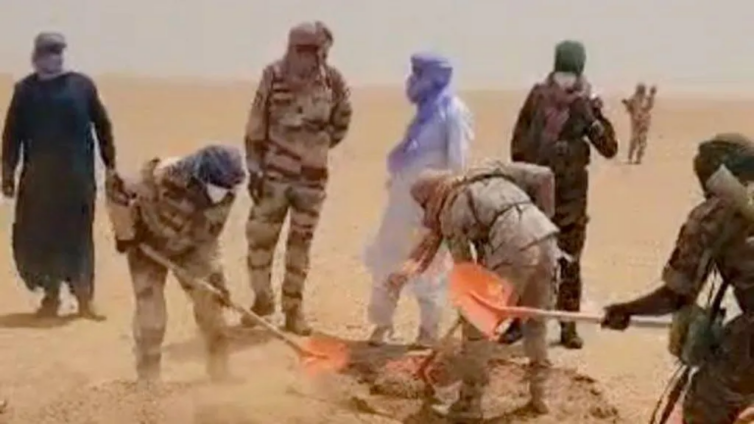
The victims were buried in mass graves by the rescue team dispatched to the area by local authorities.
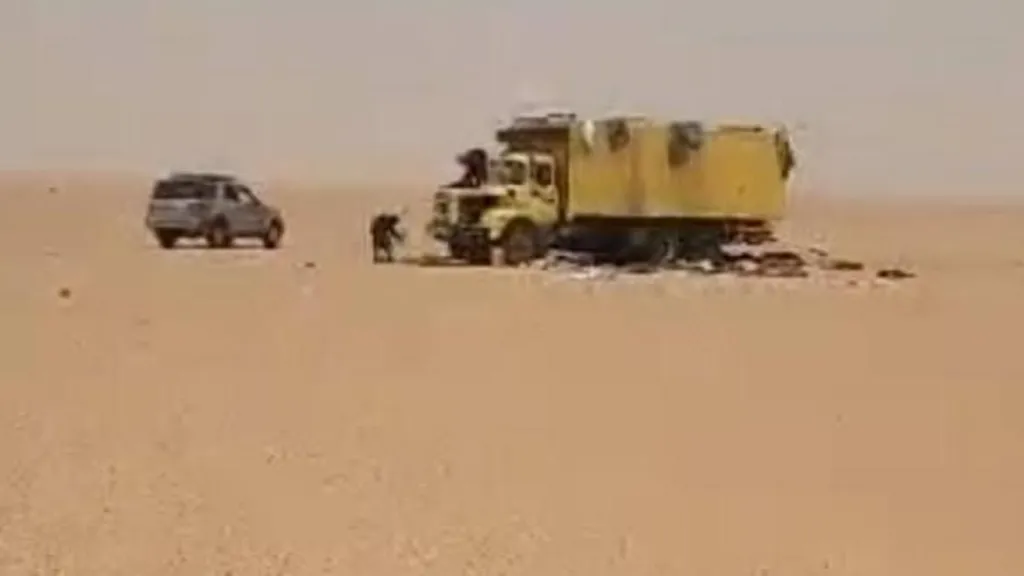
While returning from the scene, the rescue team said it came across another broken-down lorry carrying more than 60 people, who had been stranded for three days after a battery failure.
The lorry had set off from the Malian town of Harouba, more than 300km (186 miles) from the Niger border, the governor said in a follow-up statement.
The rescue team, which included Nigerien troops, distributed water to the "exhausted and distressed travellers" and helped repair the vehicle, allowing them to safely resume their journey.
The Niger desert remains a major transit corridor for migrants from across West Africa trying to reach Europe, repeatedly defying the risks associated with the perilous journey.
The governor said the tragedy underscored the "vulnerability of young people engaged in migratory and cross-border economic activities, often forced to pass through unstable areas in order to survive or seek better living conditions".
Latest Stories
-
MyJoyOnline Gets Result: FIFA/ FIBA agency Pep Sports moves to admit Ghana’s 7-Foot Basketball dreamer, Mac-Saawa, to its Ultra-Modern Sports campus
28 seconds -
GAUA strike disrupts academic plans at University of Ghana as students, parents express frustration
5 minutes -
Dad’s Army/African Polistas crowned champions of 2026 Accra Polo Club Trustees’ Cup
12 minutes -
Mahama approves Integrated Basic Education Model, with funding expected in 2027 under GETFund formula
15 minutes -
Money-driven elections fuelling corruption – Haruna Iddrisu
19 minutes -
Excessive borrowing ‘cracked’ Ghana’s economy under Akufo-Addo – Haruna Iddrisu
28 minutes -
NPP’s silence on economic indicators suggests Mahama is doing better – Haruna Iddrisu
42 minutes -
GoldBod must be more accountable to Ghanaians – Haruna Iddrisu
56 minutes -
Affi Agbenyo’s EC appointment is constitutionally appropriate, but politically, people have the right to remind us – Haruna Iddrisu
1 hour -
Accra Mall brings Soulful Weekend Vibes to October with Live R&B and Jazz
1 hour -
Education is critical to Ghana’s future and development – Haruna Iddrisu
1 hour -
Who’s Emelia Affi Agbenyo, the 43-year-old newly sworn-in Deputy EC Chair?
2 hours -
Haruna Iddrisu calls for limits on annual university accommodation fee increases
3 hours -
Today’s front pages: Tuesday, October 13, 2026
3 hours -
Wealth Over Water: How Galamsey Is Threatening Ghana’s Water Security
4 hours