

Audio By Carbonatix
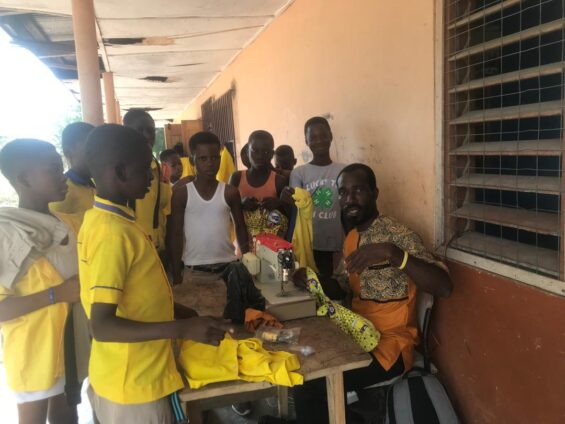
For four years, Seth Quaye Mensah has used his sewing skills and personal resources to repair and replace torn uniforms, helping vulnerable pupils attend school with dignity, confidence and renewed hope.
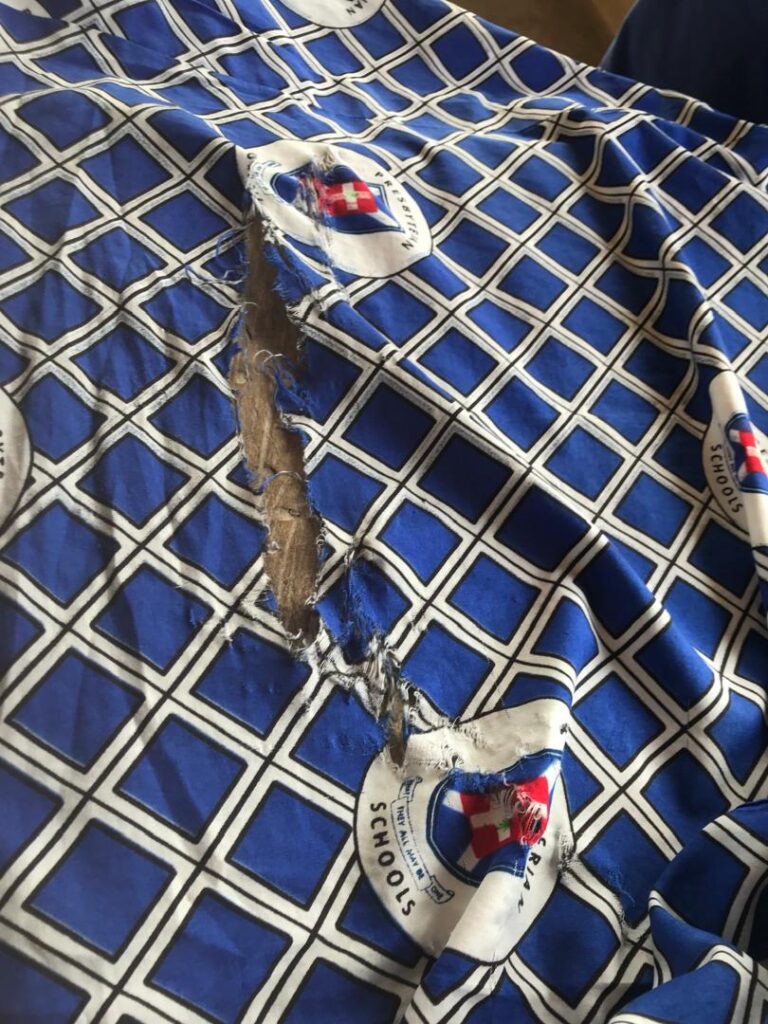
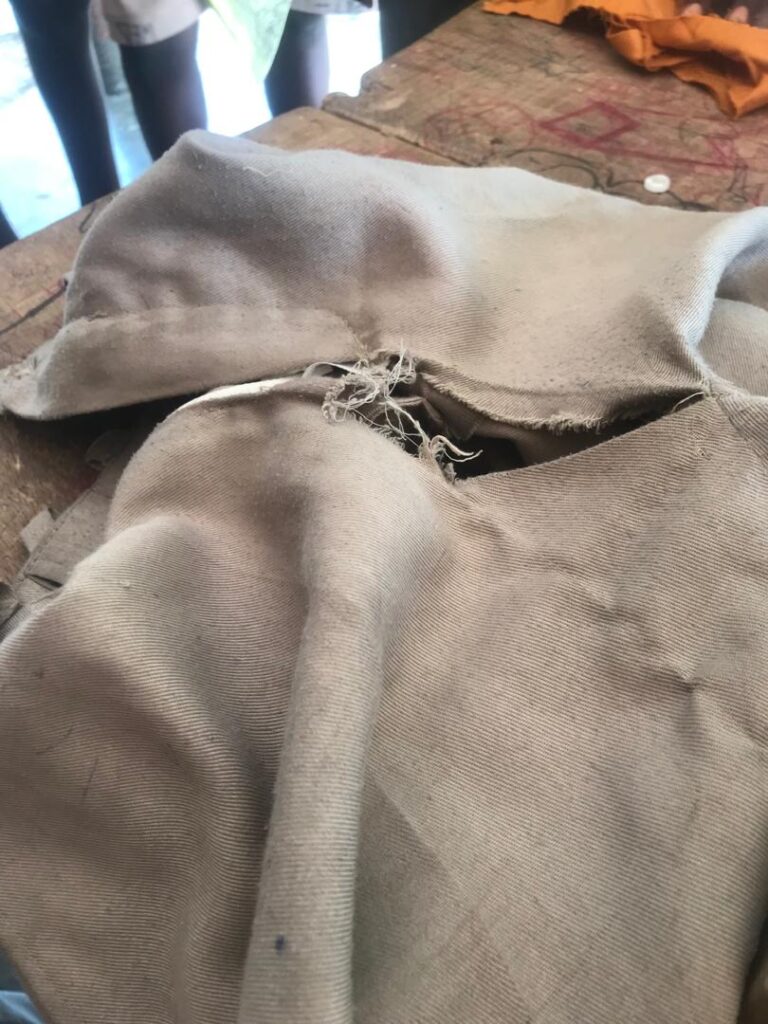
A torn uniform, missing buttons and a pair of worn-out slippers were all it took to change the course of Mr Mensah’s life. What began as a chance encounter with a struggling pupil on his son’s first day at school has grown into a mission to restore dignity and confidence to hundreds of schoolchildren through free uniform repairs and replacements.
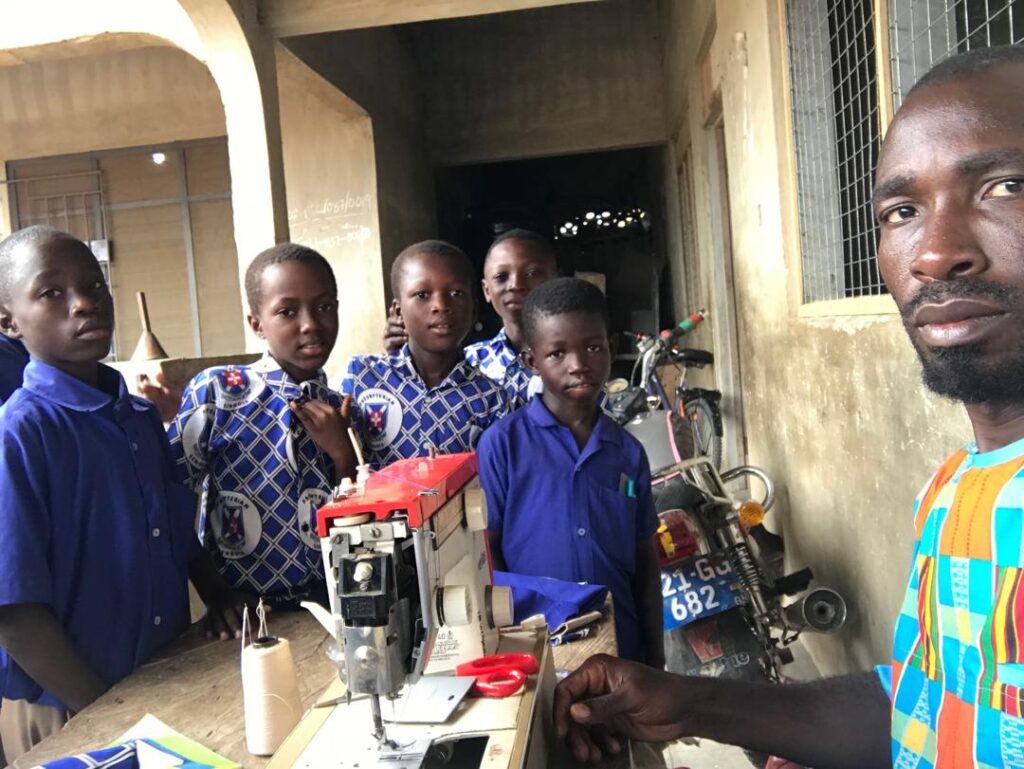
For 24 years, Seth Quaye Mensah has worked as a fashion designer, building a career in garment making and establishing himself in the fashion industry. Today, however, he is increasingly known for a different calling—supporting underprivileged pupils through his Dress Well to School initiative, which helps children attend school with pride by repairing torn uniforms and providing replacements where necessary.
Since its inception four years ago, the initiative has expanded into a community-driven effort that has reached nine schools and benefited hundreds of pupils in the Amasaman area of the Greater Accra Region.
Speaking in an interview with Myjoyonline, Mr Mensah recounted the moment that sparked the idea.
“I wanted to take a picture of my son on his first day at school when another boy ran into the frame,” he said. “After taking the picture, I noticed that his uniform was badly torn. The zip was damaged, the buttons were missing, and he was wearing slippers instead of shoes.”
The experience, he said, left a lasting impression on him. Shortly after, he sewed a new uniform for the boy and approached the school’s headmaster with a proposal that would become the foundation of the initiative.
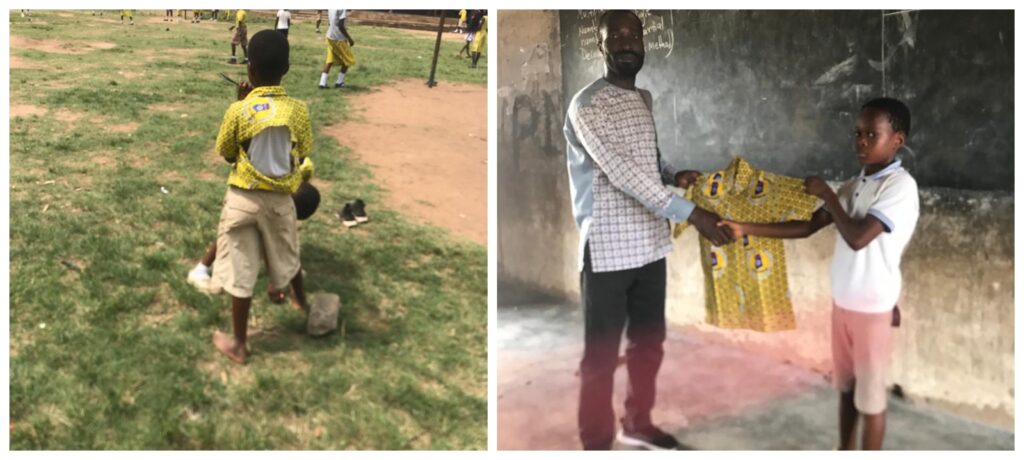
“I realised the problem was not limited to one child. Many of the pupils were coming to school in torn uniforms,” he explained.
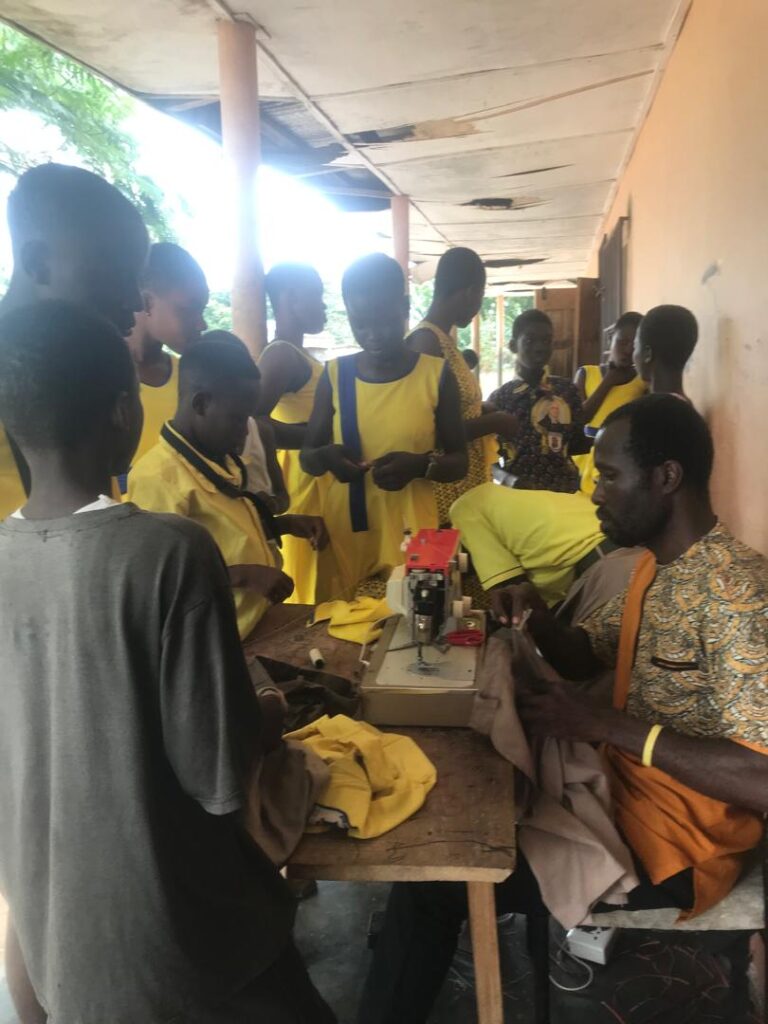
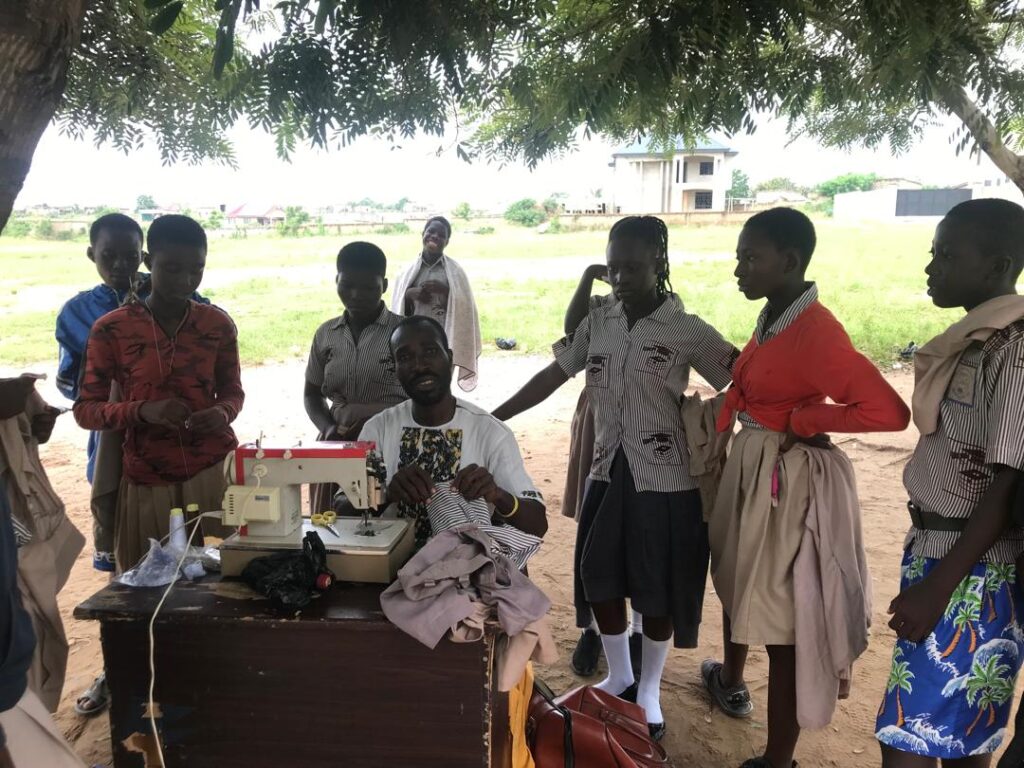
Rather than requiring children to visit his workshop, Mr Mensah took a different approach—bringing his sewing machine directly to the schools. On designated programme days, he sets up a temporary workstation on the school compound, where pupils line up with uniforms in need of repair.
What started as a small intervention quickly revealed a much larger need.
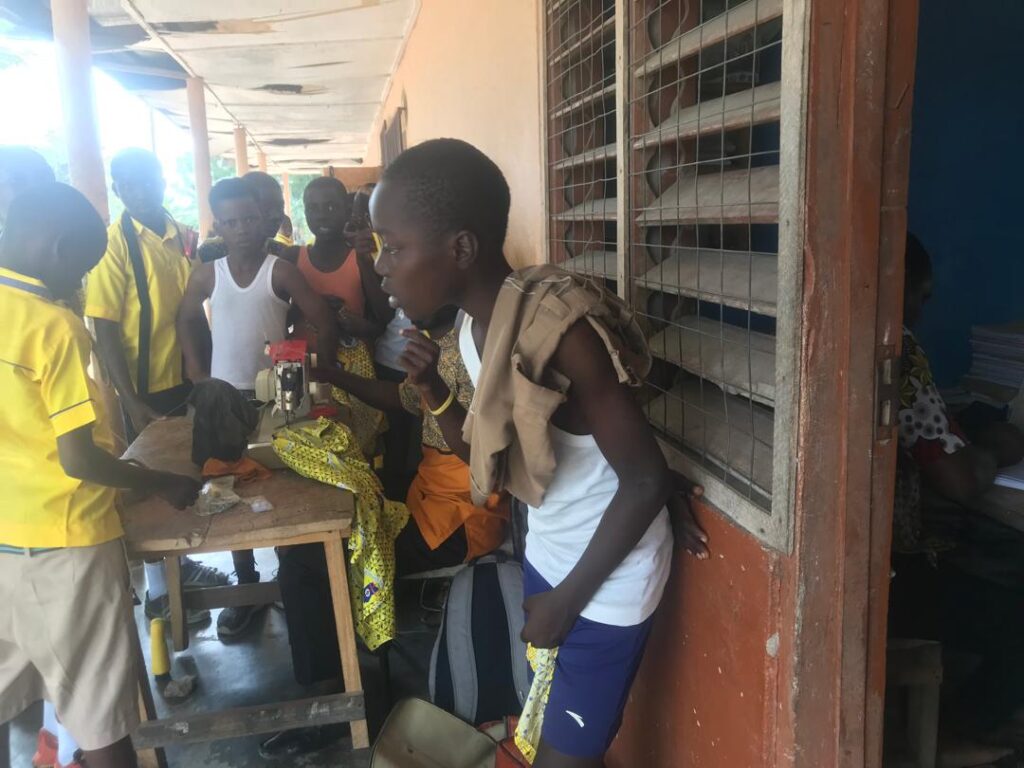
“The response was overwhelming. I could not finish in one day. The first programme took three days,” he recalled.
Since then, he has continued visiting schools each academic term, offering free repairs and, in some cases, sewing entirely new uniforms for children whose clothing is beyond repair.
Beyond uniforms, Mr Mensah says the initiative has exposed deeper challenges affecting many children from low-income households.
“Some children do not have shoes. Others lack books and learning materials. These are all things that affect their confidence and education,” he said.
To date, the programme has reached nine schools in Amasaman, namely: Okusiebiade Methodist Basic, Doblo Gonno Methodist Basic, Kojo Ashong Methodist Basic, Kwashiekuma Methodist Basic, Oduntia Presby, Akwatsiri M/A Basic, Yahoman Experimental Basic, St. Mark Anglican Basic, and St. Paul Anglican Basic, with some receiving repeated visits.
“The school where I started receives support every term. I have been there more than five times, while other schools have been visited once or twice,” he noted.
Despite its growing impact, funding remains the initiative’s biggest challenge.
“Sometimes I go to a school with just enough money for transportation there and no money to return home,” Mr Mensah admitted. “But I still go because I want to help the children.”
The project is largely sustained through proceeds from his tailoring business, with occasional support from a Ghanaian benefactor based in Australia.
For Mr Mensah, however, the reward is not financial but emotional. “When I return to the schools and see the children wearing their repaired uniforms, they are happy and confident. They are proud to come to school and interact freely with their friends,” he said.
“This programme has made me realise that many families are struggling. There is a lot of hardship, and many parents need support to keep their children in school,” he observed.
While acknowledging efforts to improve access to education, he believes more attention must be given to the everyday realities children face.
“Not paying school fees is important, but there are other issues. Some children need uniforms, shoes and learning materials. These challenges also need attention,” he said.
Funding Remains a Challenge
As the initiative continues to grow, Mr Mensah is appealing for broader support from individuals, organisations and philanthropists.
“Nothing is too small,” he said. “With any amount we receive, we can buy something to support a child. As the Bible says, little drops of water make a mighty ocean.”
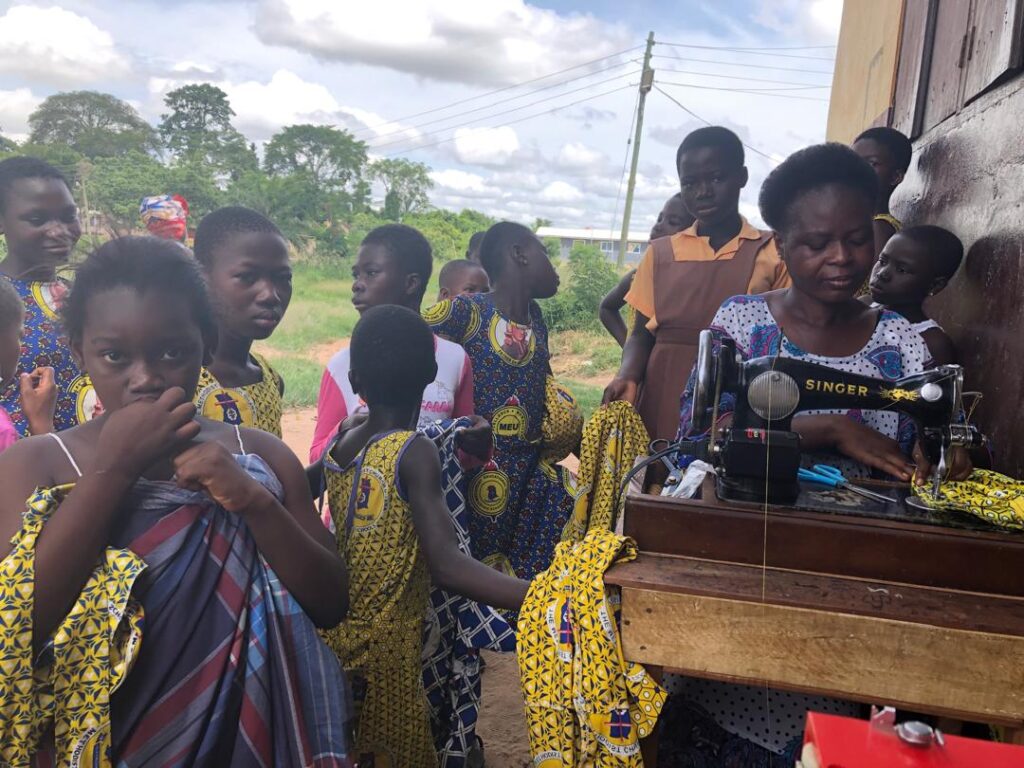
He added that even small acts of generosity can make a meaningful difference in a child’s life.
“When these children smile, our prayer is that those who support them will also be blessed,” he said.
Calling for More Helping Hands
Beyond financial assistance, Mr Mensah is inviting fashion designers, tailors, seamstresses and volunteers to join the initiative.
“You don’t necessarily need to be a tailor to help,” he said. “Simple tasks like fixing buttons or assisting with basic repairs can be learned quickly. What we need are willing hands so that together we can support these children.”
A Vision Beyond Amasaman
Looking ahead, Mr Mensah hopes to expand Dress Well to School into a nationwide programme.
“Our vision is to reach every part of Ghana because this problem is not limited to Accra or my community,” he said. “There are children in torn uniforms across the country, and we want to reach them all.”
An Appeal to Policymakers
Mr Mensah is also calling on government and policymakers to pay closer attention to the hidden challenges affecting schoolchildren.
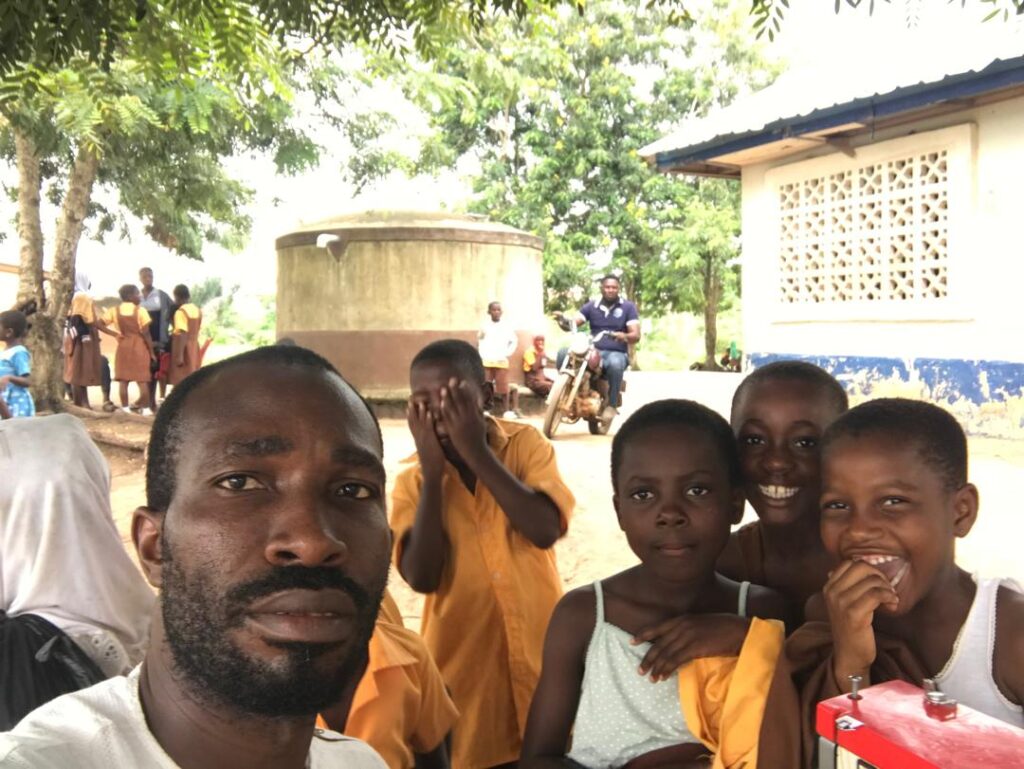
He believes investing in children’s welfare is critical to national development.
“I will plead with our authorities, the President and his Cabinet, to come down to the level of these children and see their challenges firsthand,” he said. “There is more that can be done to support them.”
“These are our future leaders. We must ensure they go to school with dignity, confidence and hope.”
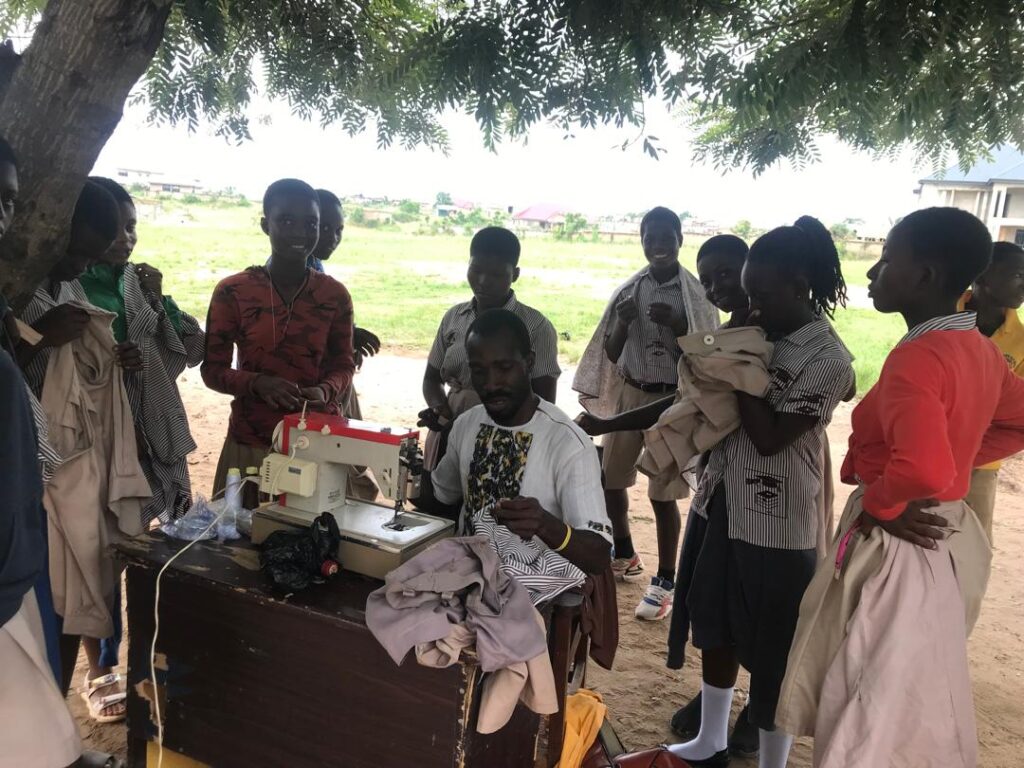
For Seth Quaye Mensah, every repaired uniform is more than just fabric and thread—it is a restoration of dignity, confidence and possibility.
And as long as there are children in need, he says, his sewing machine will keep moving—one stitch, one uniform and one child at a time.
Latest Stories
-
Credit Risk Management Directive: BoG to begin implementation for banks, others from July 1, 2027
12 minutes -
Ghana Brands Awards 2026: Leading brands, business trailblazers to shine on November 20
28 minutes -
T-bills auction: Demand improves as government exceeds target by about 76%; interest rates soften
34 minutes -
Ziope undertakes initiative to build a technologically inclined community, commissions self-help ICT lab
59 minutes -
ECG announces power outage in parts of Tema, Central Region due to network fault, maintenance
1 hour -
When the Gospel Becomes a Weapon: The church, blackmail and the abuse of faith
2 hours -
JoyNews’ Jacqueline Ansomah Yeboah selected for UK Media Excellence for Emerging Technology Fellowship
2 hours -
Mental Health Alliance urges government to operationalise Mental Health Fund
2 hours -
Ghana–Holy See agreement heads to Parliament after Cabinet approval
2 hours -
Luv FM Corporate Games 2026: Kumasi Central Prisons, Amanfiman Bank win big amid fun
3 hours -
WAFU B U17: Ghana top Group A after win over Togo
3 hours -
Ho Central Mosque reopens amid unresolved leadership dispute that led to closure
4 hours -
Minority caucus questions GH¢16.4m in Ablakwa’s SA evacuation spending, demands independent audit
5 hours -
Gender Ministry meets Nana Akua Addo’s husband over domestic violence after hospital discharge
5 hours -
UG Vice-Chancellor urges swift operationalisation of National Research Fund
6 hours