

Audio By Carbonatix
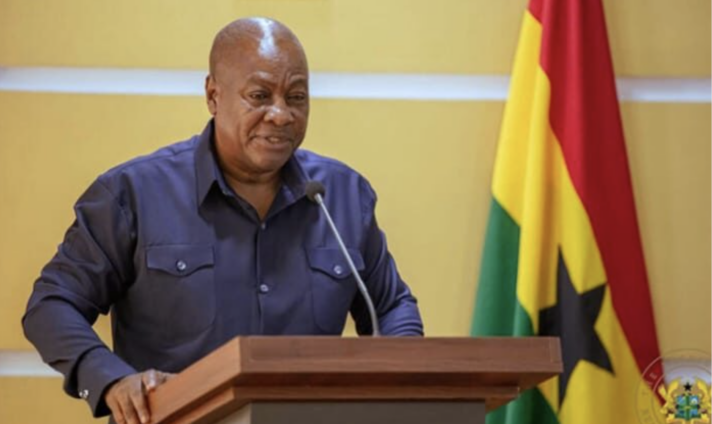
The Chief Executive Officer of the Centre for Citizenship, Constitutional and Electoral Systems (CenCES), James Kwabena Bomfeh, has said he is not surprised by reports of declining approval ratings for President John Dramani Mahama, attributing the trend to growing public frustration over economic conditions and unmet expectations following the 2024 general elections.
His comments come in response to a recent Institute of Economic Affairs (IEA) survey, which reportedly shows a dip in public approval of the President’s performance.
Although Bomfeh said he had not reviewed the full study, he noted that the outcome aligns with prevailing public sentiment.
“I would not be surprised. A lot has taken place within the period, and it would be surprising if the President’s approval rating went up,” he said.
He argued that while statistical indicators of the economy may show improvement in some areas, they do not always reflect the lived experiences of ordinary citizens.
“You have the cedi doing very well against the major currencies, particularly the dollar, and yet prices of items on the market have not come down in response. What is happening? Why is there that dichotomy?” he questioned.
According to him, this disconnect between macroeconomic performance and household realities is a key factor shaping public perception of government performance. He added that rising utility costs and stagnant wages have further compounded public dissatisfaction.
Mr Bomfeh stressed that citizens are more influenced by the cost of living than technical economic indicators such as exchange rate stability or inflation trends.
He further pointed to expectations set during the 2024 election campaign, arguing that unmet promises have also contributed to declining public confidence in the administration.
Despite the concerns, Mr Bomfeh said the government still has an opportunity to reset its image and improve performance through a cabinet reshuffle.
He suggested that repositioning key officials could inject renewed energy into governance and improve responsiveness to public concerns.
“At the end of the day, it’s about who you put in fixed positions. People get too comfortable in office, and that affects performance,” he noted.
He urged the Presidency to take lessons from the IEA findings and broader public feedback, warning that failure to respond decisively could deepen dissatisfaction in the months ahead.
Latest Stories
-
Driver convicted over concrete spill on Madina-Adenta Highway
3 minutes -
Photos: Prospective homeowners turn up in numbers for final day of JoyNews–Republic Bank Habitat Fair
6 minutes -
Aggrieved teachers demand payment of unpaid four-year legacy arrears
39 minutes -
Skipping breakfast bad for your health?
53 minutes -
Kpeshie Lagoon reclamation linked to first-ever flooding at Tse Addo – ISD
1 hour -
GRA announces major policy proposal under Modified Taxation Scheme initiative
1 hour -
TCL sues Samsung for false advertising over ‘Mini LED’ televisions
1 hour -
US embassy child abuse images suspect flown from UK before police interview
2 hours -
Payment dispute led to murder of Dr Jesse Amuah and wife at Asylum Down – Court told
2 hours -
COPEC calls for GH¢1 petrol, continuation of GH¢2 diesel subsidy amid price surge
2 hours -
Petrol to sell at GH¢16.26, diesel GH¢19.07 from Wednesday – COPEC
2 hours -
Massive crowds flock to JoyNews–Republic Bank Habitat Fair on final day to explore mortgages and seek expert advice
2 hours -
Ghana’s Alice Banaaza spotlights fugu weaving at 2026 CHAN Festival in UK
3 hours -
Russia’s Youth Festival could unlock business partnerships and scholarships for Ghanaian youth – John Aggrey
3 hours -
The 21st Century Gold Standard was piloted in Ghana under Bawumia – Gideon Boako
3 hours