

Audio By Carbonatix
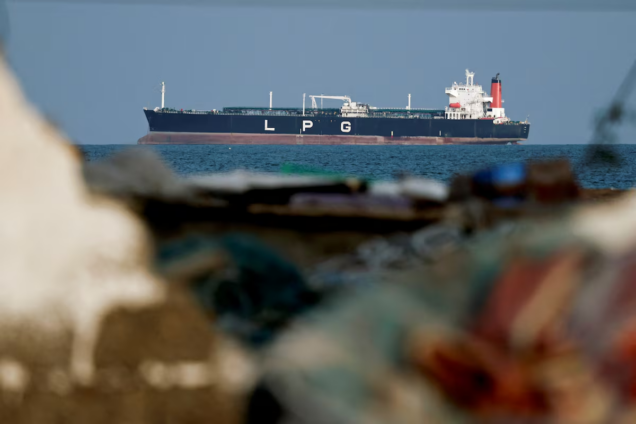
Oil prices fell more than 1% on Wednesday, extending this week's losses and trading near four-month lows, amid signs that more oil tankers stranded in the Gulf are set to move out of the Strait of Hormuz.
Brent crude futures fell 78 cents, or 1.0%, at $76.30 a barrel as of 0350 GMT. U.S. West Texas Intermediate slipped 78 cents, or 1.1%, to $72.43 a barrel.
Both benchmarks settled down around 1% on Tuesday, touching their lowest levels since early March.
"Positive signals from the Persian Gulf are fuelling optimism about oil flows through the Strait of Hormuz. Vessel crossings increased in recent days, although they remain well below pre-war levels," ING commodity strategists said in a note on Wednesday.
Prices have also come under pressure this week after Washington granted Tehran a 60-day sanctions waiver following initial peace talks, allowing it to sell oil, and as hostilities in Lebanon eased.
"Crude oil prices were weighed down by hopes of easing U.S.-Iran tensions and a recovery in oil shipments through the Strait of Hormuz," said Tomomichi Akuta, senior economist at Mitsubishi UFJ Research and Consulting.
"Further progress in nuclear negotiations could push prices back to pre-war levels," he added.
On Tuesday, Oman and Iran agreed to press on with discussions about the future administration of navigation in the Strait. U.S. Secretary of State Marco Rubio said any Iranian attempt to levy transit fees would violate international law.
Still, uncertainty remains over the accord's durability. U.S. President Donald Trump said on Tuesday that Iran had agreed to nuclear inspections into "infinity," while Tehran said it had made no such concession in negotiations.
Investors are also watching how quickly Middle Eastern producers can restore exports and whether more ships will enter the region.
An Iranian military source told Fars news agency that a limited number of vessels are being allowed to pass through the strait each day under coordination with Iran's Revolutionary Guards Navy.
Ship-tracking data showed that three stranded supertankers passed through the strait on Tuesday.
The U.N. shipping agency said an evacuation plan to enable hundreds of ships with 11,000 seafarers stranded in the Gulf to sail through the strait is underway after the U.S.-Iran ceasefire deal.
Meanwhile, crude stocks fell by 765,000 barrels in the week ended June 19, market sources said, citing data from the American Petroleum Institute released on Tuesday.
Nine analysts polled by Reuters estimated, on average, that crude inventories fell by about 4.5 million barrels in the last week. ,
Latest Stories
-
Ghana’s film industry: The Nokia of African cinema?
14 minutes -
British Council supports two Ghanaian creatives for UK cultural exchange opportunities
32 minutes -
Trump says Canada wants ‘benefits’ of being US state after trade talks collapse
2 hours -
TikTok to pay $400m to US in one of largest child privacy settlements
2 hours -
Asante Kotoko management doesn’t involve me in supporters mobilization – McBrown
2 hours -
Frustration builds in Indiana town struggling without power for 12 days
2 hours -
‘Jesus was accused; he kept quiet’ – Afenyo-Markin on Sammy Gyamfi allegation
2 hours -
NSMQ 2026: Accra High steals one-eighth ticket from Sunyani SHS in stunning final-round twist
2 hours -
Kejelcha breaks men’s half marathon world record by 29 seconds
2 hours -
Nkoko Nkitinkiti programme has failed – Afenyo-Markin claims
3 hours -
NDC yet to deliver key 2024 campaign promises – Afenyo-Markin
3 hours -
Adamus welcomes 12-month roadmap to revive mine, restore investor confidence
4 hours -
T-bills: Government records 162% oversubscription, interest rates slump
4 hours -
UPSA moves to turn student research into market-ready solutions
4 hours -
Presby SHS, Suhum honour late coordinator with dominant One-Eighth qualification
5 hours